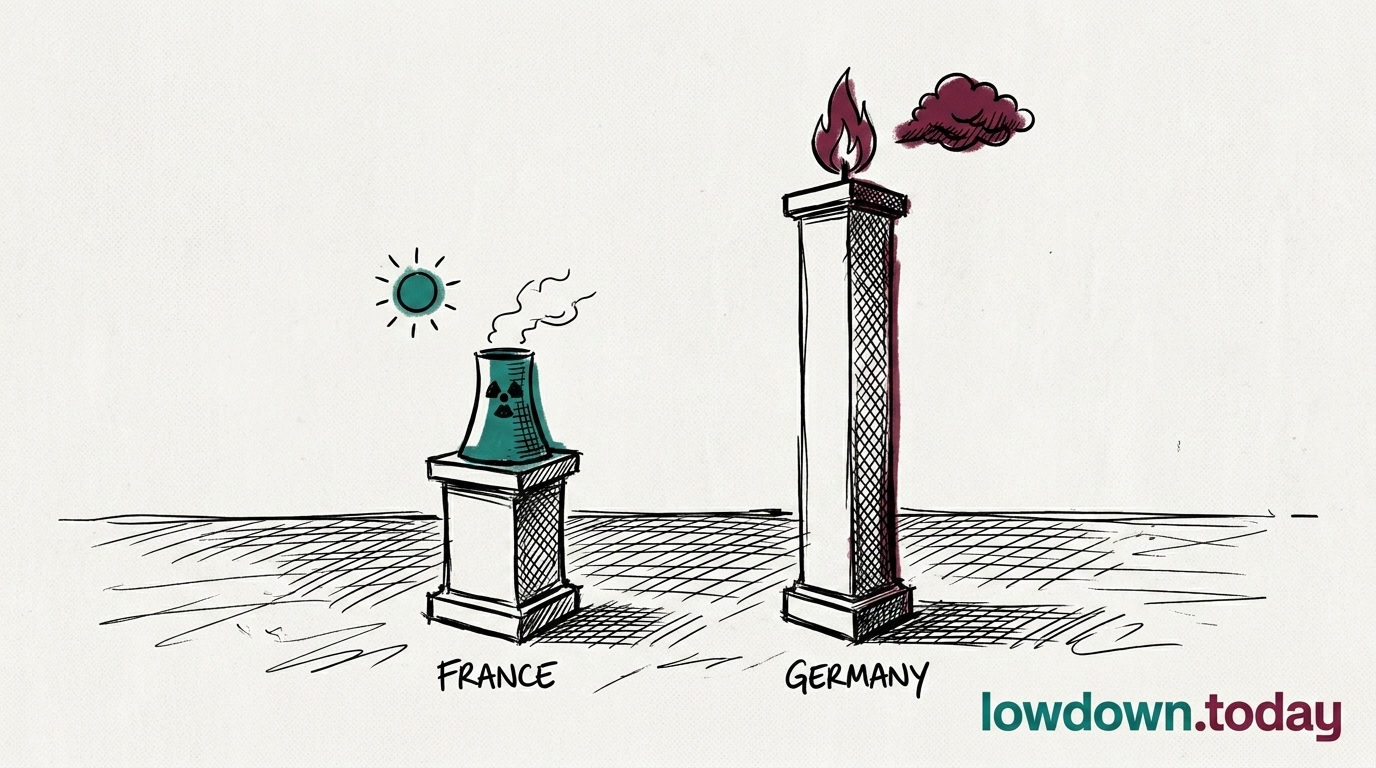
German day-ahead power cleared an average of €103.16/MWh on Monday 20 July, inside a range running from €0.00 to €194.771. Solar and wind oversupply held the 03:00 to 06:00 block at zero for four hours; the evening peak carried the top of the range.
Put the three verified inputs together. Monday's TTF settlement, burned through a modern combined-cycle gas turbine at 55 to 58% efficiency, costs €102 to €108 per MWh of electricity. EUA carbon at €80.002, at roughly 0.2 tonnes per MWh, adds another €16. Marginal cost therefore lands between €118 and €124 against €103.16 of revenue, putting the clean spark spread between minus €15 and minus €21. Four sessions earlier it was positive, on German day-ahead at €156 and carbon at €80.14.
Only part of that swing belongs to Hormuz, and the decomposition deserves stating rather than glossing. The fuel leg carries the conflict premium and nothing else: gas has risen since 15 July, worth €7 to €8 of extra generation cost, while carbon has not moved at all. The power leg did the rest, falling more than €50 from Thursday's print, and a Monday in late July carrying four hours of zero-priced solar has an ordinary seasonal component behind it that no conflict explains. Call the split roughly 13% conflict, 87% weather and calendar. Anyone selling this as a pure Hormuz effect is selling about €8 of it and hoping nobody checks the other €50.
Either way the fleet stays off-merit, and the storage consequence does not change. Gas that would have gone into German turbines now has somewhere else to go, and the caverns need it: net EU injections since 1 July are running 17% below last year, the slowest July fill pace in six years against the 5 July baseline3. The bloc still reached 52.49% on 15 July on data from GIE, the Gas Infrastructure Europe body that runs the AGSI+ transparency platform4, so the level keeps climbing while the pace falls behind. Whether a spread this negative converts into a faster injection rate over the coming week is the practical test of whether demand destruction buys anything for the November floor.




