Skip to content
Briefings are running a touch slower this week while we rebuild the foundations.See roadmap
European Energy Markets
29MAY

TTF confirms EUR 50 as a ceiling

4 min read
09:05UTC

TTF settled EUR 51.816 on 25 May, an intraday 2026 high, then fell 8.1% to EUR 47.60 on 26 May on US-Iran deal reports, finishing below the week's open despite a confirmed Norwegian supply loss.

EconomicDeveloping
Key takeaway

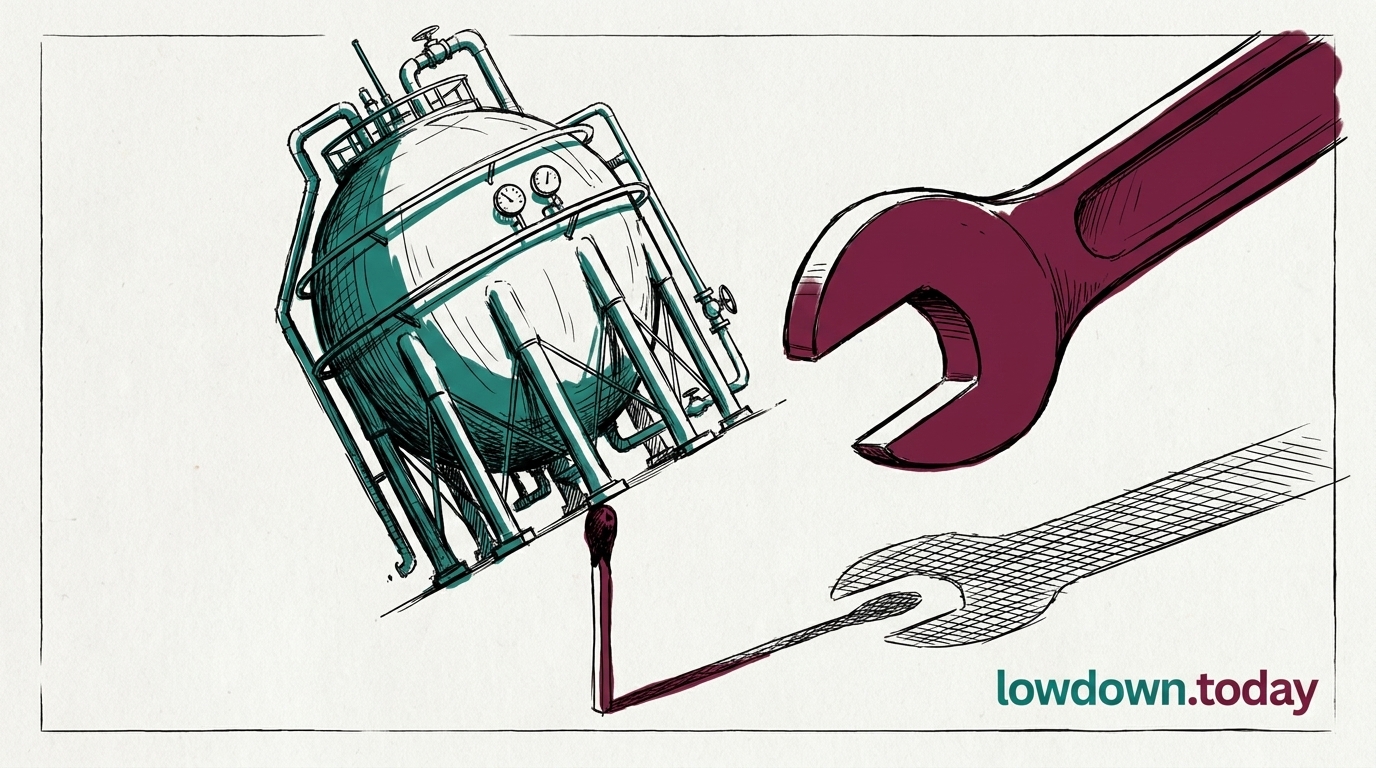
TTF priced Iran optionality over a confirmed Norwegian loss, fixing EUR 50 as a diplomatic ceiling not a floor.

TTF settled EUR 51.816/MWh on 25 May, an intraday 2026 high, then fell 8.1% to EUR 47.60 on 26 May on reports of progress toward a US-Iran deal 1. The week's close sat below the 22 May open of EUR 48.68 and a whisker under the EUR 47.69 prior baseline . The benchmark did this while the verified Troll and Hammerfest outages kept a large block of Norwegian supply offline through the window .

The EUR 50 question is now settled. The break above the level on 18 May was the first test ; the 22 May retrace established the ceiling dynamic; the spike-and-crash confirmed it. EUR 51.82 held for a single session before Iran deal optimism sent the benchmark back below EUR 48. A benchmark that ignores a confirmed Norwegian loss to chase a ceasefire rumour is trading optionality, not the supply curve.

For the strip that makes EUR 50 a sell-zone on diplomatic headlines rather than a physical floor. Norwegian exports then rose around 40% toward 260 mcm/day as Troll maintenance eased, a genuine bearish surprise the curve had already front-run 2. The short EUR 50-strike summer position keeps paying until the Iran path actually resolves, at which point the diplomatic premium that anchors the ceiling either collapses on a deal or reprices hard on a breakdown. Until then the level functions as sentiment, not as fundamentals.


Deep Analysis

In plain English

TTF is the main European gas price benchmark, set in the Netherlands. Think of it as the 'petrol station price' for wholesale natural gas across Europe. When TTF rises, energy bills tend to follow; when it falls, they ease. On 25 May, TTF hit its highest price of 2026 at EUR 51.82 per megawatt-hour (a megawatt-hour is roughly the gas needed to heat a medium house for about a month). Then, the very next day, news emerged that the US and Iran might be close to a deal. If a deal happens, more gas from the Middle East could reach global markets via the Strait of Hormuz, which has been restricted. On that news alone, TTF fell to EUR 47.60, a drop of 8.1% in a single day. Here is the striking part: Norway, which normally supplies about a quarter of Europe's gas, was already sending 50 million cubic metres less per day than normal because of the broken compressor at Troll and the shutdown at Hammerfest. That real, verified supply loss could not hold prices up. A rumour about a deal that has not happened was more powerful than actual missing gas. This tells us the gas market is currently being driven more by news about Iran diplomacy than by real supply and demand. The EUR 50 per megawatt-hour level has effectively become a ceiling: prices spike to it briefly then fall back when diplomatic news improves.

Deep Analysis
Root Causes

The EUR 50 ceiling emerges from two concurrent structural features of the 2026 TTF market.

First, geopolitical optionality has replaced storage fundamentals as the dominant marginal pricing signal for TTF. The Iran deal / Hormuz closure binary has introduced a diplomatic premium of EUR 3-7/MWh into TTF since the conflict began. When deal headlines surface, that premium drains instantaneously because the option that justified holding it has been (temporarily) extinguished. This is not a physical supply event; it is a market pricing mechanism responding to a binary geopolitical option.

Second, the 58 mtpa of new LNG export capacity due online in H2 2026 (per Timera Energy) has shifted market participants' view of the supply ceiling. Traders pricing TTF at EUR 50-52 are also pricing in the LNG supply wave arriving in H2 2026, which places a soft ceiling on forward curves. Any spot spike above EUR 50 triggers Asian spot-to-European rerouting signals that add incremental Atlantic LNG supply, mechanically capping the upside.

The combination means EUR 50 is defended from above by LNG rerouting economics and from below by diplomatic deal speculation. The result is a range (EUR 43-51) with a hard top constrained by optionality dynamics rather than physical balance mechanics.

What could happen next?
  • Consequence

    EUR 50 as a diplomatic ceiling means the risk premium for winter is being carried in the options market rather than the spot market. Short EUR 50-strike summer positions continue to be profitable until an actual Iran resolution closes the Hormuz option permanently.

  • Risk

    A Troll restart slip past 10 June combined with summer heat demand could provide the physical tightness needed to break EUR 50 in the absence of a bullish Iran deal. The ceiling is only resilient while diplomatic news remains positive.

First Reported In

Update #12 · EU refill doubles on mandates as TTF fades

Investing.com· 26 May 2026
Read original
Different Perspectives
Amsterdam-Rotterdam gas trading desks
TTF failing to sustain EUR 47+ with 51 mcm/day of Norwegian capacity offline confirms EUR 50 as a diplomatic ceiling; the curve is a Troll-restart long, and EBN's EUR 233 million mandate budget cap is a known limit on price-insensitive prompt buying.
ARERA
ARERA
Italy's energy regulator is running mandatory storage injection that carries the EU aggregate trajectory alongside CRE and EBN, while Italian industrial consumers at Panigaglia face a simultaneously low-utilisation terminal and a EUR 2/MWh delivered-cost basis above TTF. The mandate funds security of supply at the expense of Italian competitiveness.
Shell
Shell
As a long-term Russian LNG contract holder, Shell faces a replacement procurement problem concentrated in Q3-Q4 2026 ahead of the 1 January 2027 double cliff; with terminal booking lead times running weeks, the real deadline is late November 2026 and no replacement supply has been publicly named.
CRE
CRE
France's 100% mandatory booking order funds injection regardless of the inverted strip, providing the EU aggregate cover that Germany's abolished levy cannot; the CRE order is renewed annually, making it a political risk rather than a structural guarantee. That dependency exposes the EU injection trajectory to French electoral cycles.
Bundesnetzagentur
Bundesnetzagentur
Germany's regulator holds the early-warning gas stage active with no statutory instrument to compel commercial injection, and Berlin confirmed on 20 May it will introduce no summer incentive scheme; Germany is the EU's only major unincentivised storage market after the levy lapsed on 1 January 2026. The mandate gap is carried by three other member states.
European Commission
European Commission
The Commission relaxed the mandatory fill target from 90% to 80% and published an ETS benchmark revision saving industry EUR 4 billion, choosing industrial competitiveness over both climate and storage ambition at the moment physical margins are tightest. Both decisions reduce policy pressure at the exact week the trajectory margin narrowed to 45 GWh/day.
