Skip to content
Briefings are running a touch slower this week while we rebuild the foundations.See roadmap
European Energy Markets
29MAY

Germany fills at 0.50 pp/day, no scheme

2 min read
09:05UTC

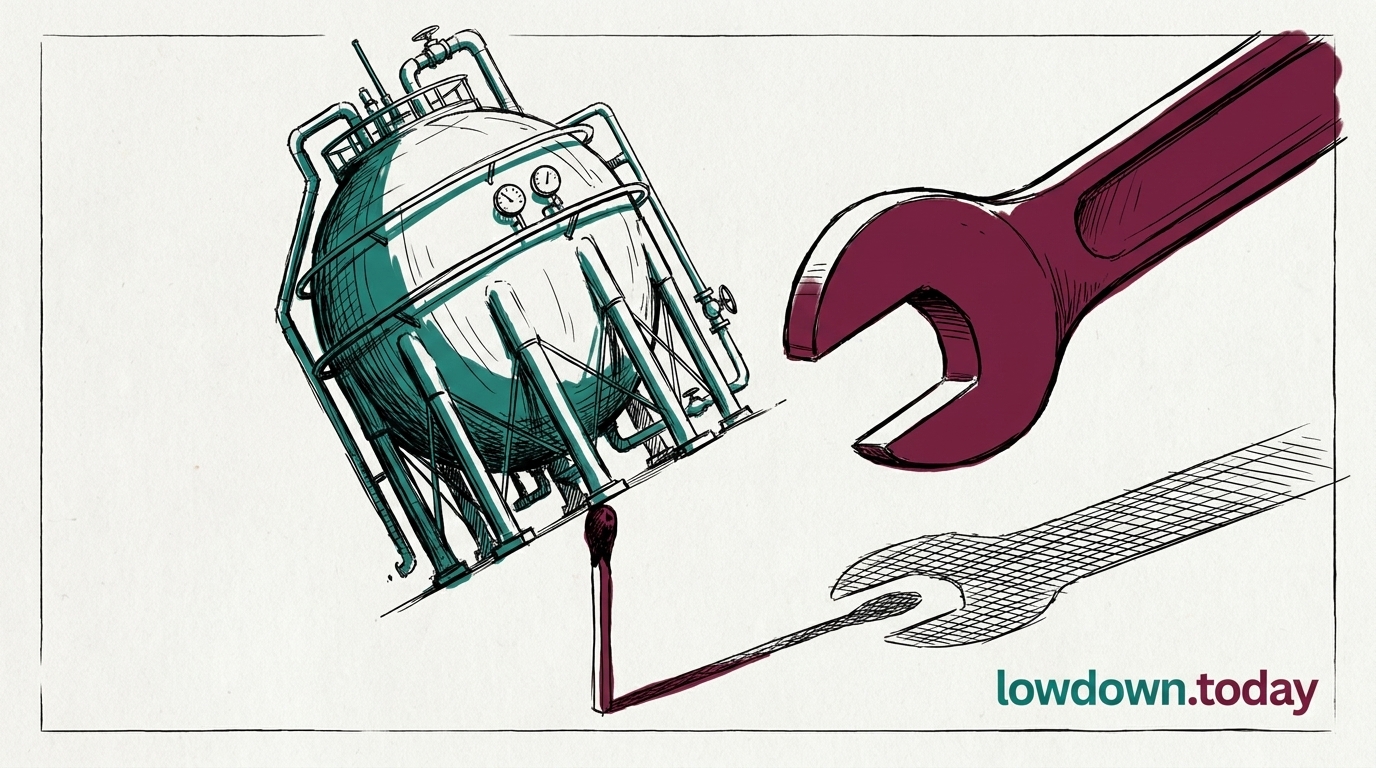
Germany ran roughly 0.50 pp/day over 22-24 May to 29.83% fill with no injection-incentive scheme, after Bloomberg reported on 20 May that Berlin will not intervene this summer.

EconomicDeveloping
Key takeaway

Germany fills with no scheme, so commercial injection would make it the leg that survives a TTF dip.

Germany ran roughly 0.50 pp/day over 22-24 May, climbing from 28.86% to 29.83% fill on net 1,242 GWh on the 24th, nearly double the 634 GWh booked on the 22nd, with no injection-incentive scheme in place after the storage levy lapsed on 1 January 1. Bloomberg reported on 20 May that Berlin will not intervene this summer and that the inverted strip leaves operators injecting against negative economics 2. Germany's 745 GWh/day season-high in April was a levy-era print; this rebound carries no state cover at all.

That creates the paradox the desk has to price. If Berlin will not pay and the strip pays nothing, what drove the volume doubling in two days? The candidate is the TTF break above EUR 50 , which gave commercial injectors a window to lock cost into an intraweek spike rather than book against a negative strip indefinitely.

The distinction matters for where the cleaner short sits. A mandate-funded leg reverses when the funding or the policy goes; a price-signal leg reverses only when the price does. If German operators stepped into the spike on a cost-lock rationale, German fill is the one leg that holds on a TTF retreat, and the short belongs on the compelled Dutch and French injection instead. The economics are not directly observable from fill data, so the German leg stays the ambiguous one in the thesis, sturdier than the headline fragility frame would suggest.


Deep Analysis

In plain English

Germany is Europe's biggest gas storage market. It uses enormous underground caverns to store gas in summer and draw it down in winter. This year, the German government decided not to offer any financial support to companies to encourage gas storage, unlike France, Italy, and the Netherlands, which are all paying or ordering companies to fill stores. Yet somehow German companies were injecting more gas than expected in late May 2026, reaching 29.83% fill. The likely explanation is a brief window earlier in May when gas prices spiked high enough that large companies decided to lock in supply costs for winter, even though summer gas was still technically more expensive than winter gas. Germany ended last winter with only 21% of its storage capacity filled, the worst level since 2018. Companies and analysts think that bad experience made German buyers more cautious this year and more willing to inject early, even at a small loss, to avoid a repeat shortage.

Deep Analysis
Root Causes

Germany's injection-without-subsidy paradox traces to the lapsing of its storage levy on 1 January 2026, combined with the EUR 50 TTF break on 18 May.

The storage levy, in effect through December 2025, required network users to fund a pool that reimbursed operators for injection at below-commercial spreads. Its lapse left commercial operators in Germany as the EU's only major unincentivised market, injecting purely on arbitrage economics.

The EUR 50 TTF break created a brief window in which operators could assess whether winter-weighted expectations justified storage entry. With the Bundesnetzagentur's early-warning gas stage active continuously since July 2025, large industrial users face regulatory pressure to maintain buffer supplies regardless of spread economics, making some injection effectively compulsory at the firm level even without a formal mandate.

The Bloomberg 20 May non-intervention confirmation closes off any expectation of a returning levy or new subsidy, meaning future German injection pace depends entirely on whether TTF re-offers a cost-lock window. At EUR 47-48 and below, commercial injection economics do not support sustained pace .

What could happen next?
  • Risk

    German commercial injection depends on opportunistic TTF spike windows rather than sustained arbitrage. A summer without another EUR 50 spike means German injection collapses back toward the EU mandate average pace, worsening the bloc-level fill trajectory.

  • Opportunity

    Germany's market-driven injection leg survives TTF dips that collapse mandate-funded legs in France, Italy, and the Netherlands. In a scenario where TTF falls to EUR 44-46, German commercial operators who locked cost at EUR 50 continue injecting while mandate economics deteriorate in other markets.

First Reported In

Update #12 · EU refill doubles on mandates as TTF fades

Gas Infrastructure Europe· 26 May 2026
Read original
Different Perspectives
Amsterdam-Rotterdam gas trading desks
TTF failing to sustain EUR 47+ with 51 mcm/day of Norwegian capacity offline confirms EUR 50 as a diplomatic ceiling; the curve is a Troll-restart long, and EBN's EUR 233 million mandate budget cap is a known limit on price-insensitive prompt buying.
ARERA
ARERA
Italy's energy regulator is running mandatory storage injection that carries the EU aggregate trajectory alongside CRE and EBN, while Italian industrial consumers at Panigaglia face a simultaneously low-utilisation terminal and a EUR 2/MWh delivered-cost basis above TTF. The mandate funds security of supply at the expense of Italian competitiveness.
Shell
Shell
As a long-term Russian LNG contract holder, Shell faces a replacement procurement problem concentrated in Q3-Q4 2026 ahead of the 1 January 2027 double cliff; with terminal booking lead times running weeks, the real deadline is late November 2026 and no replacement supply has been publicly named.
CRE
CRE
France's 100% mandatory booking order funds injection regardless of the inverted strip, providing the EU aggregate cover that Germany's abolished levy cannot; the CRE order is renewed annually, making it a political risk rather than a structural guarantee. That dependency exposes the EU injection trajectory to French electoral cycles.
Bundesnetzagentur
Bundesnetzagentur
Germany's regulator holds the early-warning gas stage active with no statutory instrument to compel commercial injection, and Berlin confirmed on 20 May it will introduce no summer incentive scheme; Germany is the EU's only major unincentivised storage market after the levy lapsed on 1 January 2026. The mandate gap is carried by three other member states.
European Commission
European Commission
The Commission relaxed the mandatory fill target from 90% to 80% and published an ETS benchmark revision saving industry EUR 4 billion, choosing industrial competitiveness over both climate and storage ambition at the moment physical margins are tightest. Both decisions reduce policy pressure at the exact week the trajectory margin narrowed to 45 GWh/day.
