Skip to content
Briefings are running a touch slower this week while we rebuild the foundations.See roadmap
Drones: Industry & Defence
13APR

DJI puts $1.56bn on Ninth Circuit record

3 min read
13:26UTC

DJI filed its Opposition Brief in Ninth Circuit Case 26-1029 on 22 April, quantifying $1.56 billion of 2026 losses and asking the court to hold the case in abeyance for six months.

TechnologyDeveloping
Key takeaway

DJI's $1.56 billion quantifies the gap US enterprise drone makers are sized against; abeyance freezes the field through November.

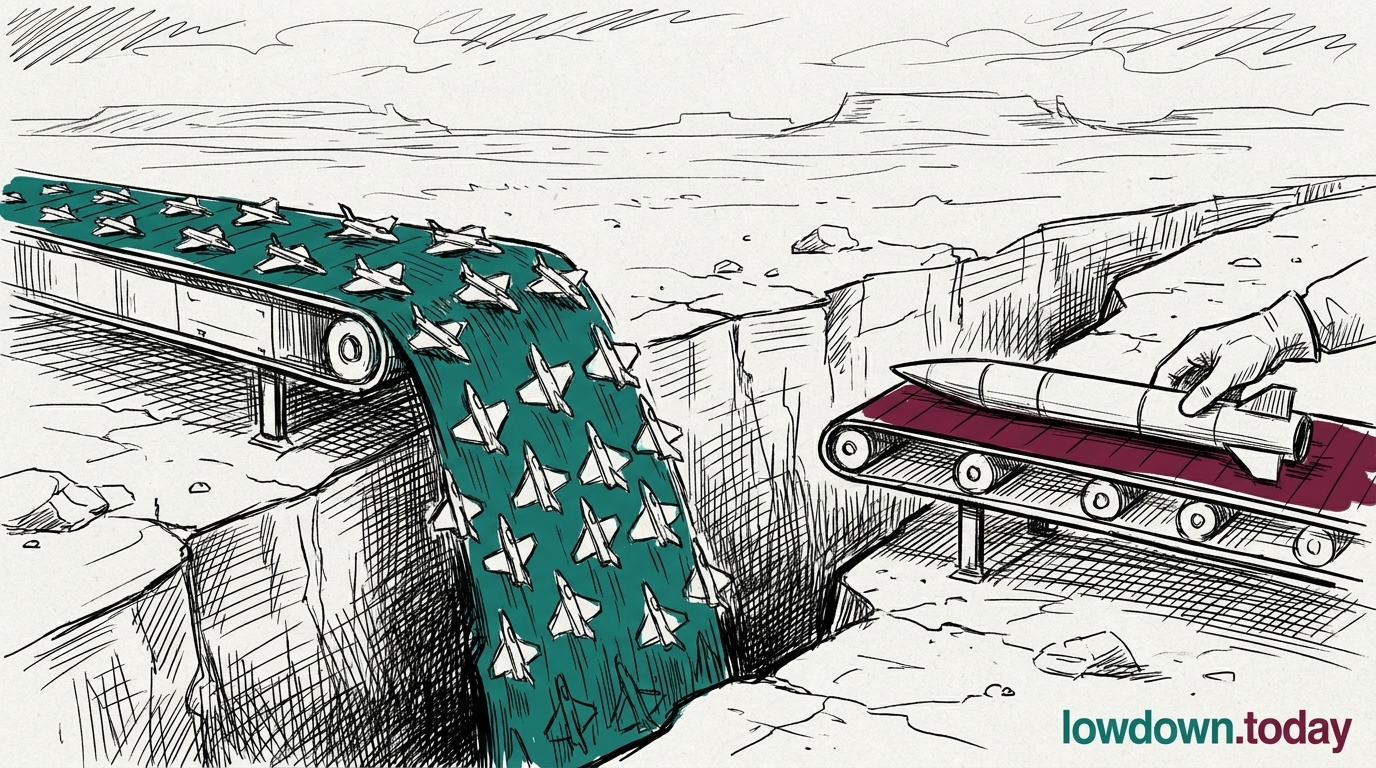
DJI (Da-Jiang Innovations) filed its Opposition Brief in Ninth Circuit Case 26-1029 on Wednesday 22 April, putting $1.56 billion of 2026 losses on the record: $700 million from fourteen existing products whose Federal Communications Commission (the US radio-spectrum regulator, FCC) authorisations have been set aside, and $860 million from twenty-five new products it cannot launch in the United States this year 1. Each month the abeyance runs is roughly $130 million in foregone DJI revenue, which means the addressable market for Skydio, Autel Robotics' litigation-blocked replacements, and any domestic enterprise drone maker that can certify by year-end keeps growing. The brief asks the court not to rule on the merits but to deny the FCC's motion to dismiss, hold the case in abeyance for six months, and require a status report in November 2026.

The number puts a dollar figure on the gap that Federal Acquisition Regulation (FAR) clause 52.240-1, which bars Chinese-manufactured drones from federal contracts, opened in March , and that the Department of Defense classified annex widened on 3 April . DJI cannot contest the classified evidence used to justify its exclusion; that procedural reality is why the brief asks for time rather than judgment.

DJI is deliberately stretching the litigation calendar past the FY2027 appropriations cycle and into the post-election political window. The November 2026 status report aligns with the appropriations timeline for the FY2027 NDAA, which is when any DJI-favourable carve-out would have to land. DJI is preserving optionality on a future administration's regulatory posture rather than betting on judicial reversal in the Ninth Circuit, where the procedural deck favours the FCC's classified-evidence shield.

The six-month abeyance freezes the US regulatory situation through October, structurally protecting Skydio, Autel's parallel litigation, and any domestic enterprise drone maker now sized against the $1.56 billion commercial vacuum the Pentagon's positive number is helping to fill. Autel's parallel Ninth Circuit case will inherit the DJI procedural template. Sceptics will note that DJI's $1.56 billion estimate is a self-asserted figure in a court filing rather than independently audited; the underlying product-level revenue figures are not separately disclosed, and a litigation pause is not the same as a regulatory reprieve.

Deep Analysis

In plain English

DJI, the Chinese company that makes roughly two-thirds of the world's commercial drones, is banned from selling new products in the United States. The ban comes from a US government list of companies deemed security risks. DJI filed documents in a US appeals court on 22 April showing the ban has cost it $1.56 billion in sales in 2026 alone. DJI is asking the court to pause the case for six months rather than rule on it now. The company cannot challenge the secret evidence the US government used to justify the ban. By asking for a delay until November 2026, DJI is betting that political conditions may change; perhaps after the US midterm elections; in a way that makes the ban easier to reverse.

Deep Analysis
Root Causes

DJI's US market exclusion rests on three independent legal layers that compound each other. First, the FCC Covered List designation revoked DJI's equipment authorisations under the agency's national-security authority.

Second, the DoD classified annex added a separate military classification basis that DJI cannot contest under FOIA. Third, FAR clause 52.240-1 bars Chinese-manufactured drones from federal contracts, removing the federal procurement channel even if the FCC Covered List were reversed.

The layering is deliberate: each layer has a different legal basis, a different agency, and a different litigation timeline. DJI would need to win at the FCC, in the DoD declassification process, and in FAR rulemaking simultaneously to restore full US market access; a coordination burden no single litigation strategy can address.

What could happen next?
  • Risk

    If the Ninth Circuit denies the abeyance request and rules on the merits before November 2026, DJI faces a likely adverse judgment that would permanently close the judicial reversal path and leave only the congressional or executive regulatory route.

    Short term · 0.65
  • Opportunity

    Skydio and other domestic drone manufacturers that can certify new enterprise-grade products before November 2026 will capture demand that DJI's price point previously held, with no near-term prospect of DJI re-entering as a competitor.

    Short term · 0.8
  • Precedent

    Autel Robotics' parallel Ninth Circuit case will adopt the DJI abeyance template. If DJI's six-month pause is granted, Autel's legal team will use the same procedural argument, effectively coordinating the two cases into a shared political timeline.

    Medium term · 0.72
First Reported In

Update #7 · DAWG jumps 24,000% as Anduril sweeps board

DroneXL· 30 Apr 2026
Read original
Different Perspectives
Chinese drone manufacturers (DJI, Autel)
Autel's Ralls Corp Fifth Amendment filing and DJI's Ninth Circuit quantification of USD 1.56 billion in 2026 losses are parallel constitutional attacks on a classified-evidence exclusion mechanism; neither company can contest the intelligence allegations directly, so both are betting on due-process doctrine to reopen the FCC authorisation route.
Ukraine (SSEC export regulator)
Baltic states bought Lithuanian Merops and Swedish LVKV 90 stopgaps while Ukraine's cheapest combat-proven interceptors at USD 2,100 to USD 2,500 per unit remain legally blocked under EU conflict-aggravation rules; Perennial Autonomy, built on Ukrainian combat data, can now sell via Munich while direct Ukrainian sales to the same buyers remain prohibited.
Helsing
Helsing
HX-2 combat-proven status, a EUR 1.46 billion German framework, an $18 billion valuation, and the OHB space JV together constitute the first credible European counterweight to Anduril's US stack. The critical test is whether European procurement offices can maintain sovereign AI discipline under operational urgency, or default to the US integration speed that drove the Netherlands Lattice decision.
Anduril Industries
Anduril Industries
A USD 61 billion valuation on USD 2.2 billion revenue prices in the assumption that Lattice becomes the default Western counter-drone software layer. The Netherlands adoption and Project NYX inclusion suggest the architecture bet is converting; the S-1 filing window opens when quarterly growth sustains the 27x multiple.
European Union
European Union
The EUR 115 million AGILE programme was designed before Baltic states began emergency national purchases worth ten times the total EU budget; calling for coordination on 26 May after each country had signed contracts is not a procurement policy, it is a statement of concern with no enforcement teeth.
UK Ministry of Defence
Britain has committed GBP 752 million to Ukraine drones, GBP 115 million to Hormuz, APKWS to Gulf combat, and three concurrent procurement programmes, all driven by the same operational pressure. Project NYX and Corvus together set the British Army's drone architecture through 2036; the autumn down-select will reveal whether Washington or London holds the architectural preference.
