Ninth Circuit Case 26-1029
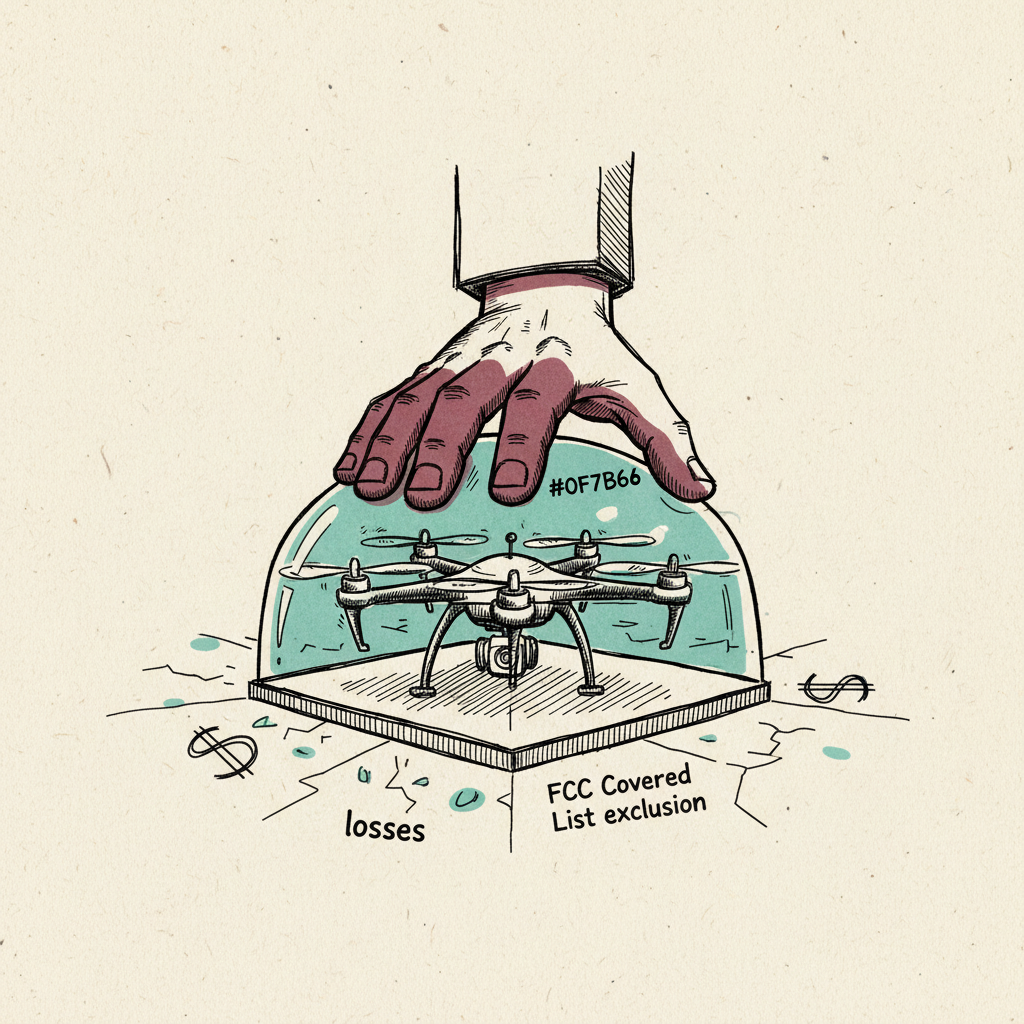
DJI's Ninth Circuit appeal challenging its FCC Covered List exclusion; seeking to contest $1.56 billion in 2026 losses.
Last refreshed: 30 April 2026
Can DJI legally challenge its US market ban in the courts?
Timeline for Ninth Circuit Case 26-1029
Mentioned in: DJI puts $1.56bn on Ninth Circuit record
Drones: Industry & DefenceBackground
Ninth Circuit Case 26-1029 is DJI's federal appellate challenge against its placement on the FCC's Covered List, which has barred the company from certifying new products for the US market. DJI filed its Opposition Brief in the case on 22 April 2026, quantifying $1.56 billion in 2026 losses: $700 million from fourteen existing products whose FCC authorisations were set aside, and $860 million from twenty-five new products that DJI cannot launch in the United States in 2026. DJI requested the Court deny the FCC's motion to dismiss, hold the case in abeyance for six months, and require a status report in November 2026.
The case is complicated by the Department of Defense's filing of a classified intelligence annex on 3 April 2026 opposing DJI's FCC petition. The existence of classified evidence that DJI's legal TEAM cannot review creates a structural asymmetry: the Court must weigh national security claims it cannot fully disclose against quantified commercial harm that DJI has placed on the public record. The Ninth Circuit's handling of this tension will set a precedent for how classified national-security intelligence can be used to sustain regulatory exclusions against foreign technology companies without full due process transparency.
The case represents the judicial dimension of a multi-layered US regulatory effort to exclude Chinese drone technology from the domestic market, which also includes FAR clause 52.240-1 (federal contract bar) and the Section 232 tariff investigation. A Ninth Circuit ruling in DJI's FAVOUR would require the FCC to reconsider its Covered List placement but would not automatically resolve the other regulatory barriers, which rest on separate legal bases. An adverse ruling would confirm the exclusion and potentially establish the classified-annex mechanism as a viable tool for future foreign-technology bans.
What is DJI's Ninth Circuit case about?
Why can't DJI sell drones in the United States?
How much is the US drone ban costing DJI?
What is the classified annex in the DJI FCC case?

