Skip to content
You can now search across every topic, entity and event.What's new
Drones: Industry & Defence
4APR

EHEL laser contest slips to Q4 FY26

2 min read
20:57UTC

The Army's EHEL competition winner selection has slipped from Q2 to Q4 FY26, delaying directed-energy counter-drone fielding as kinetic intercept costs mount.

TechnologyDeveloping
Key takeaway

EHEL delay extends dependence on high-cost kinetic interceptors as Gulf attrition accelerates.

The US Army's EHEL (High Energy Laser) competition winner is now expected no earlier than Q4 FY26, a two-quarter delay from the Q2 FY26 timeline reported in Update #4. AeroVironment is preparing an entrant, adding competitive pressure to what had been a narrow field.

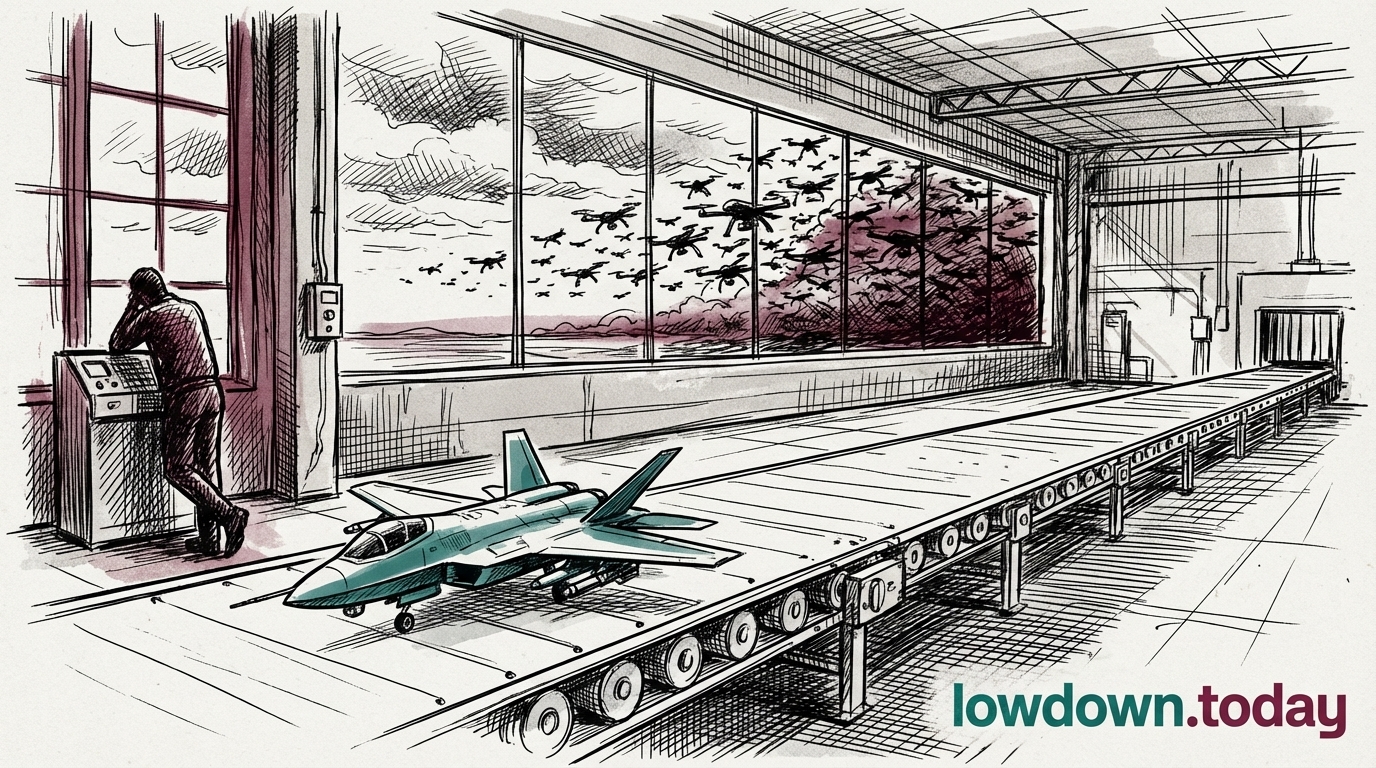
The slip carries operational weight. Every month that EHEL selection is delayed extends dependence on kinetic interceptors whose cost-per-engagement is structurally unsustainable against Iranian drone swarms. LOCUST X3 demonstrated a $5 per engagement cost against Group 1 to Group 3 drones ; a PAC-3 MSE round costs millions. Gulf attrition rates are consuming these expensive interceptors faster than industry can produce them.

AeroVironment's entry into both the EHEL directed-energy competition and the Lethality Prize kinetic ecosystem (see Event 13) is a portfolio hedge. The company's $135 million in recent Army contracts established both a production baseline and a cost benchmark that EHEL candidates will be measured against. Qualifying on both fronts would give AeroVironment coverage across the kinetic and directed-energy counter-drone markets simultaneously.

For programme managers, the Q4 FY26 timeline creates a six-month window during which fielding expectations must be revised against actual Gulf consumption rates. The demand signal is not waiting for the competition to conclude.

Deep Analysis

In plain English

The US Army was developing a powerful laser weapon called EHEL designed to shoot down drones cheaply. A laser costs roughly $5 per shot; current missile interceptors cost millions. The Army expected to pick a winner from competing companies by the middle of this year, but that decision has now been pushed to at least October 2026. Every month of delay means the Army stays dependent on expensive missiles to shoot down cheap drones. In the Gulf, this cost difference adds up quickly when you are intercepting hundreds of drones per day. A company called AeroVironment is now entering the competition, which may be one reason the timeline shifted.

What could happen next?
  • Risk

    A further slip from Q4 FY26 into FY27 would extend kinetic-only counter-drone dependence through an additional budget cycle, creating pressure to fund more kinetic interceptor production rather than waiting for directed-energy solutions.

  • Opportunity

    AeroVironment's dual positioning in both the EHEL directed-energy competition and the Lethality Prize kinetic ecosystem means it can capture revenue regardless of which intercept technology dominates the next procurement cycle.

First Reported In

Update #5 · Gulf drone war rewrites procurement

Defence Online· 13 Apr 2026
Read original
Different Perspectives
Australian Department of Defence
The $6.9 million counter-drone award to DZYNE, part of Ondas's $70 million order book, is a funded delivery against a real budget line while most of Farnborough's reveals carry no disclosed contract value.
Baykar
Baykar
Astore Levante extends the Bayraktar TB3 into a European joint venture the same way the Kizilelma export deal opened Indonesian production, treating proven Turkish airframes as the basis for allied manufacturing rather than new design programmes.
Leonardo
Leonardo
Declaring LBA Systems fully operational converts a Turkish export relationship into Italian production lines for Astore Levante, giving Italy a domestic combat-drone manufacturing base without funding a new airframe from scratch.
Minneapolis City Council (Vice President Jamal Osman)
The council killed a free Skydio trial 6-6 over the company's Israeli and ICE sales, not its drone-as-first-responder technology. It sets a precedent that other councils evaluating DFR vendors will now have to weigh alongside cost and capability.
UK Ministry of Defence
BAE's Brontanax reveal at Farnborough runs alongside the MoD's own Project NYX and Project Corvus competitions, neither of which has named Brontanax a winner. A demonstrator and a £300 million programme name are not yet a production order.
Procurement sceptics
Two identically sized IDIQs to different primes within seven weeks, and a five-nation pact where one partner moves weeks ahead of the rest, could just as easily read as an industrial base still improvising vendor mix as a deliberate hedging doctrine. Neither ceiling appears sized against a validated requirement yet.