Skip to content
Drones: Industry & Defence
30MAR

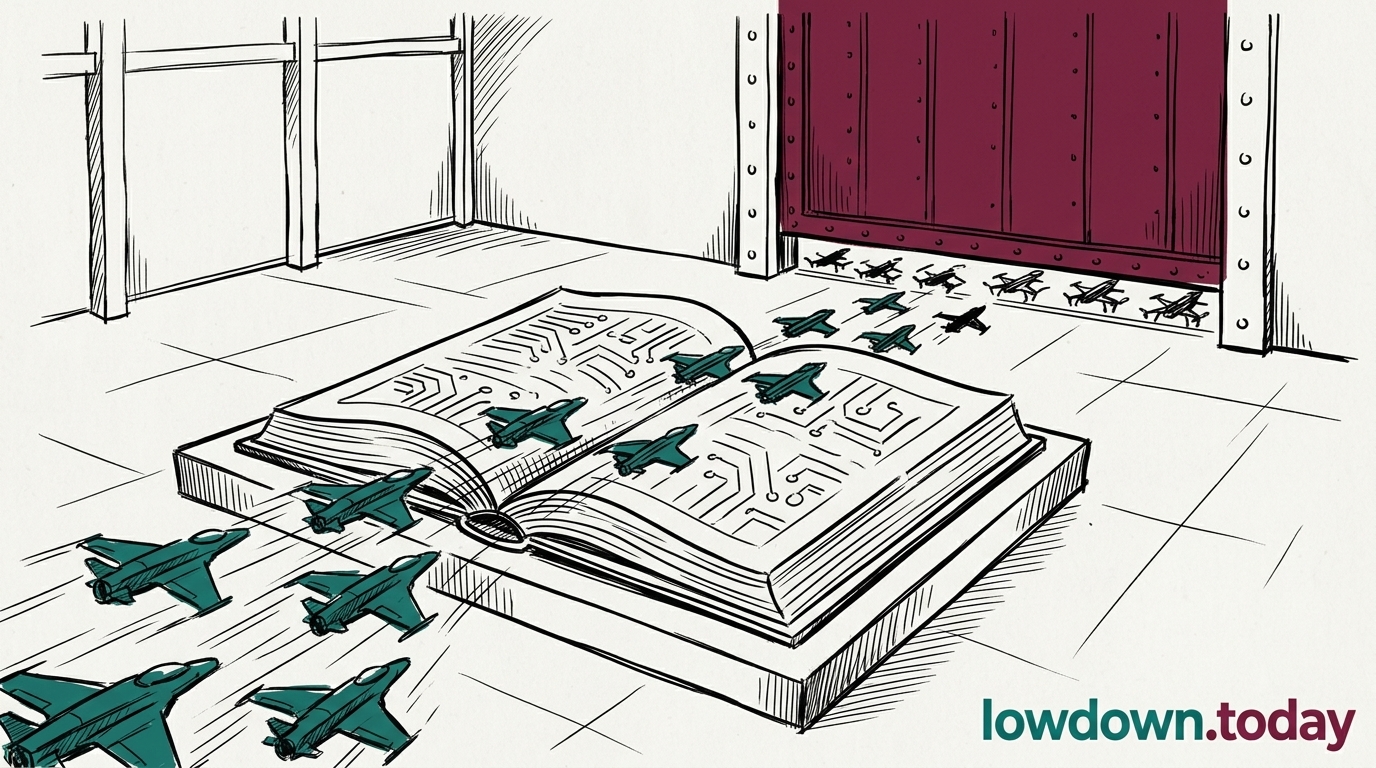
Section 232 drone tariff deadline passes

2 min read
20:09UTC

The 270-day statutory clock on a Section 232 probe into drone imports expired with no public decision. Tariffs could reshape component economics overnight.

TechnologyAssessed
Key takeaway

A potential tariff decision on drone imports remains pending past its statutory deadline.

The Section 232 investigation into UAS imports, opened in July 2025, reached its 270-day statutory deadline around late March 2026 with no public tariff decision announced.1

No announcement does not mean no action. If tariffs are imposed, the 38% of Ukrainian drones still built with Chinese parts face an immediate cost shock. So do US integrators sourcing motors, flight controllers, and sensors from Shenzhen. Combined with FAR 52.240-1's procurement ban , the regulatory environment is tightening on two fronts simultaneously: procurement exclusion and potential import duties. Manufacturers have a narrowing window to secure alternative suppliers.


Deep Analysis

In plain English

A Section 232 investigation is a US trade inquiry into whether a particular import poses a national security risk. It normally leads to tariffs or quotas within 270 days. The deadline passed with no announcement. This is legally permissible, but unusual. The silence means drone manufacturers and importers cannot plan their supply chains because a major cost increase could arrive with short notice. The most immediate effect is uncertainty. Companies buying or selling drones that contain Chinese parts do not know whether those components will become 25% or 50% more expensive within weeks.

Deep Analysis
Root Causes

The investigation was opened in July 2025 under the Biden-to-Trump transition, with the incoming administration inheriting an investigation that had commercial and security dimensions it had not designed. The silence at the deadline reflects genuine policy uncertainty: tariffs high enough to affect Chinese manufacturers would raise costs for US commercial drone operators who have no domestic alternative for sub-$500 components.

The UAS industry also has an unusually fractured lobbying structure. Defence prime contractors favour tariffs; commercial integrators oppose them; component manufacturers are largely absent from the US market. The administration faces a lobbying coalition that cannot agree on what policy it wants.

What could happen next?
  • Risk

    Companies dependent on Chinese drone components face an unquantifiable tariff risk, making long-term supply chain planning impossible until a decision is announced.

    Immediate · High
  • Consequence

    If tariffs above 25% are imposed, the US consumer drone market would shrink materially as entry-level price points become unviable without Chinese components.

    Short term · Medium
  • Opportunity

    European drone component manufacturers have a narrow window to establish US supply chain relationships before any tariff announcement forecloses the market to new entrants.

    Short term · Medium
First Reported In

Update #3 · Anduril wins $20 billion counter-drone deal

White & Case LLP· 30 Mar 2026
Read original
Different Perspectives
Anduril
Anduril
Anduril views consolidated procurement as enabling rapid scaling — the $20 billion enterprise contract replaces 120 separate Army contracts with a single vehicle. Arsenal-1's early opening positions it to argue manufacturing readiness that CCA competitors cannot yet demonstrate.
Ukrainian drone manufacturers
Ukrainian firms have battle-tested interceptors priced at $2,100–$2,500 per unit and demand from 11 nations, but the wartime export ban forces partnerships with Western firms rather than direct sales.
IISS
IISS
IISS characterises drone innovation in the Russo-Ukrainian war as adaptation within existing military paradigms rather than a transformation of warfare — a more cautious assessment than the Pentagon's procurement urgency suggests.
US Pentagon, Anduril and Shield AI
The Pentagon awarded Anduril a $20 billion enterprise vehicle and confirmed Gauntlet II's live EW red team, prioritising procurement speed over competition; Anduril began YFQ-44A production four months early. Shield AI countered by raising $2 billion and validating Hivemind on a European airframe, betting multi-platform interoperability hedges against Anduril's platform lock.
Volodymyr Zelenskyy / Ukraine
Zelenskyy publicly disclosed that 10 shadow drone factories have been built abroad to circumvent Ukraine's wartime export ban, signed 10-year defence deals with Saudi Arabia and Qatar, and deployed 228 specialists across five Gulf states. The disclosure is a calculated signal that the ban is fracturing and Kyiv is seeking revenue structures independent of Western aid.
Saudi Arabia
Saudi Arabia
Saudi Arabia signed a 10-year defence deal with Ukraine and accepted the deployment of Ukrainian counter-drone specialists the US declined to partner on in August 2025. The Gulf pivot reflects Riyadh's assessment that Ukrainian combat-proven doctrine at $2,500 per interceptor is more cost-effective than Patriot-dependent air defence.