Skip to content
You can now search across every topic, entity and event.What's new
Drones: Industry & Defence
19MAR

Drone Tariff Deadline Passes in Silence

2 min read
08:30UTC

The statutory clock expired. Commerce said nothing. The industry built for tariffs that may never arrive.

TechnologyAssessed
Key takeaway

The 270-day tariff deadline expired without action, leaving drone import policy in limbo.

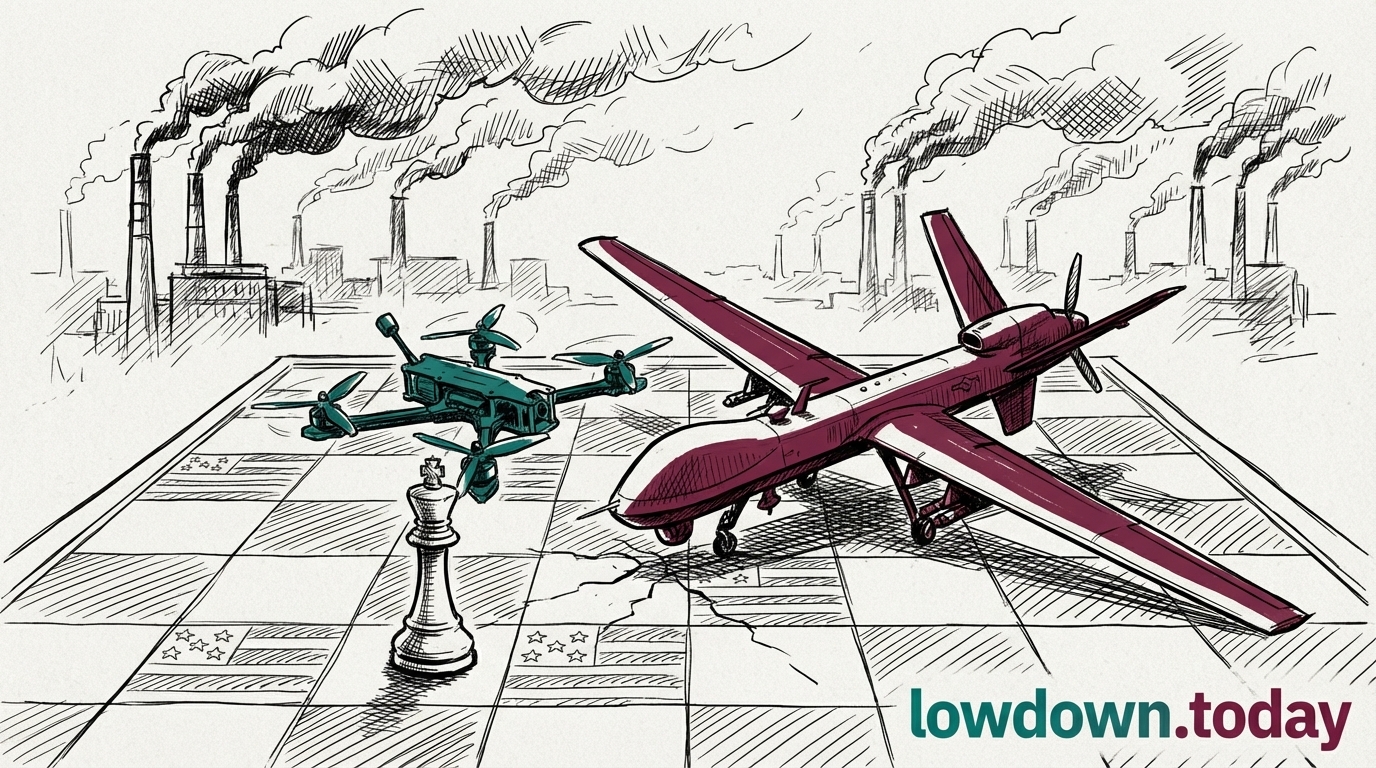
The Section 232 national security investigation into UAS imports, opened by the Commerce Department in July 2025, passed its 270-day statutory deadline on approximately 28 March 2026 . No report has been transmitted to the President. No tariff has been announced. 1

The administration's 2 April proclamation reinforced tariffs on steel, aluminium, and copper. It did not mention drones. 2 Even if the report were delivered this week, the President has 90 days to act, pushing any decision into summer at the earliest. For domestic drone manufacturers who invested in China-free supply chains expecting imminent protection, the silence is a material negative signal. For commercial operators still sourcing Chinese components, it is a temporary reprieve. Combined with FAR 52.240-1's procurement ban , the regulatory environment is tightening on one front while stalling on another.

Deep Analysis

In plain English

The US government opened an investigation in 2025 to decide whether to impose tariffs on drones imported from China, on national security grounds. The investigation had a legal deadline of 270 days. That deadline passed in late March 2026 with nothing announced. No report, no tariffs, no explanation. The administration's April tariff announcement covered metals but not drones. This matters because US companies who invested in building drone parts locally, expecting tariff protection from cheaper Chinese competitors, now face continued price competition without the protection they planned for.

Deep Analysis
Root Causes

The Section 232 investigation was opened in July 2025 alongside similar investigations into semiconductors, pharmaceuticals, and commercial aircraft. The Commerce Department's Bureau of Industry and Security faces limited bandwidth to complete multiple complex investigations simultaneously, and drone tariffs scored lower priority against sectors with larger domestic constituencies.

Domestic drone manufacturers who invested in China-free supply chains based on tariff expectations face a compounded risk: the FAR 52.240-1 procurement ban reduces Chinese competition in government contracts, but commercial markets remain open to Chinese components, which are cheaper by 40-60% for motors, flight controllers, and sensors.

What could happen next?
  • Even if a Commerce report is delivered in April 2026, presidential action cannot occur before late July 2026, meaning tariffs remain months away at minimum.

  • Domestic component manufacturers without government contract revenue will face increasing margin pressure from commercial operators continuing to source Chinese parts.

First Reported In

Update #4 · Factories Under Fire: America's Drone Gap Meets Reality

Army Recognition· 4 Apr 2026
Read original
Causes and effects
This Event
Drone Tariff Deadline Passes in Silence
The expired deadline without action signals the administration may be quietly deprioritising drone tariffs, leaving domestic manufacturers without expected trade protection.
Different Perspectives
South Korea's Defense Acquisition Program Administration
DAPA folded drone and roadside-bomb jammers into an 18-year, KRW 3.448 trillion K2 tank upgrade approved 11 August, rather than fund counter-drone kit as its own programme. Seoul is treating the threat as permanent enough to write into a platform's lifecycle, not urgent enough to buy ahead of it.
NATO Support and Procurement Agency
NSPA named five pre-qualified counter-drone suppliers under new framework contracts on 27 July, giving allies a purchasing route with no published budget attached. A framework without committed money is an instrument waiting for a spending decision, not a guarantee one is coming.
Ukraine's Ministry of Defence
Ukraine's forces strike with more than 70 AI and computer-vision systems drawn from over 200 domestic producers, the ministry said on 18 August, a supplier base neither Washington's tariff fight nor Beijing's export licence touches. Kyiv is scaling capability faster than either government is writing rules for it.
A European drone-component manufacturer
A European manufacturer selling components into the United States faces the same 100 per cent tariff and 3 September deadline as any other foreign supplier, with the duty-free onshoring carve-out available only to firms building on American soil. That leaves it to absorb the cost, relocate assembly, or cede the US market rather than shop around a rival supply chain.
Chinese drone component exporters
Exporters now need a case-by-case licence for each US-bound dual-use shipment after MOFCOM's 5 August order, with no published review clock. The same week Shenzhen logged nearly 200,000 domestic logistics-drone sorties and Hunan reported record spraying coverage, a home market large enough to absorb what the licence regime slows from leaving the country.
US drone manufacturers
The onshoring carve-out protects Performance Drone Works' $820 million War Department loan, but the same 3 September deadline hits Red Cat Holdings and Unusual Machines, both filing over 500 per cent revenue growth on 6 August, on Chinese-sourced components with no qualified domestic substitute yet.
