Skip to content
You can now search across every topic, entity and event.What's new
Drones: Industry & Defence
20AUG

Iran got 800 interceptors; Ukraine 700

2 min read
16:38UTC

Eight hundred missiles consumed in three days of the Iran war exceeded everything Ukraine received over the entire winter, exposing a production bottleneck that cannot be resolved in under a year.

TechnologyDeveloping
Key takeaway

US interceptor production cannot sustain two simultaneous high-intensity air defence campaigns.

Zelenskyy told the BBC on 26 March that 800 US-made interceptors were consumed in three days of the Iran war, compared to 700 Ukraine received over its entire winter 1. The United States produces only 60 to 65 Patriot missiles per month.

Replacing the 800 rounds burned in Iran takes 12 to 13 months at current production rates. Zelenskyy's earlier observation that more Patriot interceptors were used in three days of the Iran war than Ukraine received in three years was a rhetorical comparison; the 26 March figures make it arithmetic. The THAAD expenditure of 100 to 150 rounds in the first week compounds the shortfall across a second interceptor class.

Zelenskyy confirmed that deliveries to Ukraine have not stopped. But the trajectory is clear: the $750 million PURL diversion notified the same day signals Washington is prioritising restocking over resupply. France's commitment of eight SAMP/T NG air defence systems becomes a more important stopgap with each week the American production bottleneck persists.

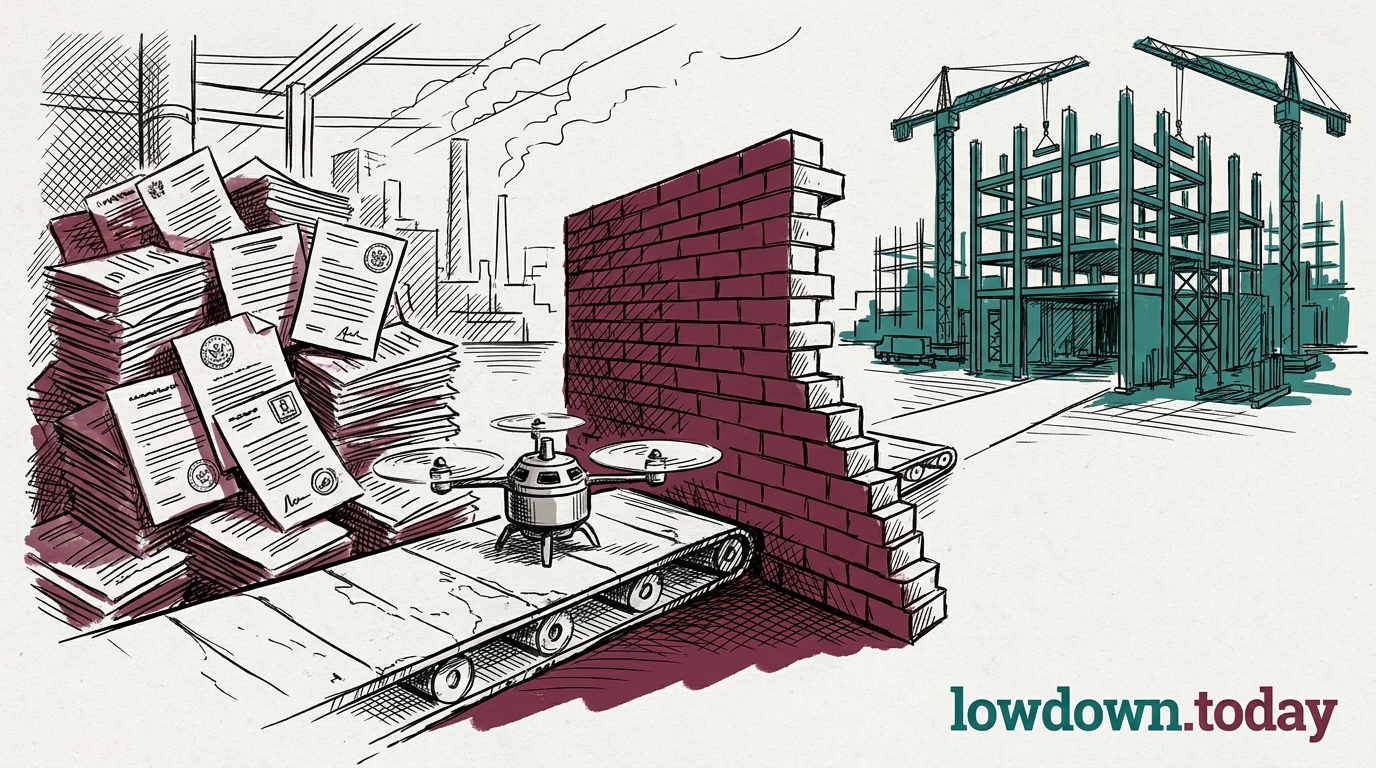
The production constraint is physical, not political. Propellant, seeker heads, and testing capacity all take 18 months to surge. No amount of congressional goodwill changes the number of missiles that leave the factory floor each month.

Deep Analysis

In plain English

Imagine there are only 65 bullets produced each month for a very expensive gun. Ukraine was given 700 over the whole winter. Then, separately, 800 were fired in just three days during the Iran war. Zelenskyy is pointing out the maths: the US cannot supply both wars at once. The gun that protects Ukraine from Russian drones uses the same bullets being spent in the Middle East. Until production speeds up — which takes 12-18 months at minimum — one theatre will go short.

Deep Analysis
Root Causes

The interceptor shortage has two structural roots.

US Patriot missile production was scaled for Cold War deterrence scenarios, not sustained multi-theatre high-intensity conflict. The production bottleneck — propellant chemistry, seeker head manufacturing, and qualification testing — cannot be surged quickly. Raytheon has stated publicly that 18 months is the minimum lead time for a significant production increase.

The Iran war created demand that was structurally unpredictable in Western defence planning. NATO procurement cycles operate on 5-10 year horizons; simultaneous high-intensity air defence campaigns across two separate theatres were not in the baseline scenario for Patriot allocation planning.

First Reported In

Update #8 · Pentagon diverts funds; 948 drones fired

Ukrainska Pravda· 27 Mar 2026
Read original
Different Perspectives
South Korea's Defense Acquisition Program Administration
DAPA folded drone and roadside-bomb jammers into an 18-year, KRW 3.448 trillion K2 tank upgrade approved 11 August, rather than fund counter-drone kit as its own programme. Seoul is treating the threat as permanent enough to write into a platform's lifecycle, not urgent enough to buy ahead of it.
NATO Support and Procurement Agency
NSPA named five pre-qualified counter-drone suppliers under new framework contracts on 27 July, giving allies a purchasing route with no published budget attached. A framework without committed money is an instrument waiting for a spending decision, not a guarantee one is coming.
Ukraine's Ministry of Defence
Ukraine's forces strike with more than 70 AI and computer-vision systems drawn from over 200 domestic producers, the ministry said on 18 August, a supplier base neither Washington's tariff fight nor Beijing's export licence touches. Kyiv is scaling capability faster than either government is writing rules for it.
A European drone-component manufacturer
A European manufacturer selling components into the United States faces the same 100 per cent tariff and 3 September deadline as any other foreign supplier, with the duty-free onshoring carve-out available only to firms building on American soil. That leaves it to absorb the cost, relocate assembly, or cede the US market rather than shop around a rival supply chain.
Chinese drone component exporters
Exporters now need a case-by-case licence for each US-bound dual-use shipment after MOFCOM's 5 August order, with no published review clock. The same week Shenzhen logged nearly 200,000 domestic logistics-drone sorties and Hunan reported record spraying coverage, a home market large enough to absorb what the licence regime slows from leaving the country.
US drone manufacturers
The onshoring carve-out protects Performance Drone Works' $820 million War Department loan, but the same 3 September deadline hits Red Cat Holdings and Unusual Machines, both filing over 500 per cent revenue growth on 6 August, on Chinese-sourced components with no qualified domestic substitute yet.
