Skip to content
You can now search across every topic, entity and event.What's new
Drones: Industry & Defence
20AUG

EU drops consortium rule for AGILE fund

2 min read
16:38UTC

The EU unveiled its €115 million AGILE defence technology programme, the first to allow single-company applications without requiring multinational consortia.

TechnologyDeveloping
Key takeaway

Removing the consortium requirement could accelerate European defence technology deployment by years.

The European Union unveiled the €115 million AGILE (Accelerated Government Innovation for Lethality and Effectiveness) defence technology programme on 7 April. For the first time, a single company can apply directly without forming a multinational consortium. The programme awaits European Parliament and Council approval.

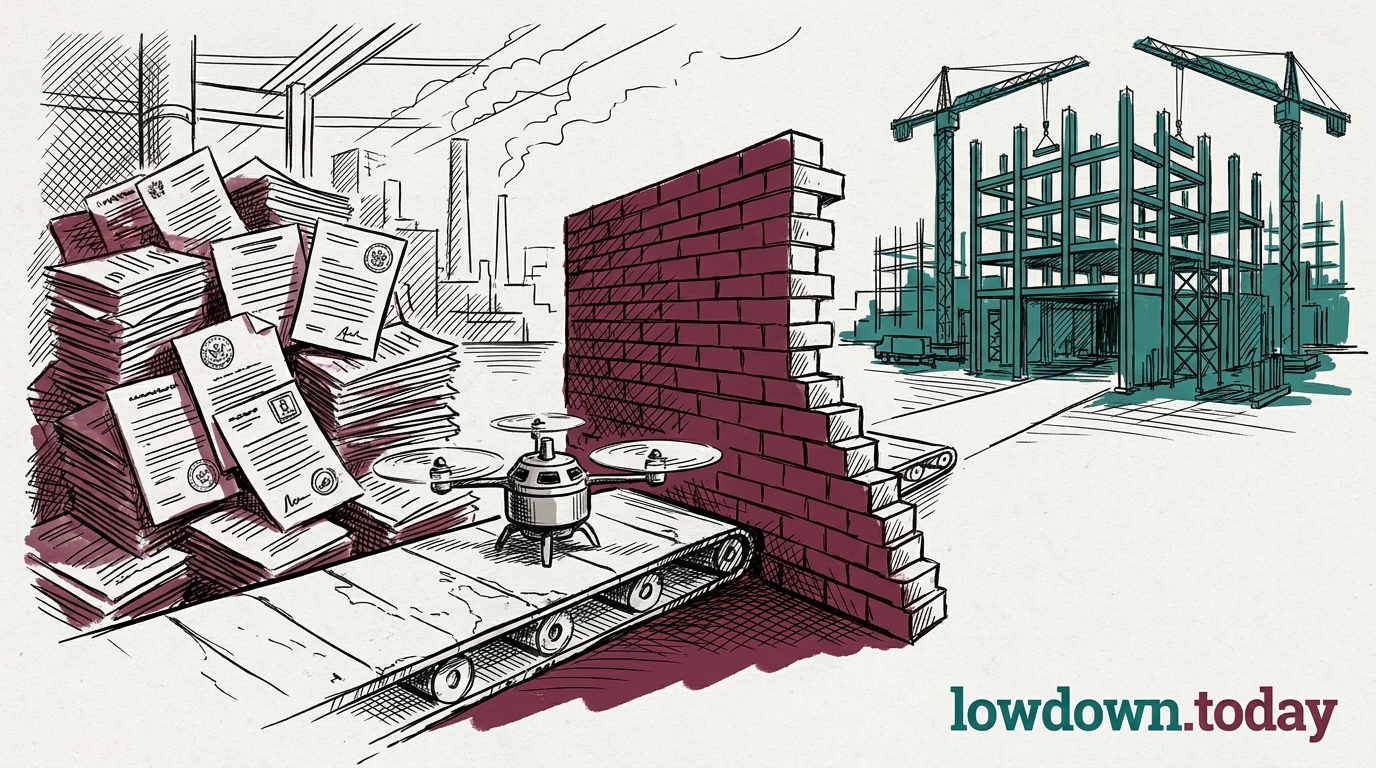
The consortium requirement has historically added months or years to EU defence procurement timelines. Removing it is a structural change to how European defence technology reaches the market. If AGILE passes in its current form, it establishes a precedent for direct EU-to-company contracts that bypasses the national industrial politics constraining capability development across the bloc.

The €115 million pilot is modest relative to Britain's £4bn commitment and the Pentagon's multibillion-dollar Drone Dominance programme. The procedural innovation matters more than the sum: 20 to 30 projects at €1 to €5 million each, with shorter evaluation timelines and retroactive funding for completed work. For European drone startups that previously had no route into EU-level defence procurement, AGILE creates an addressable market that did not exist before.

AGILE arrives weeks after Gulf conflict escalation and DroneShield's Amsterdam headquarters opening . Gulf conflict dynamics are reshaping institutional procurement rules that Brussels had previously treated as politically fixed. Whether Parliament and Council approve the programme without reinstating consortium requirements will determine whether the structural change holds.

Deep Analysis

In plain English

The EU has historically required that multiple companies from different countries form a partnership before applying for defence funding. This was meant to encourage cooperation, but in practice it added so much cost and delay that many small companies simply never applied. AGILE changes that: a single British, French, or Polish startup can now apply for EU defence funding on its own. That is genuinely new. The total fund is €115 million, which across 20-30 projects works out to roughly €4-6 million each. For a small drone startup, that is meaningful early-stage capital with no consortium overhead.

What could happen next?
  • Opportunity

    If AGILE passes without the consortium requirement being reinstated, European drone startups gain a direct funding route to EU defence procurement that bypasses the national industrial gatekeeping that has historically excluded them.

  • Precedent

    The single-company application model, if successful, will be cited in future EU defence procurement reform debates as evidence that the consortium requirement is a bureaucratic rather than a strategic necessity.

First Reported In

Update #5 · Gulf drone war rewrites procurement

Euronews· 13 Apr 2026
Read original
Different Perspectives
South Korea's Defense Acquisition Program Administration
DAPA folded drone and roadside-bomb jammers into an 18-year, KRW 3.448 trillion K2 tank upgrade approved 11 August, rather than fund counter-drone kit as its own programme. Seoul is treating the threat as permanent enough to write into a platform's lifecycle, not urgent enough to buy ahead of it.
NATO Support and Procurement Agency
NSPA named five pre-qualified counter-drone suppliers under new framework contracts on 27 July, giving allies a purchasing route with no published budget attached. A framework without committed money is an instrument waiting for a spending decision, not a guarantee one is coming.
Ukraine's Ministry of Defence
Ukraine's forces strike with more than 70 AI and computer-vision systems drawn from over 200 domestic producers, the ministry said on 18 August, a supplier base neither Washington's tariff fight nor Beijing's export licence touches. Kyiv is scaling capability faster than either government is writing rules for it.
A European drone-component manufacturer
A European manufacturer selling components into the United States faces the same 100 per cent tariff and 3 September deadline as any other foreign supplier, with the duty-free onshoring carve-out available only to firms building on American soil. That leaves it to absorb the cost, relocate assembly, or cede the US market rather than shop around a rival supply chain.
Chinese drone component exporters
Exporters now need a case-by-case licence for each US-bound dual-use shipment after MOFCOM's 5 August order, with no published review clock. The same week Shenzhen logged nearly 200,000 domestic logistics-drone sorties and Hunan reported record spraying coverage, a home market large enough to absorb what the licence regime slows from leaving the country.
US drone manufacturers
The onshoring carve-out protects Performance Drone Works' $820 million War Department loan, but the same 3 September deadline hits Red Cat Holdings and Unusual Machines, both filing over 500 per cent revenue growth on 6 August, on Chinese-sourced components with no qualified domestic substitute yet.
