Skip to content
Welcome, thoughtbot's Giant Robots listeners!Start here
Data Centres: Boom and Backlash
26NOV

UK queue: 50 GW DC vs 45 GW peak demand

3 min read
18:00UTC

The UK grid-connection register holds 50 GW of data centre demand from roughly 140 sites, against a national peak electricity use of 45 GW recorded on 11 February 2026.

IndustryDeveloping
Key takeaway

UK data centre connection requests now exceed national peak demand; queue reform is the most consequential policy lever in play.

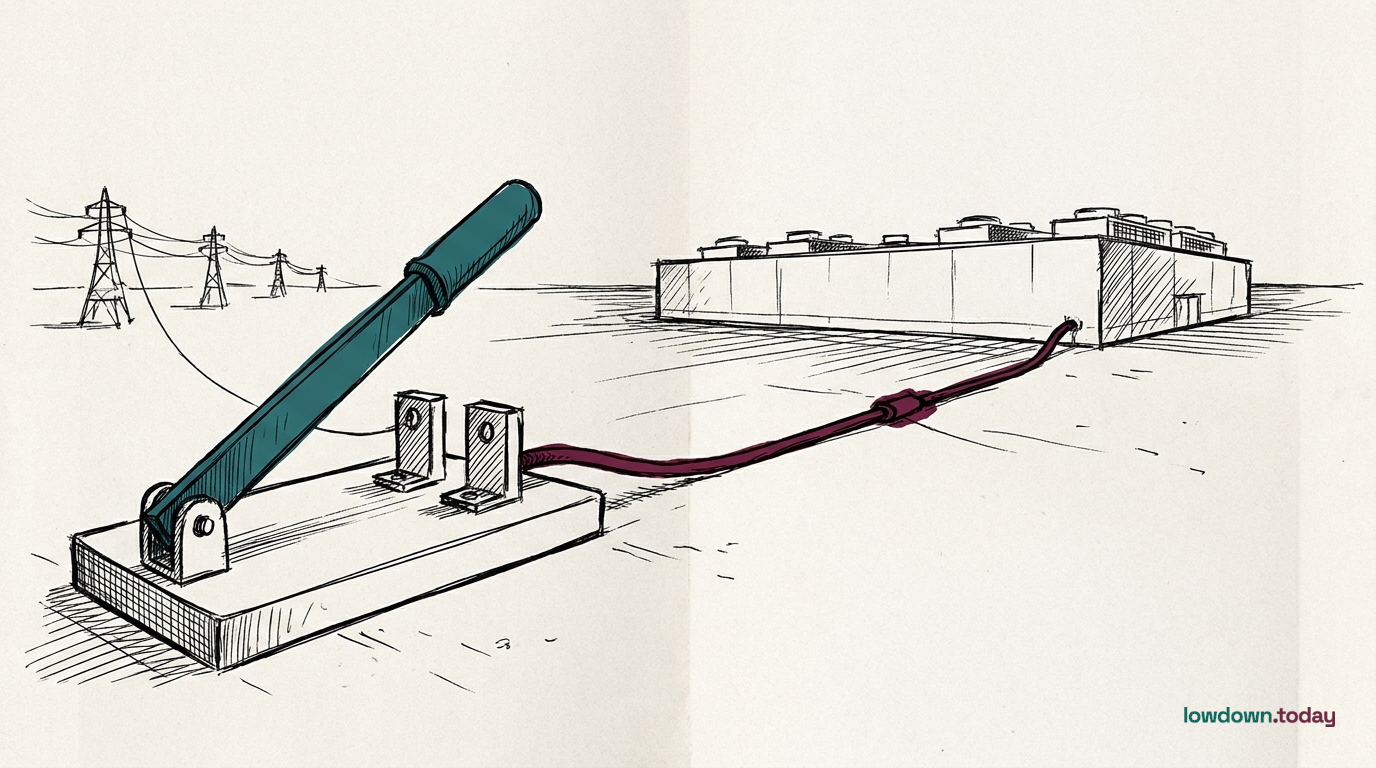
The United Kingdom's grid-connection register holds 50 GW of data centre demand from roughly 140 data centres, against a national peak electricity use of 45 GW recorded on 11 February 2026.⁠1 Total contracted offers in the UK demand queue reached 125 GW by mid-2025, up from 41 GW in November 2024, a tripling in seven months.

The register is maintained by the National Energy System Operator (NESO), the body that took over GB grid operation from National Grid ESO in October 2024 under the Energy Act 2023. It tracks every signed connection offer, distinguishing data centres from generation, electrolysers, and other large industrial loads. The 45 GW peak figure comes from NESO's own demand monitoring on a cold February evening when the British electricity system was running near full deliverable capacity.

NESO's own February register puts the data centre sub-queue alone above the entire country's recorded peak demand, and the wider queue at 125 GW is roughly three times peak. Most of those connection offers will not be built; queue-clog is a known feature of the GB system, with operators submitting speculative requests to hold optionality. Ofgem's "Curate, Plan, Connect" reform workstreams, announced in February 2026, are designed precisely to filter speculation from intent and re-rank the queue by readiness. The reform is the single largest UK grid-connection policy intervention since privatisation.

The disclosure is the event because it gives the OpenAI Cobalt Park pause its quantitative context. When a US operator describes the UK regulatory environment as "unfavourable", this register is what they mean. The 125 GW queue cannot connect on the timescales hyperscalers need; the 80% that NESO and Ofgem will likely strike off as speculative still leaves a real pipeline that exceeds available transmission headroom for the rest of the decade. Whether Ofgem publishes its AI-demand consultation response this quarter is the next decision the market is watching.


Deep Analysis

In plain English

The UK's electricity grid is managed by NESO, the National Energy System Operator. Any large new connection to the grid, whether a factory, a wind farm, or a data centre, must join a queue and wait for the grid to be physically upgraded to handle the extra load. By February 2026, data centres alone had 50 GW of queued requests, more than the 45 GW peak demand the entire UK recorded on the coldest evening in February 2026. The total queue across all types of connections reached 125 GW, up from 41 GW just seven months earlier. That growth is partly real demand and partly speculative: companies reserve grid capacity as a strategic option, even if they are not certain they will build. Ofgem, the UK energy regulator, has launched reforms to clean up the queue, but the physical work of building new power lines and substations still takes five to eight years.

Deep Analysis
Root Causes

Grid connection queues inflate when the cost of holding a reservation is lower than the option value of the connection. In the UK, Transmission Entry Capacity applications historically required only nominal deposits, creating no economic barrier to speculative reservation. The result is a queue that contains genuine projects alongside capacity-optioning strategies that will never build.

The physical constraint underneath the speculative inflation is real: new 400 kV substation infrastructure in the North of England requires five to eight years of civil works. No queue reform can shorten the construction timeline. Regulatory reform can only accelerate the culling of non-viable reservations, which in turn shortens the wait for genuine projects without adding physical capacity faster.

What could happen next?
  • Consequence

    Ofgem's Curate workstream, if it accelerates queue culling, will reduce wait times for genuine data centre connections but cannot deliver new transmission infrastructure faster than the physical construction timeline allows.

    Short term · High
  • Risk

    If queue attrition does not resolve speculative reservations before the next hyperscaler investment cycle, a second round of OpenAI-style pauses becomes probable as operators price connection uncertainty into UK location decisions.

    Short term · Medium
  • Precedent

    The 50 GW sub-queue figure, once public, becomes a negotiating reference for any hyperscaler seeking concessions from UK government on planning or grid priority, a structural shift in the power balance between operators and regulators.

    Immediate · Medium
First Reported In

Update #1 · Boom hits wall: grid says no, states freeze

The Register· 26 Apr 2026
Read original →
Different Perspectives
MUFG
MUFG
Mitsubishi UFJ (MUFG) and Morgan Stanley are preparing to sell a loan of about $4.5bn secured on the GPUs CoreWeave runs for Meta in Dalton, Georgia, with price talk of 7% to 7.5%, Bloomberg reported. Meta's contract is expected to win the loan investment-grade ratings, though CoreWeave is rated below investment grade and the loan has not priced.
CX Tech
CX Tech
CX Tech's £16.5bn, 1,000 MW plan for the former Chapelcross nuclear site has drawn more than 10,000 representations, the most Dumfries and Galloway's planners have received, BBC News reported. The company says the scheme could support up to 750 construction jobs and about 540 permanent posts; comments close on 29 November.
Nate Glubish, Alberta's technology and innovation minister
Glubish tabled Bill 42 on 18 November to ban power plants and data centres on Class 1 and 2 farmland and within 600 m of homes, a day after the regulator approved a 1,494 MW plant that fails both tests. The bill exempts projects already approved or under review, so the Indus plant stands.
NEXTDC's chairman and chief executive
After a second pay strike and a defeated spill on 20 November, NEXTDC's leaders said they are exploring a joint venture for the S4 Sydney campus and do not expect to raise shareholder capital for contracted capacity. They raised FY27 underlying EBITDA guidance to A$260m-A$275m, still excluding about A$140m tied to Melbourne's stalled M3 site.
Friends of the Irish Environment, Friends of the Earth Ireland and ClientEarth
The three groups argued in the High Court on 18 November that the CRU's data-centre connection framework breaches the 2015 Climate Act by ignoring carbon budgets, which the CRU denies. Judge Micheal O'Connell reserved judgment with no date, so the framework stands meanwhile.
South Korean data-centre industry groups
Industry groups told Etnews on 13 November that tougher grid scoring for one sector alone is unfair, three days before the climate and energy ministry raised the capital-region pass mark to 75 from 70. Pending applications are judged on the new bar; the pilot assessed 28 capital-region projects worth 1.9 GW.

Written with AI from Lowdown's published reporting. Not individually reviewed by an editor. Editorial standards.