Skip to content
You can now search across every topic, entity and event.What's new
Data Centres: Boom and Backlash
8SEP

Kenya halts $1bn Olkaria over power

3 min read
13:06UTC

Kenya suspended the $1bn Microsoft-G42 geothermal data centre at Olkaria, after President Ruto warned the full build would mean switching off half the country.

IndustryDeveloping
Key takeaway

Kenya suspended a $1bn data centre because one campus would consume a third of its national power.

Kenya's government suspended the $1 billion Microsoft-G42 geothermal project at Olkaria in the Rift Valley, a hold that surfaced in early May. President William Ruto put the reason plainly: at full scale the campus would draw so much power that, in his words, "building it would mean switching off half the country". 1

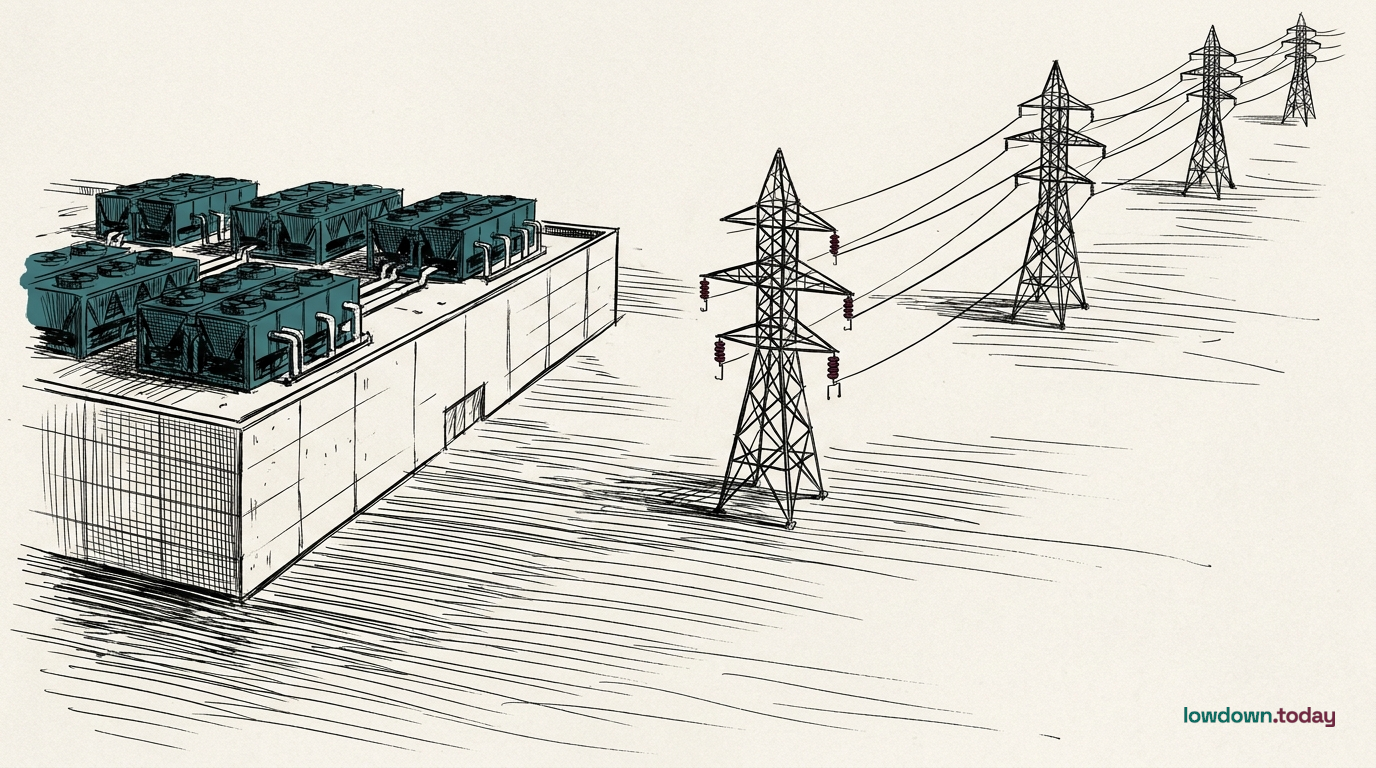
Olkaria's full 1 GW target would draw roughly a third of Kenya's entire installed capacity of about 3 GW. Microsoft, the project's hyperscaler partner, and G42, the UAE artificial-intelligence firm co-developing it, were not blocked by planning objections or activist pressure but by the raw size of the load against a small national grid.

Geothermal is about as clean and dispatchable as electricity gets, running steadily day and night without the weather dependence of wind or solar. Kenya still could not host the campus, which is the point worth holding: the thing freezing data-centre expansion is rarely how dirty the power is, and almost always how much of it a single campus demands against the capacity already in place.

The pattern crosses hemispheres. When Johor in Malaysia paused approvals after a water-rights protest, the binding limit was resource and grid capacity rather than generation type . Kenya reached the same ceiling from the opposite direction, with clean power in the ground and simply not enough of it to spare.

Deep Analysis

In plain English

Kenya's government stopped a $1 billion joint project between Microsoft and the UAE technology company G42 to build a large data centre powered by geothermal energy in Kenya's Rift Valley in May 2026. The site, called Olkaria, sits above one of the world's most powerful natural heat sources, where underground steam can generate electricity cheaply and cleanly. At full build the project would need 1 gigawatt of power, which is about one-third of everything Kenya currently generates across the entire country. President William Ruto said building it at full size would mean switching off half the country to divert power to the campus. The project is not cancelled but suspended: Kenya and the developers need to either shrink the project or wait for Kenya's national grid to grow large enough to support it.

Deep Analysis
Root Causes

Olkaria's geothermal resource rank among the ten most productive geothermal zones on earth, which is precisely why Microsoft and G42 chose it. The resource quality attracted a project scale, 1 GW, that reflects the resource rather than the grid it connects to.

Second, Kenya Power's transmission infrastructure was built for a national peak demand of approximately 2.2 GW, with the 3 GW installed capacity figure reflecting nameplate generation rather than deliverable capacity to all load points.

A 1 GW data-centre campus in the Rift Valley would require transmission reinforcement along corridors built in the 1980s and 1990s for a fraction of that load. The $1 billion project cost did not include the grid reinforcement bill, which Kenya Power and the government would absorb.

What could happen next?
  • Risk

    Hyperscale operators targeting African geothermal and solar resources face a structural grid-capacity ceiling in every Sub-Saharan market: national installed capacity averages 3-8 GW, making 1 GW projects nationally significant rather than locally significant.

  • Opportunity

    A staged 150-200 MW build at Olkaria would stay within Kenya Power's incremental capacity addition programme and could generate around $150 million in annual electricity revenue for the national utility, a viable model for sub-1 GW African data-centre investment.

First Reported In

Update #6 · Oregon bills data centres, not homes

Data Center Dynamics· 10 Jun 2026
Read original
Different Perspectives
NVIDIA
NVIDIA
NVIDIA told the Securities and Exchange Commission on 26 August it had signed memorandums aiming to mobilise over $500bn for buyers' equipment purchases, then said in the same filing the arrangements may not become definitive. It may also carry limited residual-value risk on the equipment itself.
IREN Limited
IREN Limited
IREN signed $2.4bn of financing on 25 August that only releases cash once its Mackenzie GPU servers are accepted, and only through 31 December 2026. A shipping delay from here now creates a funding problem as well as a revenue one.
Energy Commission (Malaysia)
Malaysia's Energy Commission recorded data centres at 9.3% of national power in one hot week in August, against a 7% year-to-date average, and is projecting 31% of peninsular demand by 2035. It wants roughly 9 GW of new gas-fired capacity by 2032 to cover the gap.
Economic Development Board and Infocomm Media Development Authority
Singapore's EDB and IMDA rationed 200 MW across four operators on 21 August and followed with a tropical liquid-cooling standard six days later, fixing the terms before construction starts. The agencies will decide within 18 to 24 months whether to run a third call.
Legal Resources Centre
The Legal Resources Centre put the water and power draw of two approved Cape Town Equinix sites in public, at roughly 4.4 billion litres and 1.4 to 1.5 billion kWh a year, because the city and the operator would not. It wants a cumulative assessment before any more of the five approvals proceed.
Ministerio de Minas e Energia
Brazil's energy ministry published Redata's five conditions after the Senate passed PL 278/2026 on 1 September, betting a repeatable annual water test enforces cooling design better than a one-off approval. Redata now needs President Lula's signature before any of it takes effect.

