Skip to content
You can now search across every topic, entity and event.What's new
Data Centres: Boom and Backlash
14AUG

OpenAI pauses Cobalt Park Stargate site

3 min read
10:48UTC

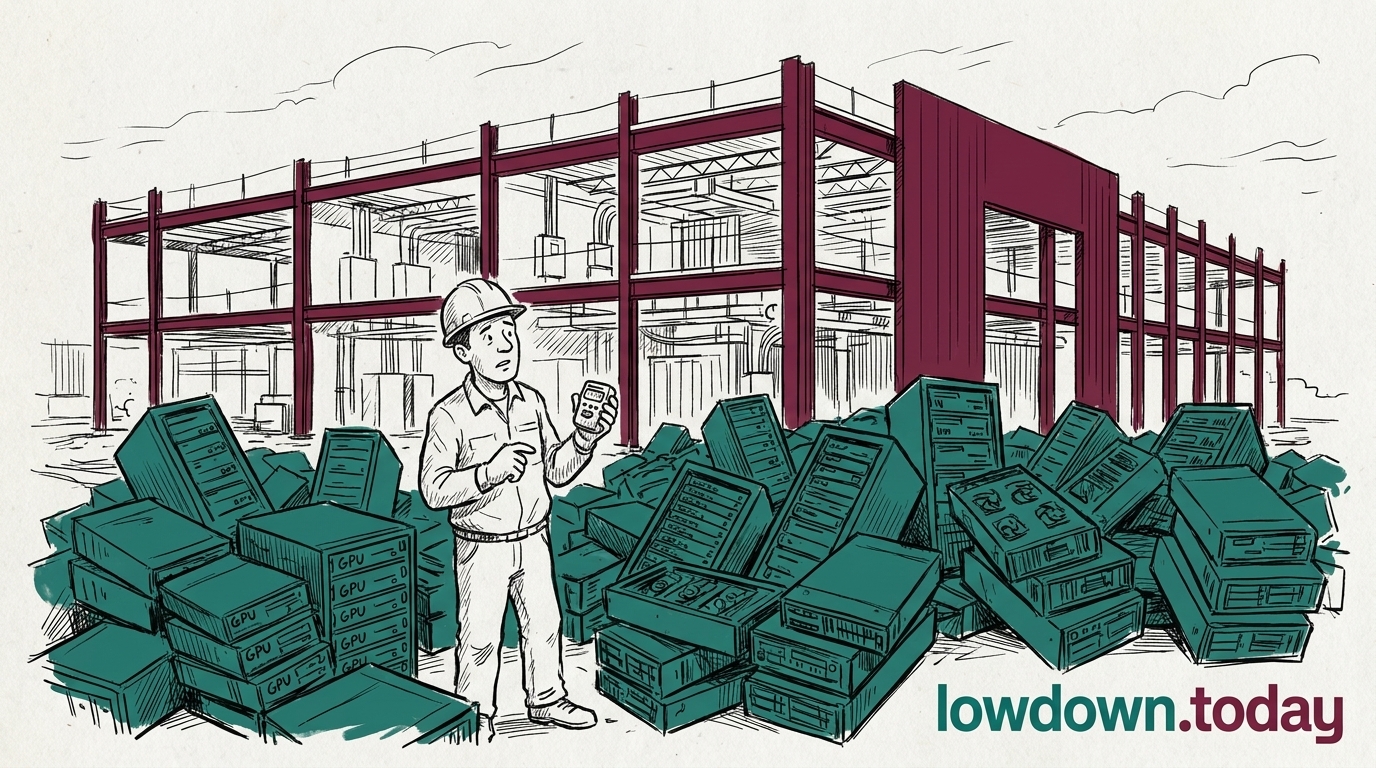
OpenAI paused its planned UK Stargate data centre at Cobalt Park, North Tyneside, on 23 April 2026, citing an 'unfavourable regulatory environment' and elevated energy costs.

IndustryDeveloping
Key takeaway

OpenAI's Cobalt Park pause is the first major hyperscaler retreat from a UK-designated AI Growth Zone site.

OpenAI paused its planned UK Stargate data centre at Cobalt Park, North Tyneside, on 23 April 2026, citing what the company described as an "unfavourable regulatory environment" and elevated energy costs. 1 The Blackstone and Nscale components of the wider AI Growth Zone build continue unaffected.

Stargate UK is the British arm of the $500 billion Stargate programme, the joint OpenAIOracleSoftBank AI infrastructure venture announced at The White House in January 2025. The AI Growth Zone is the Department for Energy Security and Net Zero (DESNZ) programme designating priority sites for accelerated grid connection and planning consent. Cobalt Park, a brownfield business park north of the Tyne, was named as the flagship North East AI Growth Zone site by the UK Government in early 2026.

The "unfavourable regulatory environment" phrase points at a specific stack of UK pressures rather than a single decision. The grid-connection register at NESO, the UK system operator, holds applicants in a queue that runs years long for new connections of this size. Ofgem's AI-demand consultation, the document UK grid analysts treat as the most consequential of the year, is still pending. UK industrial electricity prices are the highest in the G7. Operators with global site portfolios can route capex to jurisdictions that price and consent faster.

The pause matters because it lands in the same week the IEA's headline figures restated the demand trajectory in maximalist terms. The contrast is the editorial fact: capex is being raised globally and a flagship project pauses locally on the same Wednesday. Blackstone's Blyth campus and Nscale's components proceeding does not soften the signal; it sharpens it. Capital is still flowing, but it is becoming choosier about where it lands, and OpenAI has just told the UK market that Cobalt Park, on current rules, is not the right address.

Deep Analysis

In plain English

The AI Growth Zone is a UK government programme that aims to bring large-scale data centres and AI infrastructure to specific areas of England, including the North East around Newcastle. OpenAI, the company behind ChatGPT, was one of the operators lined up to build a facility at Cobalt Park, a business park near North Tyneside. OpenAI has paused that plan, saying the regulatory environment is unfavourable and energy costs are too high. In plain terms: the process of getting connected to the UK's electricity grid takes several years, and the electricity itself costs more in the UK than in some competitor locations. The wider programme continues: Blackstone, the US investment firm, is still building a £10 billion data centre at Blyth, a few miles away. The pause is specific to OpenAI's component, not a cancellation of the whole North East programme.

Deep Analysis
Root Causes

The UK energy cost premium relative to continental Europe has widened since the 2021-2022 gas price shock. UK industrial electricity prices remain among the highest in the OECD, partly because the Contracts for Difference (CfD) renewable auction programme uses a capacity market structure that does not directly translate to lower spot prices for large industrial users.

The UK's grid connection process requires a Transmission Entry Capacity agreement with the National Grid, a process that involves a queue, a feasibility study, and construction of reinforcement infrastructure. For a site in the North East, the required 400 kV substation upgrades are multi-year civil engineering projects with no shortcut available via regulatory reform alone.

Escalation

Flat to moderate. The pause is a hold, not a withdrawal. OpenAI retains the option to recommit if UK grid reform (Ofgem's Curate workstream, due response in current quarter) shortens connection timescales or if energy costs fall. The risk of escalation lies in the signal it sends to other hyperscalers evaluating UK sites: consent uncertainty is being priced into location decisions in real time.

What could happen next?
  • Consequence

    If Ofgem's AI-demand consultation produces no material queue acceleration, further hyperscaler pauses or relocations from UK sites become more likely in H2 2026.

  • Precedent

    This is the first documented case of a Stargate-brand project pausing on regulatory grounds outside the US, establishing that grid consent is a project-selection variable, not a post-commitment problem.

First Reported In

Update #1 · Boom hits wall: grid says no, states freeze

ResultSense· 26 Apr 2026
Read original
Different Perspectives
Antel, Uruguay's state telecom
Antel will build a $70m AI data centre in Canelones, announced after an 11-12 August Council of Ministers meeting, with construction from Q1 2027 and roughly 250 direct jobs. Uruguay is putting a sovereign AI facility on the state balance sheet rather than courting a hyperscaler to build one.
Comtel
Comtel
Comtel is building a Figline Valdarno data centre inside the H2-Era Green Valley complex, powered by an 84 MW solar plant and selling waste heat to on-site farming. Co-location with generation and a heat offtaker is the model regulators elsewhere are now writing into connection terms rather than negotiating case by case.
Greg Abbott, Texas Governor
Abbott directed PUCT and ERCOT on 3 August to audit every queued data centre's ownership, incentives and water use, saying projects that fail the state's survey should lose grid access. QTS's co-chief executives welcomed the review; Agriculture Commissioner Sid Miller called it too vague and wants a special legislative session instead.
Government of Gujarat
Gujarat notified a Data Centre Policy on 7 August offering capital, interest, tax and duty subsidies for projects sourcing at least 51% green power, targeting 7.5 GW against a 74 GW installed base. Where other jurisdictions priced or restricted grid access this month, Gujarat is paying developers to come instead.
Taiwan's Legislative Yuan Economics Committee
The committee gave preliminary approval on 5 August to a self-generation mandate for large power users, including data centres, with fines up to NT$750,000. It agreed the obligation in principle while leaving the megawatt threshold that defines its reach to later implementing regulation.
Australian Energy Market Commission
AEMC advised ministers on 5 August that data centres should surrender renewable certificates against actual consumption, prove new demand with new firm capacity, and register as market participants. The advice would turn passive customers into obligated participants inside the market's dispatch and settlement machinery, ahead of an access-standards determination due in late October.

