Skip to content
You can now search across every topic, entity and event.What's new
Data Centres: Boom and Backlash
4AUG

Oregon clears a 29% big-load surcharge

2 min read
10:53UTC

Oregon regulators approved a 29% electricity-rate rise for data centres and other large loads on 7 July, cutting household bills as the biggest users absorb the grid's growing cost.

IndustryDeveloping
Key takeaway

Oregon prices data-centre grid costs onto the operators, cutting household bills while the biggest campuses pay most.

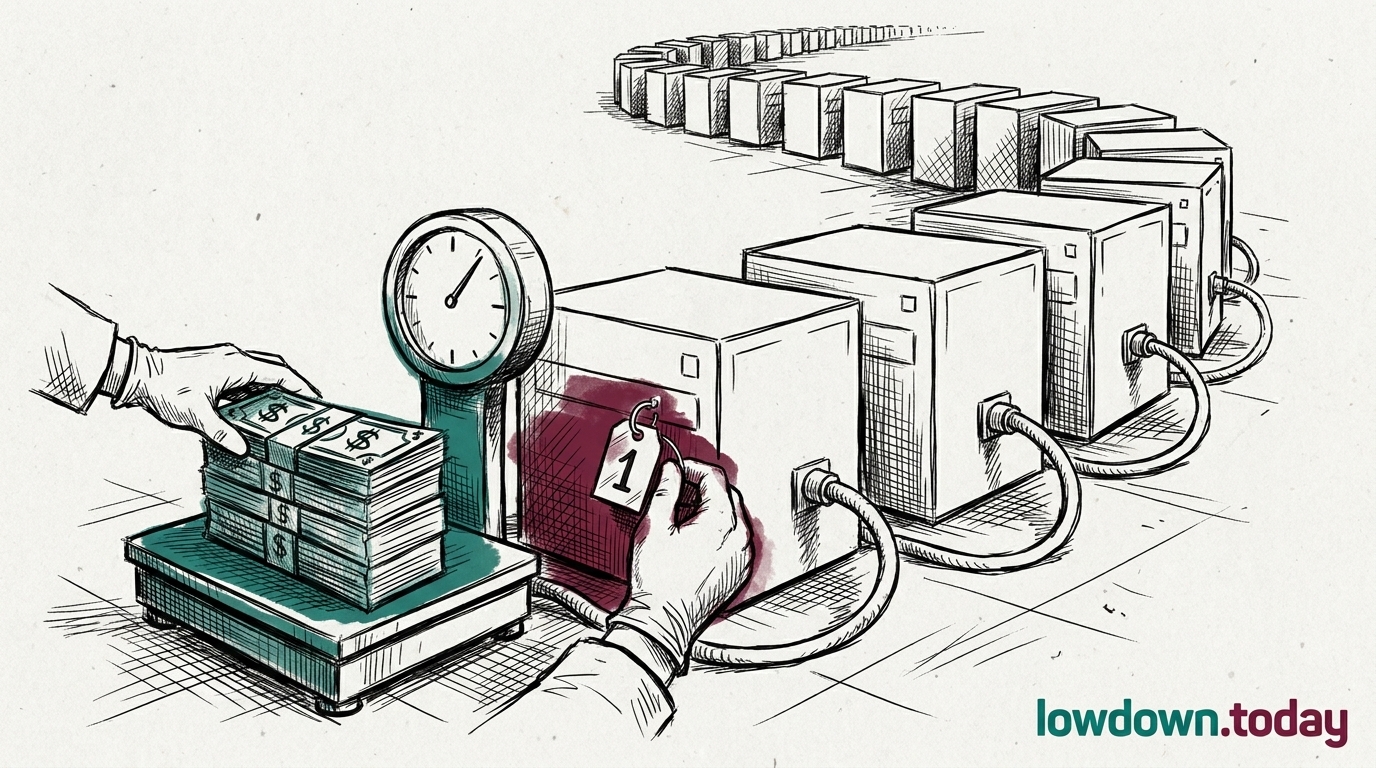
Oregon's Public Utility Commission (PUC), the state body that sets electricity tariffs, approved a 29% rate increase for large-load customers on Tuesday 7 July, effective the next day. 1 The rise covers Portland General Electric (PGE) customers drawing more than 20 megawatts (MW), the band that captures data centres, crypto miners and heavy industry. Residential bills fall 1.3% across roughly 963,000 customers, because the tariff shifts grid-reinforcement cost onto the loads that drive it.

The ruling closes a thread the beat has followed since PGE filed the 29% rise in June , then watched the PUC push its decision to 7 July on 200-page review grounds . It is the first fully approved cost-shift tariff now in force in the US. 2

The design answers a question PJM's board put to thirteen governors in May: who pays when the grid bends for AI. Oregon's regulator decided the load forcing the reinforcement should carry the cost, not the household next door. Above 100 MW the tariff adds a one-cent-per-kilowatt-hour (kWh) surcharge, so the largest campuses pay the steepest premium yet stay buildable. That is the counter-model to New York's freeze: price the load rather than block it.

Deep Analysis

In plain English

Oregon's utility regulator approved a new electricity rate for very large customers, mainly data centres, that raises their bills by 29% starting 8 July while cutting everyone else's bills by 1.3%. The idea is that big data centres should pay the actual cost of the power-grid upgrades they need, instead of that cost being spread across every household's bill. Only customers using 20 megawatts or more, roughly enough power for 16,000 homes, are affected, with an extra charge above 100 megawatts. Ordinary Oregon households will see a small saving, not a bill increase, from this decision.

Deep Analysis
Root Causes

The 29% figure exists because Oregon's POWER Act, passed in 2025, requires utilities to charge large loads the full cost of serving them rather than spreading grid-upgrade costs across the general customer base; PGE's tariff is the first test of that principle in a live rate case, so the number reflects PGE's calculated incremental cost of serving 20 MW-plus sites, not a punitive rate set to discourage data centres.

The one-month delay from 10 June to 7 July existed because Tawney's commission needed to work through roughly 200 pages of tariff detail. The delay was procedural, not a signal the PUC intended to reject or soften PGE's filing.

What could happen next?
  • Precedent

    Oregon's approved tariff gives other states weighing large-load cost-allocation rules a working model with an actual approved rate, not just a proposal.

  • Risk

    A 29% rate increase may push new hyperscale siting decisions toward states without an equivalent surcharge, shifting Oregon's cost problem rather than solving it.

First Reported In

Update #10 · New York freezes data centres by decree

KPTV· 15 Jul 2026
Read original
Different Perspectives
Government of Odisha
Odisha signed a $1.5bn agreement with HCLTech and Sarvam AI on 24 July for a sovereign AI data centre in Bhubaneswar, targeting 2028 operations. While regulators elsewhere price developers out of the queue, Odisha is bidding state financial assistance to bring capacity in, betting the AI infrastructure boom is worth courting rather than rationing.
Switch Datacenters and Uithoorn
The developer, the municipality, Liander and dozens of greenhouse growers signed a waste-heat agreement letting a 60 MVA facility proceed under a provincial rule that bans sites above 5 MVA. The public-interest exception argues the site relieves rather than adds to grid congestion, working around a standing ban from inside rather than waiting for it to change.
Iskandar Puteri residents
Residents protested in February over falling water pressure they attribute to ZDATA's 300 MW construction; ZDATA disputes causation and has not yet resolved the dispute with its wastewater-only pivot. The complaint sits unadjudicated while the operator advertises compliance to state authorities the residents cannot address directly.
Microsoft
Microsoft
DC Byte reports Microsoft looking to the Nordics for new capacity while Dublin's regional share falls to 15 per cent, though this is a market-intelligence inference rather than a company statement. Microsoft keeps its existing Dublin cloud region, which is costly to relocate, while directing new investment where power is cheaper and the queue is shorter.
ISO New England
ISO New England
ISO-NE proposed excluding new large loads from its Installed Capacity Requirement entirely, forcing data centres to bring their own generation or accept curtailment, even though New England's demand has been flat or falling for a decade. The reform is pre-emptive, written before the region has felt the strain PJM and MISO already report.
Ofgem
Ofgem
Ofgem opened its Data Centre Commitment Fee consultation on 29 July, arguing that free options on grid capacity let developers bank places on ten sites and abandon nine, crowding out projects that would build. It expects the deposit to filter the queue before the rule even takes final form.

