Skip to content
You can now search across every topic, entity and event.What's new
Data Centres: Boom and Backlash
4AUG

Denmark halts its clean wind-grid queue

3 min read
10:53UTC

Energinet extended its pause on new large-load grid connections on Wednesday 27 May, showing that even one of Europe's cleanest, wind-rich grids cannot wire data centres fast enough.

IndustryDeveloping
Key takeaway

Even Denmark's wind-rich grid cannot connect data centres fast enough, because transmission pace is the real limit.

Energinet, Denmark's transmission system operator, extended its pause on new large-load connection agreements on Wednesday 27 May, prolonging a hold first imposed in March. The decision keeps fresh data-centre hook-ups frozen in one of Europe's cleanest and most wind-rich grids. 1

The extension matters because it disproves a comfortable assumption. One theory held that US moratoriums and British queues would simply push demand toward countries with renewable surpluses to spare. Denmark has exactly that surplus and still cannot connect the load. The constraint is not generation mix but the pace at which any transmission network can physically be built out to carry new demand. Surplus wind does not help if the wires cannot move it to where the compute sits.

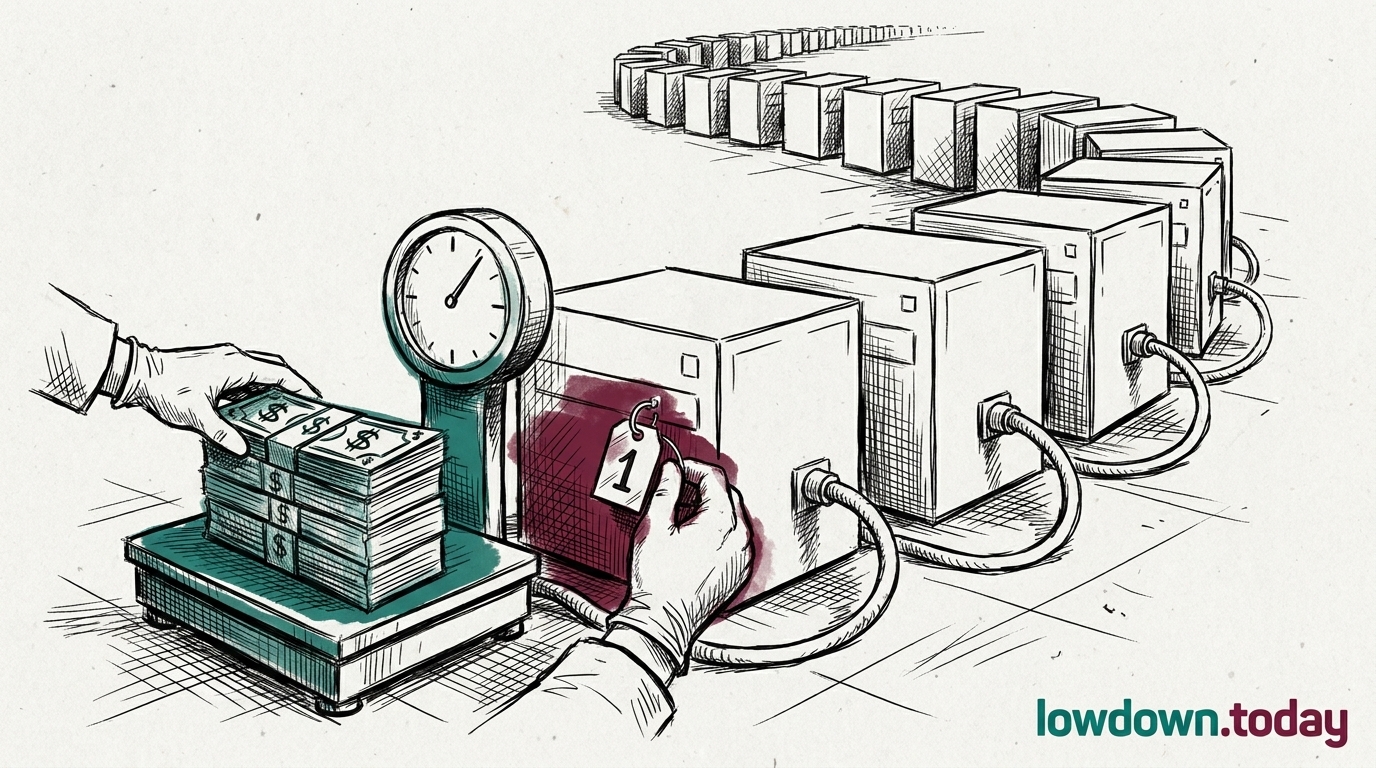
The scale of the backlog explains the freeze. Energinet is sitting on a connection queue of roughly 60 GW against national peak demand of about 7 GW, with data centres making up around 14 GW of that pipeline. At that volume the queue itself becomes the bottleneck: the operator cannot assess applications fast enough regardless of any intent to approve them.

The same dynamic has now surfaced across very different jurisdictions. Johor in Malaysia halted approvals after the country's first water-rights protest , a grid-and-resource ceiling reached despite no shortage of political will to build. Clean or not, the grid grows at the speed it grows, and the compute boom is arriving faster.


Deep Analysis

In plain English

Denmark's national electricity grid operator, Energinet, extended a freeze on new large-load connections in May 2026, preventing any new big technology sites from plugging into the grid. Denmark's grid is mostly powered by wind energy and is widely considered one of the cleanest in Europe. The problem is not a lack of clean energy: Denmark actually produces more electricity than it uses on many days. The problem is the physical wires and transformers that carry electricity from where it is generated to where a new data centre wants to use it. Building new transmission lines takes years. The queue of projects wanting to connect to Denmark's grid stands at 60 gigawatts, against a national peak demand of just 7 gigawatts: nearly nine times as much demand as the grid can handle. Even having renewable energy nearby does not help if the transmission lines cannot carry it.

What could happen next?
  • Consequence

    Data-centre operators targeting Nordic renewable-energy credentials face a hard transmission bottleneck across Denmark regardless of power-purchase agreement structures, redirecting greenfield investment toward markets with available high-voltage capacity.

  • Risk

    Energinet's moratorium without a defined review endpoint or queue-reform commitment risks extending the freeze beyond the original March 2026 imposition indefinitely, given that transmission build programmes take three to seven years.

First Reported In

Update #6 · Oregon bills data centres, not homes

Energinet· 10 Jun 2026
Read original
Causes and effects
This Event
Denmark halts its clean wind-grid queue
It refutes the relief-valve theory that surplus renewable power can absorb the compute boom: the binding constraint is transmission pace, not how clean the generation is.
Different Perspectives
Government of Odisha
Odisha signed a $1.5bn agreement with HCLTech and Sarvam AI on 24 July for a sovereign AI data centre in Bhubaneswar, targeting 2028 operations. While regulators elsewhere price developers out of the queue, Odisha is bidding state financial assistance to bring capacity in, betting the AI infrastructure boom is worth courting rather than rationing.
Switch Datacenters and Uithoorn
The developer, the municipality, Liander and dozens of greenhouse growers signed a waste-heat agreement letting a 60 MVA facility proceed under a provincial rule that bans sites above 5 MVA. The public-interest exception argues the site relieves rather than adds to grid congestion, working around a standing ban from inside rather than waiting for it to change.
Iskandar Puteri residents
Residents protested in February over falling water pressure they attribute to ZDATA's 300 MW construction; ZDATA disputes causation and has not yet resolved the dispute with its wastewater-only pivot. The complaint sits unadjudicated while the operator advertises compliance to state authorities the residents cannot address directly.
Microsoft
Microsoft
DC Byte reports Microsoft looking to the Nordics for new capacity while Dublin's regional share falls to 15 per cent, though this is a market-intelligence inference rather than a company statement. Microsoft keeps its existing Dublin cloud region, which is costly to relocate, while directing new investment where power is cheaper and the queue is shorter.
ISO New England
ISO New England
ISO-NE proposed excluding new large loads from its Installed Capacity Requirement entirely, forcing data centres to bring their own generation or accept curtailment, even though New England's demand has been flat or falling for a decade. The reform is pre-emptive, written before the region has felt the strain PJM and MISO already report.
Ofgem
Ofgem
Ofgem opened its Data Centre Commitment Fee consultation on 29 July, arguing that free options on grid capacity let developers bank places on ten sites and abandon nine, crowding out projects that would build. It expects the deposit to filter the queue before the rule even takes final form.