Skip to content
Briefings are running a touch slower this week while we rebuild the foundations.See roadmap
Cuba Dispatch
4JUN

CADECA opens cash dollar remittance windows

3 min read
11:38UTC

Cuba's state exchange network announced on 7 April it would accept dollar remittances, chasing flows that have migrated to the informal banquero network.

PoliticsDeveloping
Key takeaway

Havana is dollarising remittances by necessity, not design, and the banqueros now have a state competitor.

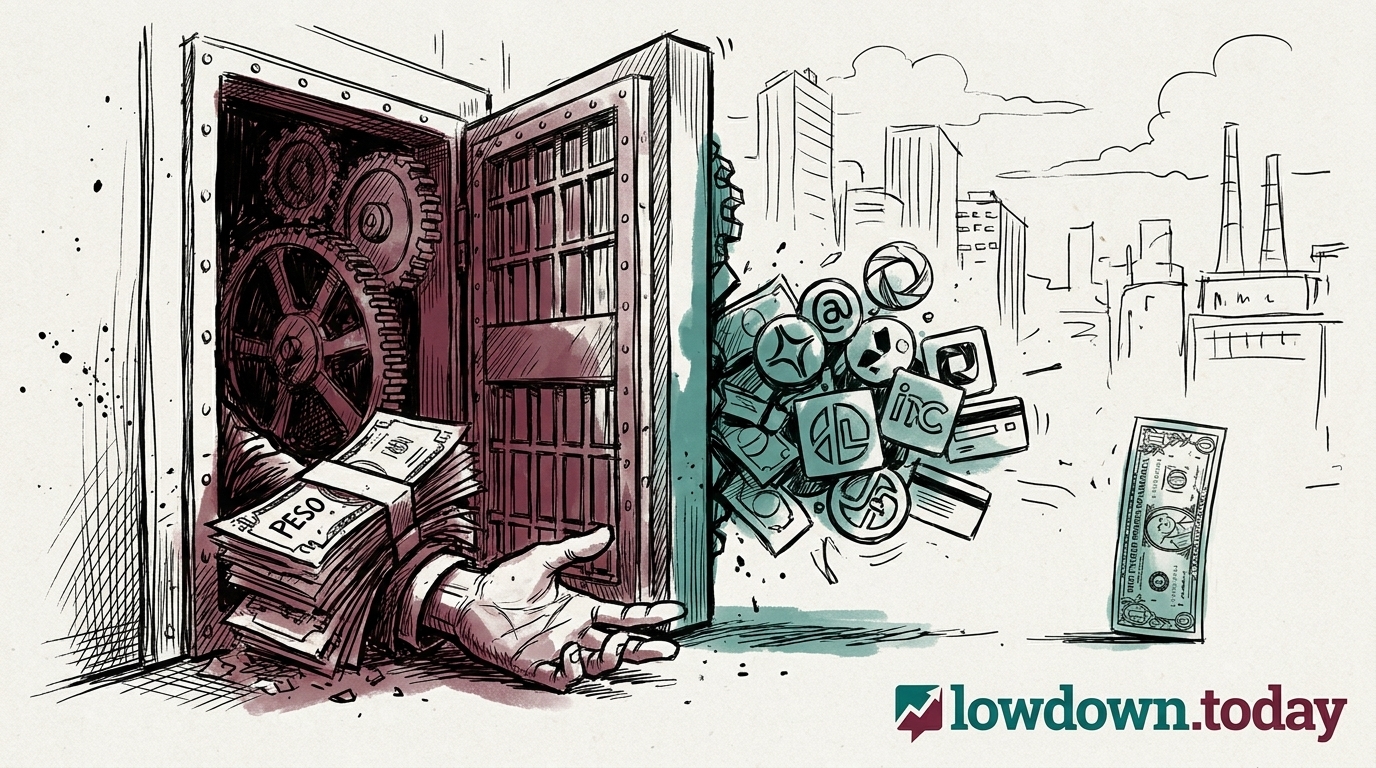
On 7 April 2026 CADECA, Cuba's state exchange network, announced that its offices would begin accepting cash dollar remittances 1. Analysts at the Havana Consulting Group and the diaspora outlet CiberCuba attribute the move to an attempt by the Cuban state to recapture flows that have migrated to the informal "banquero" network, a web of more than 150 unlicensed hand-to-hand money-transfer operators serving Cuban households.

The underlying flows have collapsed on the formal side. Remittances are running 70 per cent below the 2019 baseline of roughly $3.7 billion, and more than 95 per cent of diaspora transfers now move through informal channels. Two specific shocks drove the collapse. Western Union reportedly suspended Cuba transfers in February 2025 after Orbit S.A., Cuba's designated remittance processor, entered the OFAC Cuba Restricted List. A further 1 per cent federal tax on cash remittances, legislated by the Trump administration, took effect on 1 January 2026. Against that backdrop, GAESA's formal remittance capture had already fallen to 4.13 per cent before the CADECA move.

What CADECA is offering is genuinely new. For most of the last decade Cuban retail banking has treated the peso as the only legitimate currency, with hard currency routed through the parallel MLC digital channel. Accepting cash dollars at state branches is a reversal of that policy, signalling that Havana values recaptured hard-currency flow above its previous dollarisation resistance. The test is short: the two to four weeks after 7 April should produce either an uptick in formal-channel volumes, visible in Havana Consulting Group or FIU estimates, or confirmation that the banquero network is now too embedded to displace. Either outcome is a material signal about the durability of Cuba's informal economy.


Deep Analysis

In plain English

Cuban families abroad; mainly in Florida; send money home, but the official transfer companies like Western Union stopped operating because Cuba's designated payment processor was blacklisted by the US. Now 95 percent of that money flows through informal couriers known as banqueros. Cuba has now told its state exchange offices to accept cash dollars directly. The government wants to recapture some of that money for itself. Whether Cubans will trust the state to give them a good rate; instead of using the informal couriers who have no exchange-rate politics; is the open question.

What could happen next?
  • Consequence

    The CADECA move is a structural reversal of the 2021 Tarea Ordenamiento monetary reform, signalling that the regime's hard-currency crisis is severe enough to override the ideological investment in peso-only retail.

    Immediate · 0.85
  • Risk

    If CADECA sets non-competitive exchange rates, the banquero network retains its advantage and the state captures only the most risk-averse fraction of informal flows; an insufficient volume to stabilise state hard-currency reserves.

    Short term · 0.75
  • Opportunity

    If the CADECA move is accompanied by peso devaluation toward the informal rate, it creates a genuine competitive channel; Havana Consulting Group estimates this could recover $500-700 million annually.

    Medium term · 0.5
First Reported In

Update #1 · Cuba carve-out survives Venezuela oil easing

CiberCuba / Havana Consulting Group· 15 Apr 2026
Read original
Causes and effects
This Event
CADECA opens cash dollar remittance windows
The move is a structural dollarisation concession by a government that has spent a decade restricting the dollar at retail.
Different Perspectives
Spanish hotel operators
Meliá and Iberostar exited GAESA-linked Cuban hotels before 5 June to protect their broader Caribbean and global portfolios from secondary-sanctions exposure. Spain's commercial stake in Cuban tourism makes Madrid a structural veto risk if the EU advances Cuba-specific restrictive measures under Ollongren's mandate.
Cuban opposition / OCDH
After the US Senate killed a Cuba war-powers check 51-47 on 29 April, the Madrid-based OCDH formally demanded an EU reparations fund for political prisoners on 4 June, routing its pressure campaign to Brussels where the EU's existing restrictive-measures machinery, used previously against Venezuela and Belarus, does not require a Senate majority.
China
China
Beijing paired a birthday telegram to Castro with no operational commitment on fuel or credit, using the occasion to signal non-abandonment ahead of the G20 without incurring the cost of a replacement tanker. China has no military-logistics presence in the Caribbean comparable to Soviet-era capacity.
Russia
Russia
Moscow sent an official birthday message to the indicted Raúl Castro on 3 June, a deliberate legitimacy signal to Global South partners, while Sovcomflot has announced no replacement for the Universal's 270,000-barrel cargo that turned away on 26 May. The pattern mirrors Soviet public solidarity during the 1962 crisis while privately managing exposure.
Trump administration / OFAC
Washington let a calendar date do the work: no new designations were needed after 18 May, and the looming 5 June expiry, which strips foreign firms' legal-exit defence, drove the hotel exodus and card suspension without a second executive action. The administration has not publicly commented on the compound utility failures.
Cuban government and citizens
Havana's only countermeasure this week was a Granma editorial defending GAESA by name, conceding the designation is biting hard enough to require a public answer. Residents of Havana and Guanabacoa banged pots on the nights of 3-4 June, the first confirmed capital protests, after gas, water, and the state milk ration all failed.
