Skip to content
You can now search across every topic, entity and event.What's new
Cuba Dispatch
27APR

Monitors: Cuba amnesty excludes political cases

3 min read
10:55UTC

OCDH documented 277 repressive actions in March and HRW reported on 8 April that La Lima releases excluded government critics.

PoliticsDeveloping
Key takeaway

The amnesty arithmetic: 1,214 political prisoners minus 51 announced, plus 53 new detentions, minus verification.

On 7 April 2026 the OCDH (Observatorio Cubano de Derechos Humanos, a Madrid-based monitoring organisation) published its March report documenting 277 repressive actions including 53 detentions, and stated that no political prisoner was included in the announced Amnesty 1. A day later, on 8 April, Human Rights Watch reported that prisoner releases from La Lima prison excluded government critics and opposition figures.

The numbers do not reconcile with Havana's narrative. Prisoners Defenders, which maintains the authoritative census Cuba-watchers rely on, counted 1,214 political prisoners in March 2026 with 28 new cases logged in February alone 2. OCDH separately recorded 15 people detained for protesting and 21 political prisoners released over the month. Work through the arithmetic: 51 releases announced against 1,214 documented leaves roughly 1,163 political prisoners unaccounted for, and the 53 new detentions in March mean the political-prisoner stock is being refreshed even as the headline releases are announced.

The methodological gap cuts in a specific direction. OCDH and Prisoners Defenders work from named-case registries maintained in the diaspora with witness and family corroboration. The Cuban government has published no named roster of the 3 April releases, which makes verification one-sided. HRW's 8 April finding is consistent with both monitors' counts. For any US concession that would be contingent on political-prisoner releases, the operative figure is 1,214 minus the diplomatic theatre, and the theatre has so FAR moved the denominator barely at all.

Deep Analysis

In plain English

Independent human rights groups counted 1,214 Cuban political prisoners as of March 2026; people jailed for what they said or did in protest against the government, not for ordinary crimes. Cuba says these are criminals who broke Cuban law. Human rights monitors say they are political detainees. The Cuban government's announcement that 2,000+ prisoners were freed sounds large; but the monitors say none of them were the political prisoners on the documented list. The bottom line: the 2,000 released were mostly criminal prisoners, not dissidents. The documented list of political prisoners barely moved.

What could happen next?
  • Consequence

    The 53 new detentions recorded in March simultaneously with the April 3 releases means the political-prisoner stock is being refreshed even as headline releases occur; the net effect on the documented list is marginal at best.

  • Risk

    If Washington treats the April 3 release wave as partial compliance without a named-case audit, it sets a precedent that headcount releases; not named political prisoner releases; satisfy the diplomatic condition.

First Reported In

Update #1 · Cuba carve-out survives Venezuela oil easing

Observatorio Cubano de Derechos Humanos· 15 Apr 2026
Read original
Causes and effects
This Event
Monitors: Cuba amnesty excludes political cases
Independent monitoring contradicts the government's amnesty framing and sets the benchmark of 1,214 political prisoners against which any US concession would have to be weighed.
Different Perspectives
Russia
Russia
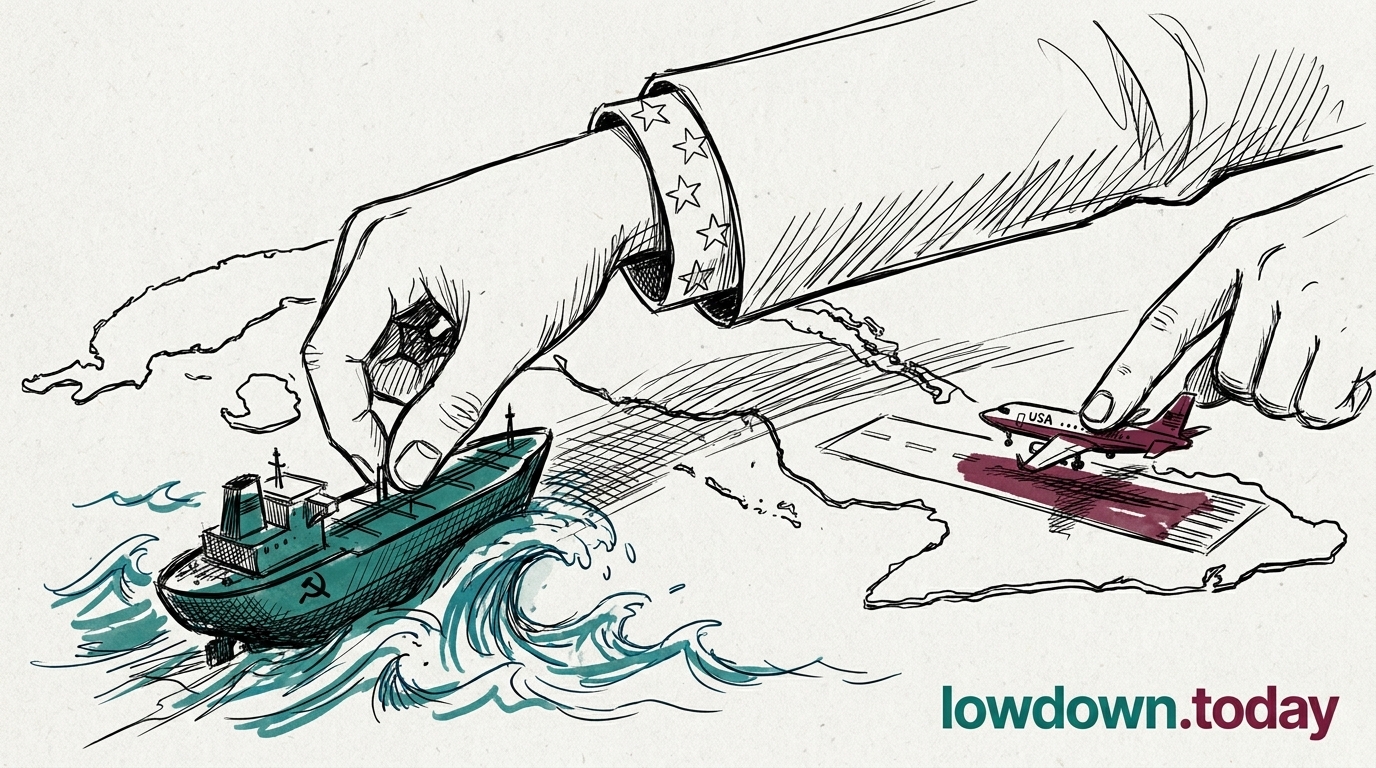
Moscow has sent Havana solidarity gestures, including birthday messages to Raúl Castro, but no tanker has reached Cuba since the Sovcomflot Universal diverted away in May, and none arrived this week either. Russia's backing remains rhetorical while the fuel gap CUPET's designation created stays unfilled from any state-to-state source.
Observatorio Cubano de Derechos Humanos (OCDH)
The Madrid-based monitor published its half-year count of 1,949 repressive actions on 7 July, 299 in June, the highest monthly total it has logged in 2026, with independent journalists the most-targeted group. OCDH's figures moved the debate from sanctions cadence to security-state conduct in the same week Havana wanted the argument to stay on sanctions.
European Union (Stavros Lambrinidis)
Lambrinidis told the UNGA the embargo harms ordinary Cubans, then criticised Havana's Ukraine-ceasefire vote and Russian military participation, announcing no new measures. The EU is managing two separate Cuba files, human rights and Cuba's Russia alignment, that have not yet merged into one policy with teeth.
United States (Mike Waltz / OFAC)
Ambassador Mike Waltz held up photographs of named Cuban political prisoners, including Otero Alcántara, telling the delegation "this is not Havana", while OFAC issued no new Cuba designation between 1 and 9 July. Washington is running the prisoner-naming track and the sanctions track separately, and a re-charged Otero Alcántara would give the naming track a fresh case to press.
Cuban Ministry of Foreign Affairs (MINREX)
MINREX rebutted Mike Waltz's prisoner photographs at the UNGA debate, saying Cuba has nothing resembling the repression imagery Washington displayed, while giving no public account of Otero Alcántara's whereabouts. Havana's embargo case depends on external sanctions as the sole cause of harm, which a domestically caused grid failure and an unexplained disappearance both complicate.
Russia and China
Russia and China
Moscow and Beijing offered rhetorical solidarity but no relief. No Russian tanker has reached Cuba since the Sovcomflot Universal diverted on 26 May, and China has moved no substitute cargo, leaving Havana's fuel siege unbroken by its strategic partners.

