Skip to content
You can now search across every topic, entity and event.What's new
Cuba Dispatch
4AUG

OFAC covers two, says nothing on tourism

2 min read
10:34UTC

OFAC gave GECOMEX and GEMAR until 12 August to unwind their contracts. It published nothing at all for the tourism ministry designated the same day.

PoliticsDeveloping
Key takeaway

OFAC's wind-down covers a trade group and a shipping group, not the tourism ministry.

OFAC's FAQ 1262, published on Monday 13 July alongside the designations themselves, grants a 30-day wind-down to 12 August for GECOMEX and GEMAR, and for any entity either of them owns more than half of 1. It addresses the Ministry of Tourism (MINTUR) nowhere. No amendment to the Cuban Assets Control Regulations (CACR), the US Treasury rules implementing the embargo, and no tourism general licence appeared with it.

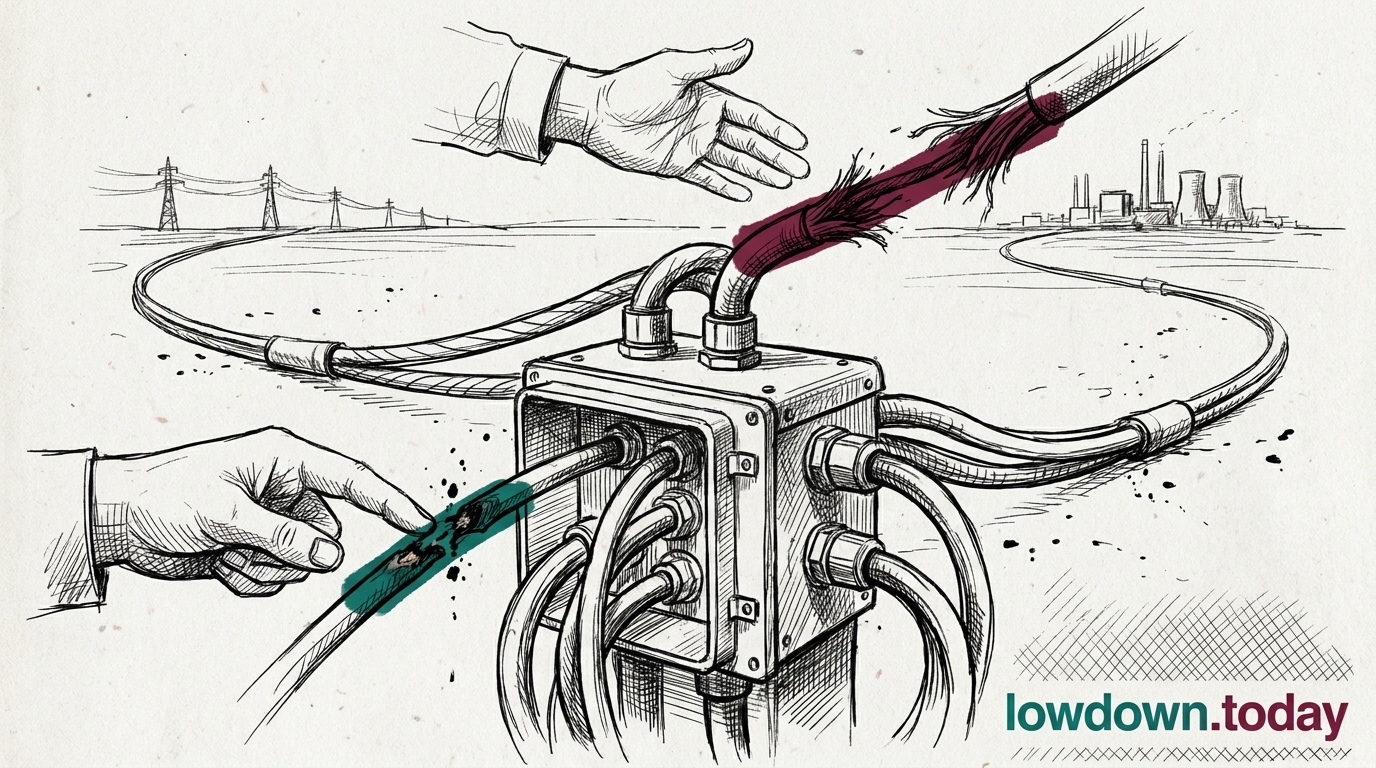
A wind-down window is a narrow, time-limited promise, and its mechanics matter here. For the window's duration, OFAC (the US Treasury body that writes and enforces sanctions programmes) will not target non-US persons for transactions ordinarily incident and necessary to unwinding existing business with the named entity. That is what lets a Spanish shipping agent settle an outstanding invoice, cancel a charter or repatriate cash without becoming a sanctions target itself. Without one, a foreign company holding a live contract with a designated entity faces the choice on day one: break the contract immediately, or keep performing it and risk designation for doing so. The window turns a cliff into a staircase.

GECOMEX and GEMAR, the foreign-trade conglomerate and the maritime group, are the two lowest-profile names on Monday's list. MINTUR sits behind every third-country tour operator, travel agent, card processor and hotel-management contract in the Cuban market, and it got no staircase. Those firms are working the summer without a published answer, in a season when arrivals have already fallen 55.8 per cent year on year .

OFAC's silence may track jurisdiction rather than an oversight. The counterparties of GECOMEX and GEMAR are non-US firms with contracts that must physically be unwound, so a window makes exit orderly. MINTUR's counterparties are largely prohibited to US persons under the CACR already, so from OFAC's side there may be nothing left to wind down; the exposure lands instead on third-country operators the CACR never bound. That distinction reads as cold comfort from a tour desk in Madrid holding August bookings. The West of England P&I Club had told shipowners earlier in July to re-screen Cuban counterparties, warning that transport and logistics designations were coming 2. GEMAR landed days later.


Deep Analysis

In plain English

When the US Treasury's OFAC (Office of Foreign Assets Control) adds an entity to its sanctions list, anyone doing business with it normally has to stop immediately. A "wind-down" period is a grace window that lets people finish existing deals without breaking the rules, but it has to be granted specifically, it is not automatic. OFAC gave that grace period to two of the ten entities designated on 13 July, but said nothing at all about the Ministry of Tourism, the entity most likely to affect anyone who has already booked a trip to Cuba or works in Cuban tourism. Until OFAC says otherwise, tour operators, travel agents and payment processors touching MINTUR bookings are working without any published guidance.

Deep Analysis
Root Causes

GECOMEX and GEMAR are trade and logistics conglomerates with finite, countable exposures: contracts, invoices, shipments. A wind-down clock has a natural stopping point, transactions clear or they do not, so OFAC can write a bounded rule.

MINTUR sits at the head of a diffuse chain: travel agents, third-country tour operators, hotel management contracts and card processors who may not even know a given booking touches the ministry. That structural difference, a countable trade relationship versus a diffuse consumer-facing one, is a plausible reason the same-day FAQ covers the former and stays silent on the latter, though OFAC has not stated this explicitly, so it remains an inference rather than a confirmed rationale.

What could happen next?
  • Risk

    Third-country tour operators, travel agents and card processors with existing Cuba bookings that touch MINTUR have no published compliance pathway.

  • Opportunity

    A follow-up OFAC FAQ extending wind-down terms to MINTUR would resolve the gap, but none has been published as of this research pass.

First Reported In

Update #11 · Cuba blames the blockade for a 64% gas rise

US Treasury Office of Foreign Assets Control· 17 Jul 2026
Read original
Different Perspectives
OCDH (Observatorio Cubano de Derechos Humanos), Madrid
OCDH itemised its previously reported first-half tally of 1,949 repressive actions into named categories, including 91 cases against independent journalists and 50 retaliations against prisoners' relatives. The monitor documents state conduct without endorsing sanctions as the remedy, a distinct position from Washington's designation campaign.
US State Department and OFAC
Four Federal Register notices on 31 July confirmed GAESA's own SDN designation dates to 7 May, closing a gap left by coverage that described only GAESA-controlled assets as sanctioned; Rubio separately called US sympathy for Cuba anti-Americanism. Whether the lagged gazetting reflects deliberate sequencing or administrative backlog is not established.
Unión Eléctrica (UNE), Cuba's state grid operator
UNE's load-dispatch director blamed the 2 August total collapse on a 110kV Havana substation fault and a Felton trip, not the storm damage CNN and AP cited, and a day later Decreto 160 took force, de-listing 46 private-sector activities. Havana's own record was more specific, and more severe, than the wire account.
Spain (Foreign Ministry and hotel investors)
Madrid has worked to shield Spanish hotel operators exposed to Cuba, and OFAC's General Licences 2 and 3 winding down the Guernsey-listed CEIBA Investments fund give those investors a defined exit rather than an abrupt block. Spain's stake in managing an orderly wind-down, not confronting the designation itself, keeps it distinct from Havana's collective-punishment framing.
Cuban Ministry of Foreign Affairs (MINREX)
Foreign Minister Bruno Rodriguez Parrilla called the 23 July designations "castigo colectivo" and defended the medical missions as protecting healthcare access for patients in the countries where Cuban doctors serve, without addressing the evasion allegation against Coral Maritima directly.
US Treasury (OFAC) and State Department
OFAC designated Cuba's medical-missions operators and named the Mariel-Coral Maritima transfer as GAESA sanctions evasion on 23 July, characterisations Washington has not independently substantiated in public documents reviewed. The administration frames the wave as closing hard-currency channels sector by sector, following the same pattern applied to tourism and financial clearing in June and July.