A 220kV (kilovolt) transmission line between Santa Clara and Sancti Spíritus failed at 15:55 on Friday 10 July, split Cuba's grid, tripped thermal units and set off a frequency oscillation that disconnected the Sistema Eléctrico Nacional (SEN), the national grid, entirely at 16:301. Generation stood at 935 MW (megawatts) against 3,100 MW of demand, with 11 of 16 thermal units offline. Infobae counted 12.6 per cent of Havana with power afterwards. Nuevitas had already taken the system down once that month, on 6 July.
A single line fault collapsing an entire national system points at the reserve margin rather than at the line. Spinning reserve is generation already synchronised and turning, able to absorb a sudden swing in frequency within seconds and hold the system together while operators shed load. The units that would have absorbed this swing were among the 11 thermal blocks already sitting offline. Cuba's Soviet-design thermoelectric fleet cannot be taken out for the maintenance it needs, because the plants still running are the ones holding the evening peak, so the maintenance backlog and the reserve shortfall feed each other.
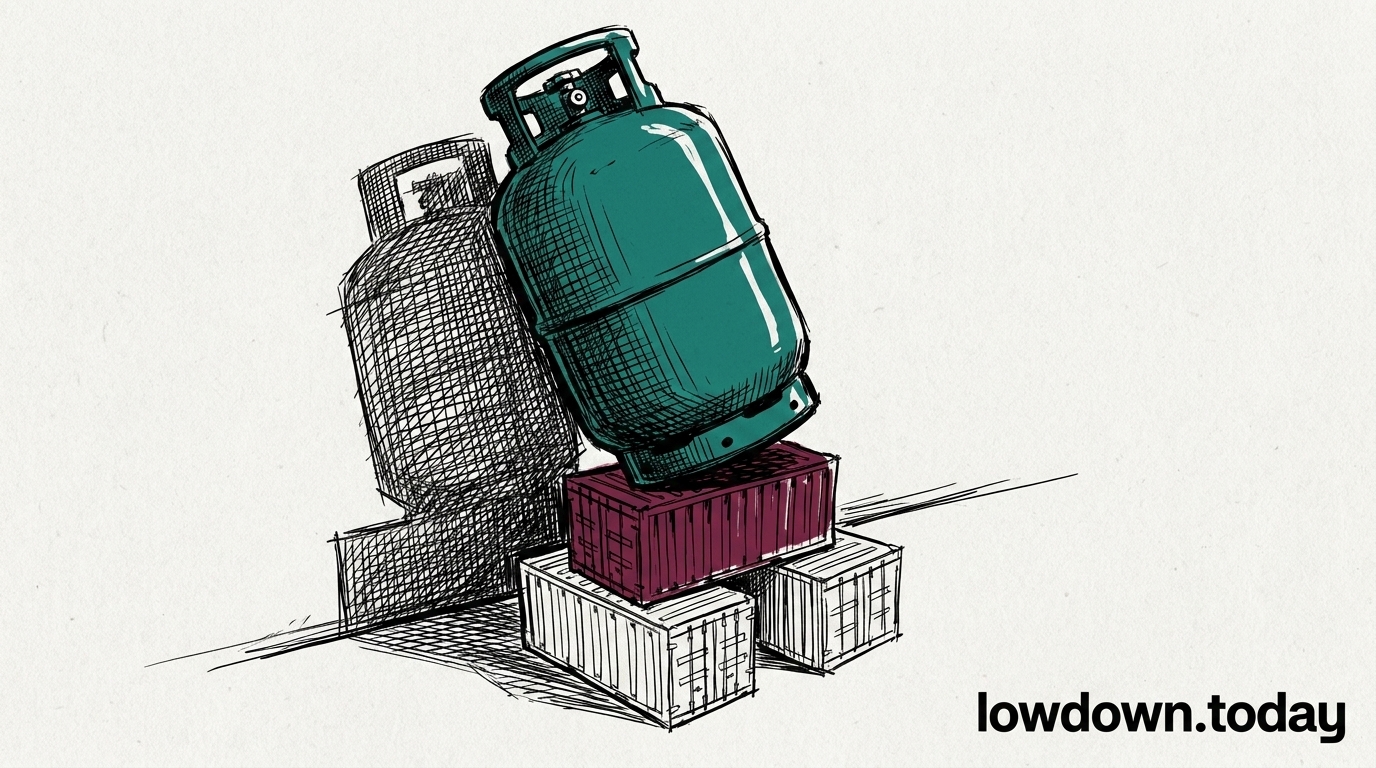
Cuba's 505 MW of new solar produces nothing at the 20:30 peak, and the four planned 50 MW batteries that would shift daytime output into the evening have no in-service date. Every fault therefore lands on a fleet with nothing spare behind it, which is why the trigger has moved upstream: this collapse began in the wires, not in a shortage of fuel to burn. The cooking gas cylinder and the dark grid are the same fuel shortage read at two different meters, and only one of them has a price printed on it.




