Skip to content
You can now search across every topic, entity and event.What's new
Autonomous Systems: Land & Sea
6JUN

The MASS Code enters force, its detail deferred

2 min read
11:59UTC

The IMO's global code for crewless ships took effect on 1 July, but its working framework was pushed to December, leaving operators with a milestone and little else.

TechnologyDeveloping
Key takeaway

The global rulebook for crewless ships began, but the detail operators need does not arrive until December.

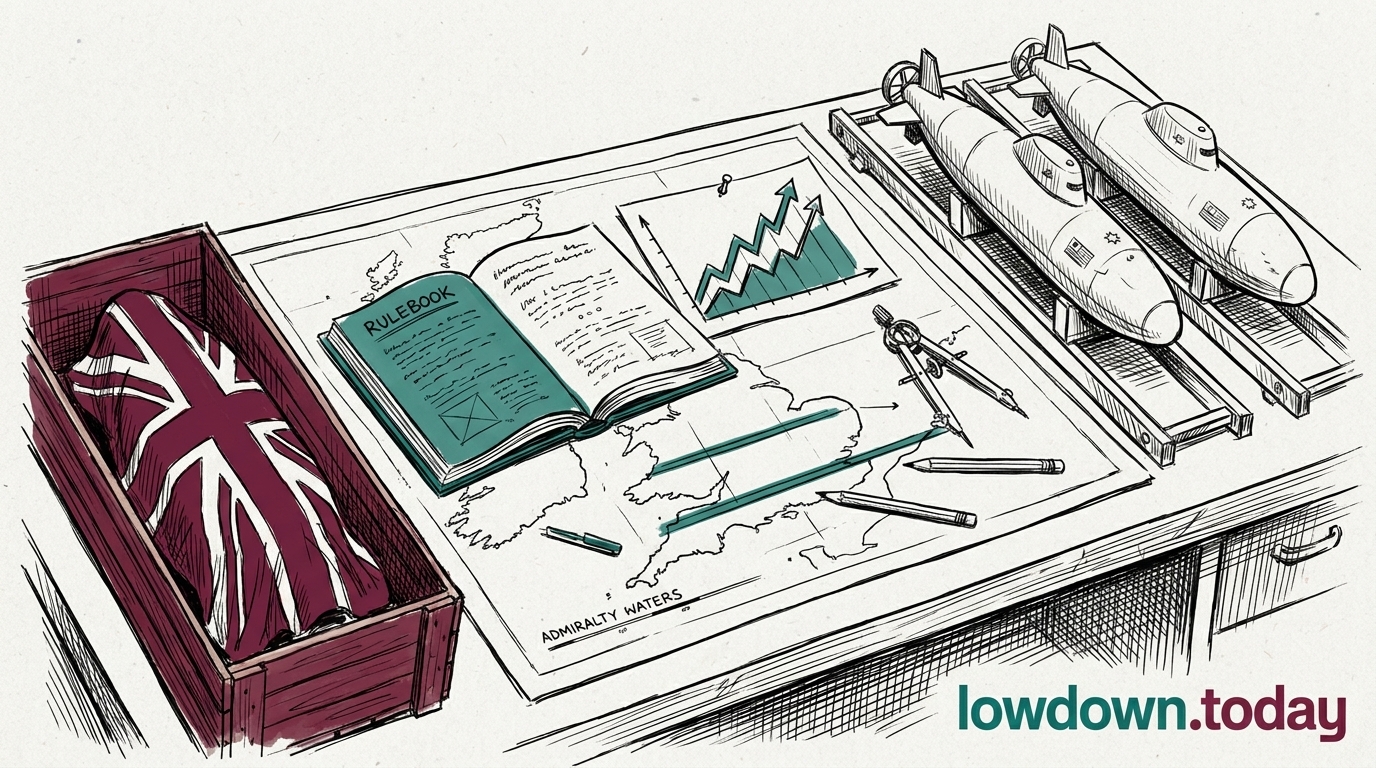
The International Maritime Organization let its non-mandatory Maritime Autonomous Surface Ships Code take effect on schedule on 1 July 2026 , the milestone the prior update tracked as approaching. Entry into force was administrative: the Experience Building Phase framework will not be developed until the Maritime Safety Committee meets as MSC 112 in December 2026, and the Maritime and Coastguard Agency offered no national-legislation timeline.

The pattern that runs through the naval plan repeats in the regulatory domain. A code arrives on time and the binding detail moves to a later date, so classification societies keep filling the gap with their own class rules, and the pan-European FAVOR research programme remains where the workforce and liability questions are being worked out. The three gaps Nautilus International flagged before entry, who answers when a master is ashore, whether one operator can supervise several vessels, and how displaced seafarers are handled, are unchanged.

For an operator planning a crewless voyage, 1 July added a headline and no new certified pathway.

Deep Analysis

In plain English

The global rules for ships that sail with few or no crew officially came into effect on 1 July. But the detailed part that operators actually need, the working framework, will not be written until an international committee meets in December. So for now the milestone is mostly on paper: nothing an operator may legally do changed on the day, and the biggest questions, like who is responsible if something goes wrong while the captain is on shore, are still unanswered.

What could happen next?
  • Meaning

    Entry into force starts the clock toward a mandatory 2032 instrument without changing what an operator may legally do today.

    Short term · Assessed
  • Consequence

    Classification societies keep setting the de facto rules through their own class notations until MSC 112 builds the framework.

    Medium term · Assessed
  • Risk

    The unresolved shore-based-master liability question remains a barrier to scaling crewless operations.

    Long term · Suggested
First Reported In

Update #5 · Britain names four robot warship classes

International Maritime Organization· 3 Jul 2026
Read original
Causes and effects
This Event
The MASS Code enters force, its detail deferred
Entry into force starts the clock toward a mandatory 2032 instrument without changing what an operator may legally do today, so the regulatory frontier moved on paper more than in practice.
Different Perspectives
RUSI naval-procurement analysts
RUSI reads Thales-Exail as backward integration into a supply chain Thales already depended on, and the mothership order as the true bottleneck behind Britain's autonomy transition, not the drones themselves. Firm specifications for Type 91-94 without a named contractor mark a requirement stage, not a procurement commitment.
US Defense Innovation Unit
DIU used its Other Transaction Authority to select Norway's Kongsberg over a US-only team to design the CAMP extra-large underwater vehicle, due for concept design in the third quarter of 2026. DIU values proven HUGIN-class vehicle hours over the domestic-sourcing preference a standard procurement track would apply.
UK Ministry of Defence
Defence Minister Luke Pollard confirmed on 17 July that Britain will spend GBP 90 million on three Norwegian-built mine-hunting motherships, retiring HMS Chiddingfold the same fortnight after 42 years' service. The motherships, not more drones, are the bottleneck the Royal Navy is actually funding to hold its autonomy timetable.
Kongsberg
Kongsberg
Kongsberg's HUGIN line won a US Navy XLUUV design lead from the Defense Innovation Unit on 15 July while the same product family closed Main Supplier and HUGIN-order deals with Fugro and DOF. One Norwegian programme now serves a US design study, a European AUKUS bid and two commercial survey contracts at once.
Thales
Thales
Thales agreed on 6 July to pay EUR 3.9 billion for Exail Technologies, folding sonar, vehicle and navigation production under one French roof rather than continuing to buy in the vehicle layer. The deal turns Thales into a single vertically-integrated bidder against Kongsberg's DRASS-partnered European AUKUS counter-bid.
China (military commentary)
Chinese military commentary has called uncrewed maritime equipment 'an excellent force multiplier' that cannot overturn the fundamental logic of naval warfare, the lone voice against the Western consensus that autonomy is the central axis of naval modernisation. Beijing reads the airdrop trial as an incremental logistics fix, not London's claimed doctrinal breakthrough.