Skip to content
Welcome, thoughtbot's Giant Robots listeners!Start here
Autonomous Systems: Land & Sea
12AUG

Frankenburg compounds a UK interceptor win

1 min read
14:17UTC

Babcock, ACUA Ocean and Frankenburg Technologies announced a maritime counter-drone system on 21 July, eight days after Frankenburg won its first UK interceptor contract.

TechnologyDeveloping
Key takeaway

Frankenburg parlayed a UK land-interceptor win into a prime-backed maritime product line within a fortnight.

Babcock, ACUA Ocean and Frankenburg Technologies announced an integrated maritime counter-drone system on Tuesday 21 July, pairing a Babcock multi-domain launcher with Frankenburg precision missiles and ACUA's uncrewed surface vessels against mass drone attacks in high seas. Babcock is a UK defence prime; ACUA Ocean builds uncrewed boats; Frankenburg is a UK interceptor startup. The partnership builds on a January 2026 memorandum of understanding between Babcock and Frankenburg.⁠1

Frankenburg won a slice of Britain's first low-cost interceptor contracts under LCADE just eight days earlier, the Ministry of Defence programme funding cheap air-defence effectors. Within a fortnight the same firm had turned a single-digit-million land-interceptor award into a prime-backed second product line facing a new domain.

That is how defensible positions get built at the small end. A first government award signals a startup as credible, a prime then attaches it to a larger system, and the second contract arrives before the first has delivered. Babcock supplies the launcher and the customer relationships; ACUA supplies the seaborne platform; Frankenburg supplies the effector it had just been credentialled to build. Each award makes the next easier to win, the same compounding that lets larger players hold ground once they have a foothold.

Deep Analysis

In plain English

This is a system for shooting down drones at sea. Babcock, a UK defence company, built the launcher that fires the weapons; Frankenburg Technologies supplied precision missiles designed to intercept incoming drones; and ACUA Ocean provided uncrewed surface vessels, boats that operate without a crew on board, to carry the system out to sea. The three companies combined their separate specialities into one integrated product rather than any single firm building the whole thing itself, a common approach in defence technology where launcher, weapon and platform makers each bring their own expertise.

Deep Analysis
Root Causes

The system exists because no single UK firm currently builds all three components, launcher, precision interceptor missile and uncrewed surface vessel, that a maritime counter-drone system needs.

Babcock's multi-domain launcher gives the system a platform, Frankenburg's missiles, fresh from its LCADE award, give it a strike capability, and ACUA Ocean's uncrewed vessels give it a maritime delivery platform, each partner supplying the piece the others lack rather than one firm building a vertically integrated system.

What could happen next?
  • Meaning

    The system combines three separate UK-linked suppliers, Babcock's launcher, Frankenburg's missiles and ACUA Ocean's vessels, into one maritime counter-drone product rather than any single firm building it alone.

  • Consequence

    Frankenburg converts its 13 July LCADE interceptor award into a second, larger maritime partnership within eight days, extending its supplier base beyond that one government programme.

First Reported In

Update #16 · BAE unveils Britain's first combat drone

Naval Today· 24 Jul 2026
Read original →
Causes and effects
This Event
Frankenburg compounds a UK interceptor win
A startup turning a single land-interceptor award into a prime-backed second product line inside a fortnight shows how early preferment compounds.
Different Perspectives
Conservative opposition
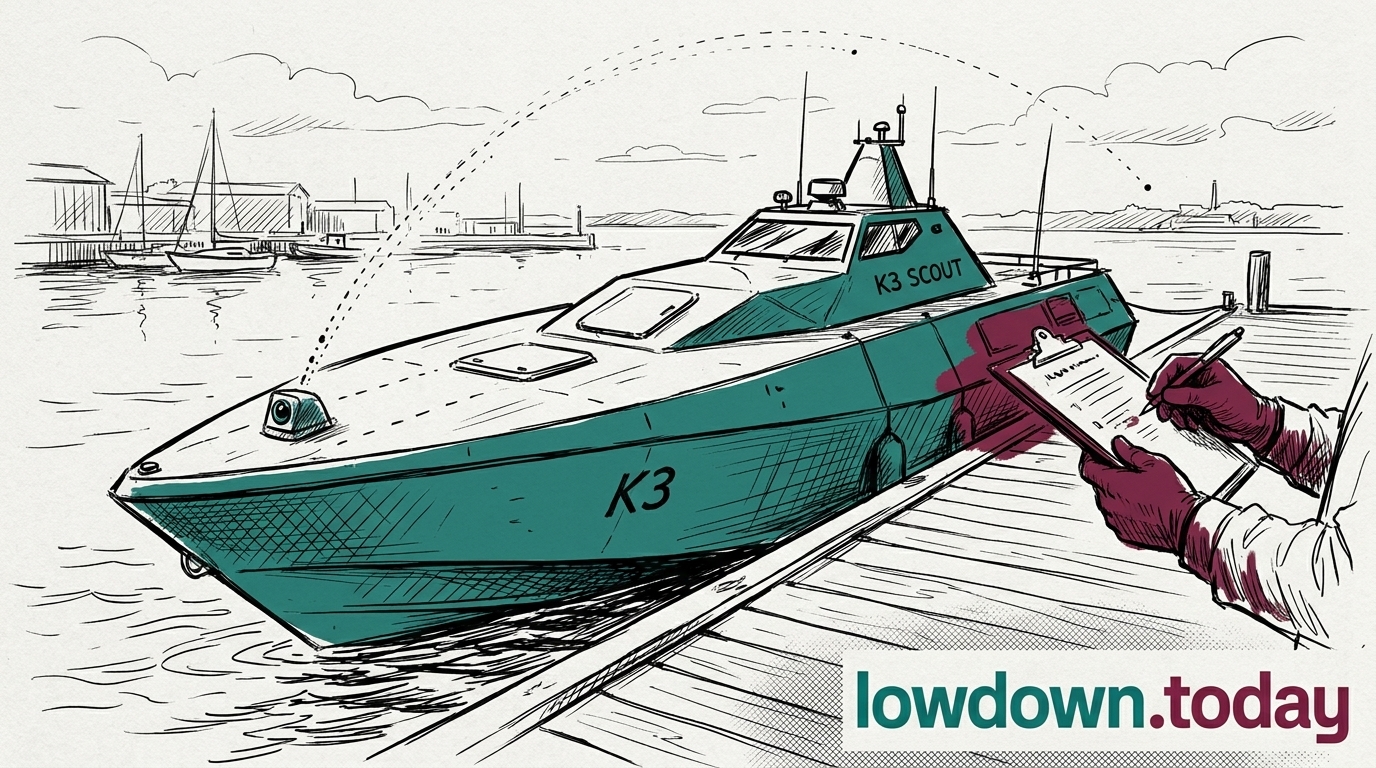
The Conservative opposition called on the Government on 9 August to 'urgently audit' equipment for hidden Chinese components, after the Telegraph's K3 SCOUT report. No named MP has been quoted on the record; the call came at party level, alongside the Ministry of Defence's own 10 August statement that no data had been compromised.
Kraken Technology Group
Kraken Technology Group is a UK maritime-defence company based in Portsmouth that builds the K3 SCOUT, and crossed a $1bn valuation in July on a single-sourced $175m raise. The camera components reached the fleet under a third party's written security assurance, which the Platform Authority, which does not yet exist, was never positioned to check.
Navy Commercial
Navy Commercial
Navy Commercial at Whale Island published two notices on 5 August: 074032-2026, asking industry how to build a Platform Authority to certify uncrewed vessels, and 074351-2026, a GBP10m multi-role USV testbed for the Defence Chief Technology Officer. Responses on the Platform Authority close 19 August, ten days after the cameras were found transmitting to China.
HUMAIN
HUMAIN
HUMAIN and Applied Intuition stated a 2030 target for thousands of autonomous trucks on Saudi logistics corridors. The announcement disclosed no order, fleet baseline or contract value.
Saildrone
Saildrone
Saildrone and Lockheed Martin demonstrated two JAGM launches from a Surveyor-class vessel at RIMPAC. The accepted record identifies no requirement, customer or production configuration behind the demonstration.
Taiwan Legislative Yuan
Taiwan's Legislative Yuan passed the Act at third reading with a small suicide uncrewed boat on the named development list. The NT$240 billion ceiling covers all unmanned domains, and the Act was not promulgated by 4 September.
