Skip to content
Briefings are running a touch slower this week while we rebuild the foundations.See roadmap
Artemis II Moon Mission
10APR

Four-aircraft relay to track Orion through descent

1 min read
11:48UTC

NASA and Department of Defence crews are tasked to track Orion at Mach 32 across 1,701 nautical miles using a relay of four aircraft with telescopes and onboard sensors.

ScienceAssessed
Key takeaway

Aerial relay and external sensor data will generate the first empirical crewed lunar re-entry dataset.

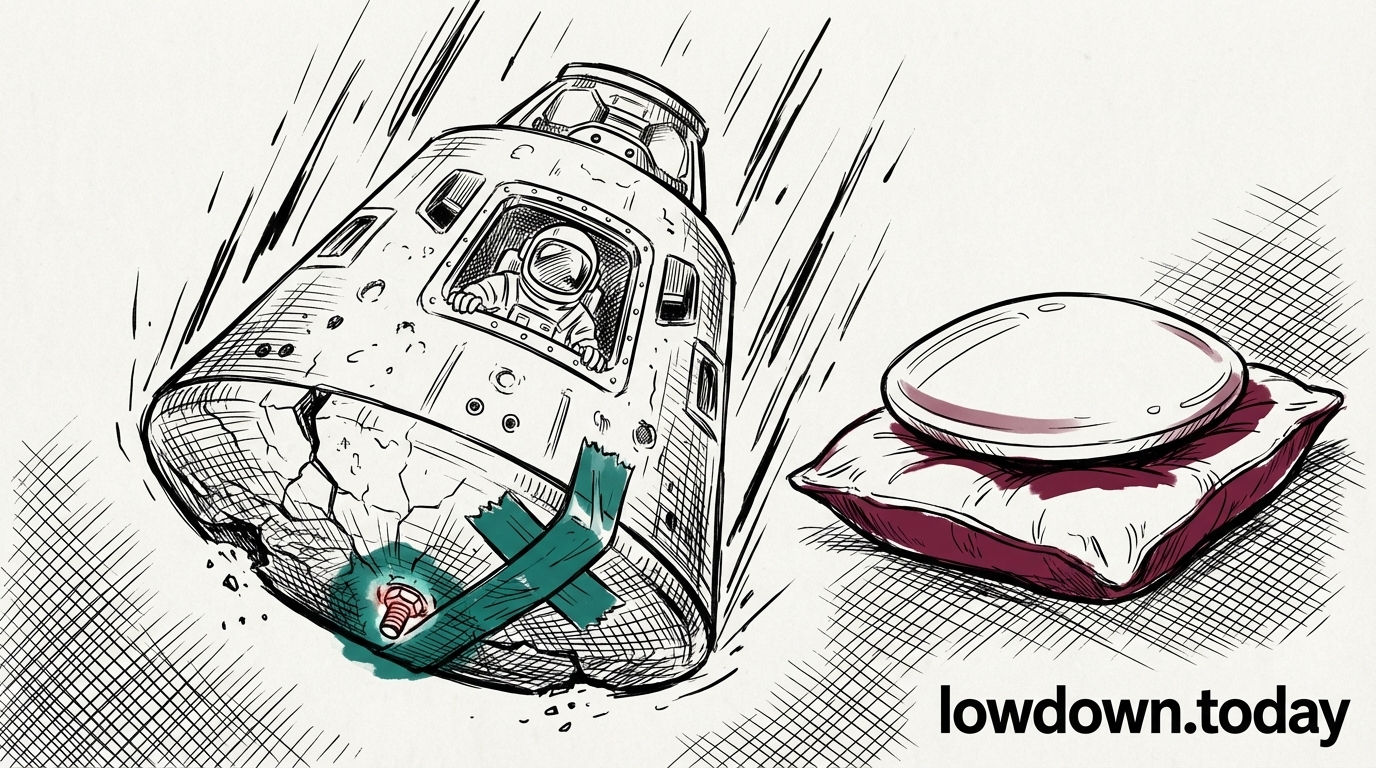
Four aircraft are tasked to track Orion across 1,701 nautical miles of descent at Mach 32, collecting real-time heating data through telescopes and sensors. The aerial relay reflects the limits of ground-based re-entry simulation at lunar-return velocities. No wind tunnel or computational model fully reproduces the coupled plasma, ablation, and gas dynamics of a crewed capsule at Mach 32. This is the same modelling gap that caused NASA to miss both the char loss and the bolt erosion on Artemis I . The relay exists because NASA needs empirical data.

The separately recovered external sensor adds a second data stream: measurements taken from outside the capsule's ablative boundary layer, which cannot be replicated by internal instrumentation alone.

Deep Analysis

In plain English

Four aircraft will chase the capsule through the atmosphere taking measurements. This is not unusual for test flights, but the speeds involved are extraordinary: Mach 32 means the capsule crosses the sky faster than any aircraft can follow, which is why they need a relay of four.

What could happen next?
  • Consequence

    Aerial relay and external sensor datasets will refine the re-entry thermal models used to clear Artemis III.

First Reported In

Update #8 · Thirteen minutes on a shield NASA already replaced

Spokesman-Review / AP wire· 10 Apr 2026
Read original
Different Perspectives
JAXA
JAXA
JAXA is an Artemis Accords signatory with the Lunar Cruiser rover planned for south-pole surface operations; Chang'e 7's first-arrival timeline compresses the window those surface systems were designed to operate in alongside American crew.
Space Research Institute RAS / Roscosmos
The LILEM instrument on Chang'e 7 gives Russia science-cooperation presence at Shackleton's rim with no independent crewed lunar capability on a public timeline. This is Roscosmos's only confirmed path to south-pole science in the current decade.
CNSA / China Manned Space Agency
Chang'e 7 at Wenchang confirmed a second-half 2026 launch for Shackleton rim, 18 to 24 months before any American crewed arrival. The mission carries a Russian LILEM instrument, giving Roscosmos a south-pole science foothold inside China's programme.
Jeremy Hansen / Canadian Space Agency
Hansen appeared at the 16 April JSC press conference in his only public moment since splashdown. Canada's Canadarm3 remains without a confirmed deployment host after Gateway cancellation, with CSA maintaining institutional silence on the programme's status.
Airbus Defence and Space
Airbus has issued no post-mission ESM performance statement; its press room returned a 404 error on a 14 April check. The only named Airbus engineer quote on the mission appeared in a Nature interview, not a company release.
Daniel Neuenschwander / European Space Agency
ESA's 11 April statement praised ESM translunar injection precision and omitted the pressurisation valve anomaly; the June 2026 Council is the sole stated review forum. ESM-3 is at KSC without a corrected-baseline disclosure to justify its readiness.