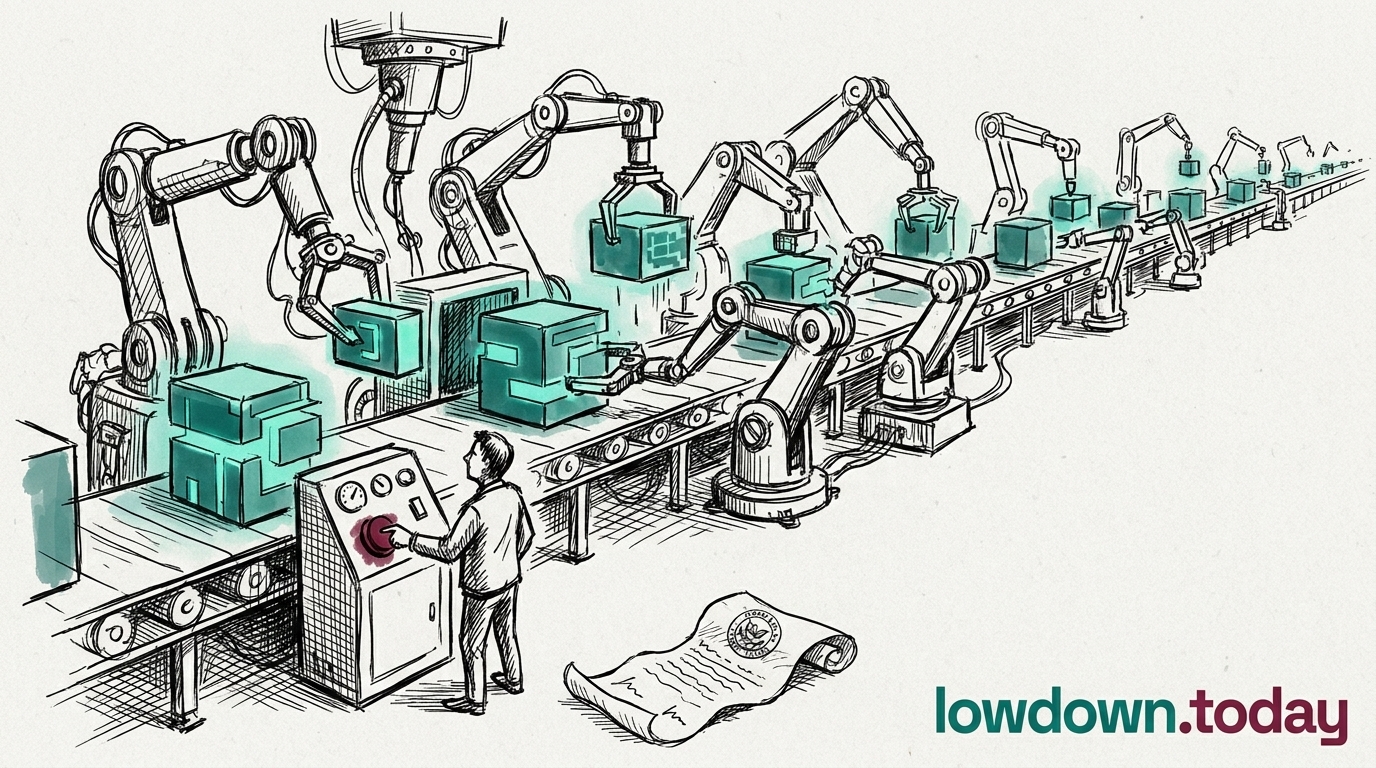
PayPal CEO Enrique Lores, who took the role on 1 March 2026, announced 4,760 redundancies alongside Q1 2026 results, representing 20% of PayPal's 23,800-person global workforce. The cuts are phased across a 24-to-36 month horizon and target $1.5 billion in annual run-rate savings. Lores framed the programme as PayPal "becoming a technology company again" via "aggressive AI adoption."
The WARN Act (Worker Adjustment and Retraining Notification Act, the 1988 US federal law requiring 60 days' notice for mass layoffs affecting 500 or more workers at a single site) requires the notice obligation to be triggered by a qualifying event: a single decision affecting sufficient workers within a defined timeframe. Spreading cuts across 24 to 36 months means no qualifying event arises. That is the same playbook Oracle deployed for its 30,000-person reduction in March 2026, which generated WARN Act filings covering fewer than 4% of the affected headcount. Oracle's Massachusetts operations produced no filing at all despite the company's Burlington offices, a gap that remains unresolved.
Lores's incoming-CEO framing, that PayPal will become a technology company again, has a dual function. It positions the cuts as strategic repositioning rather than operational failure, and it redirects analysts toward future AI-enabled revenue rather than present headcount decline. PayPal has been a digital payments company for 25 years; its payment infrastructure already runs on software. The claim that it needs aggressive AI adoption to qualify as a technology company is as much new-leadership narrative as operational thesis.
Four enterprise platform companies, GitLab, Cloudflare, Upwork, and PayPal, announced cuts in the same fortnight using structurally similar justifications. The common thread is not that each company independently reached the same conclusion; it is that the same legal architecture, the same corporate communication playbook, and the same AI-efficiency rationale are being applied in sequence, with each company's successful navigation reducing the perceived compliance risk for the next.





