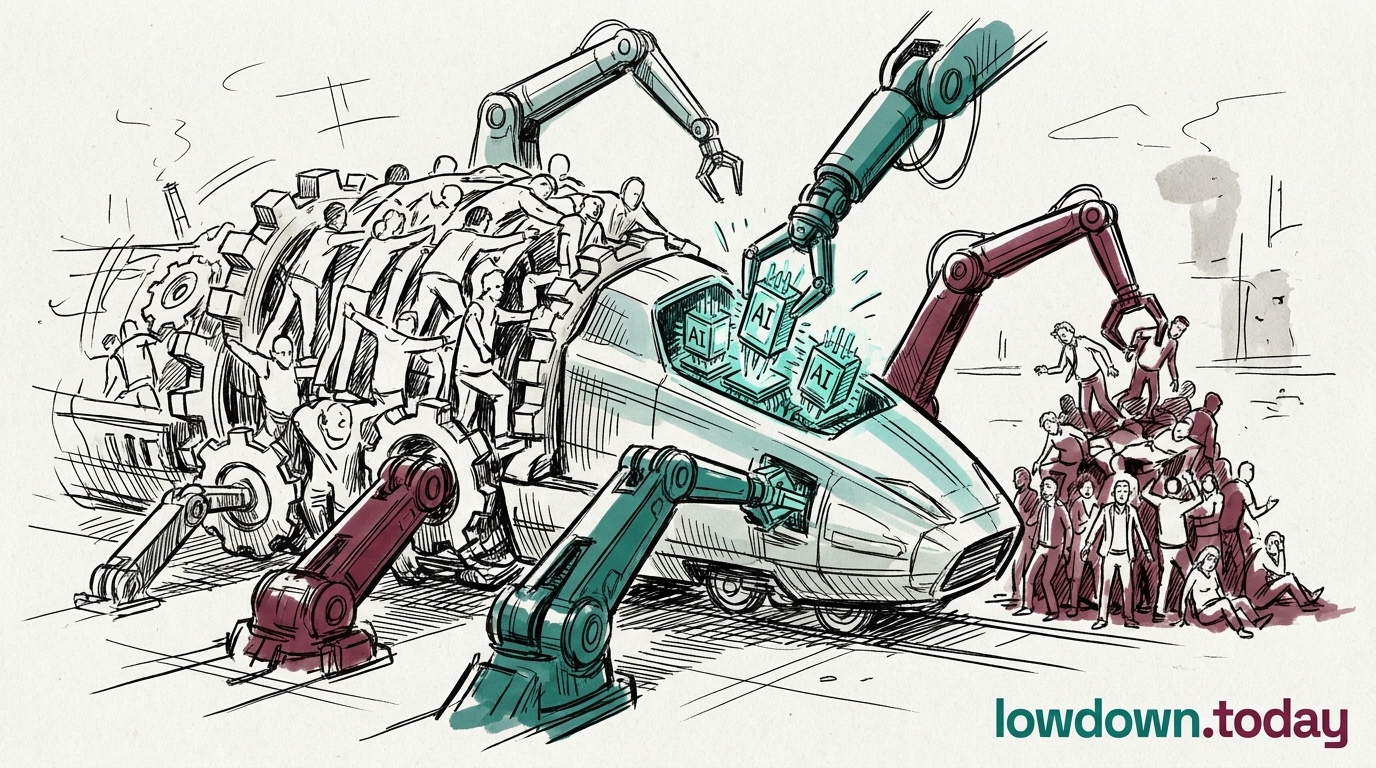
The Bureau of Labor Statistics, the US federal statistical agency responsible for labour market data, has not rescheduled its 14 April 2026 GenAI workplace paper as of 23 April. The skipped publication is now nine days old with no public explanation, leaving the New York Fed Survey of Consumer Expectations as the de facto federal measure of AI workplace impact.
GenAI, meaning generative AI, is the specific technology category the BLS paper was scheduled to quantify at workforce level. Without it, no single federal dataset captures the volume, composition or trajectory of AI-linked employment change.
The BLS skip was first documented nine days ago, when the NY Fed SCE immediately filled the vacuum with its 62% unemployment-expectation figure. The bipartisan Hawley-Warner coalition wrote to the BLS in March specifically to build an AI displacement instrument; the agency's absence from its own publication date confirms the federal measurement gap the Hawley-Warner letter had identified.
The NY Fed SCE is a monthly household survey run by a regional reserve bank. It was not designed to be the primary federal measure of AI workplace impact, and it cannot substitute for the cross-sectional firm-level data only BLS produces. A household survey asks workers what they fear; a firm-level survey asks employers what they are doing. Goldman's substitution estimate and the Stanford JOLTS analysis remain the operative measures of AI displacement precisely because the statutory agency responsible has not produced a competing figure.
The practical consequence: as Meta, IBM, Wipro, Snap and UKG ran the April restructuring cycle, investors, policymakers and regulators priced the displacement wave off academic and wire-service models rather than federal statistics. Whether the BLS reschedules before its next publication window in May, or lets the federal AI labour measurement brief drift to the New York Fed by default, will be the clearest signal of whether the US statistical apparatus can keep pace with the phenomenon it was built to measure.





