Skip to content
Welcome, thoughtbot's Giant Robots listeners!Start here
AI: Jobs, Power & Money
16APR

UK vacancies fall below pre-Covid line

3 min read
13:29UTC

ONS reported UK vacancies at 705,000 for February to April, the lowest since 2021 and now below the pre-pandemic baseline, with real wage growth down to 0.1%.

EconomicDeveloping
Key takeaway

UK vacancies fell below the pre-pandemic baseline as real pay growth stalled at 0.1%, with no AI attribution.

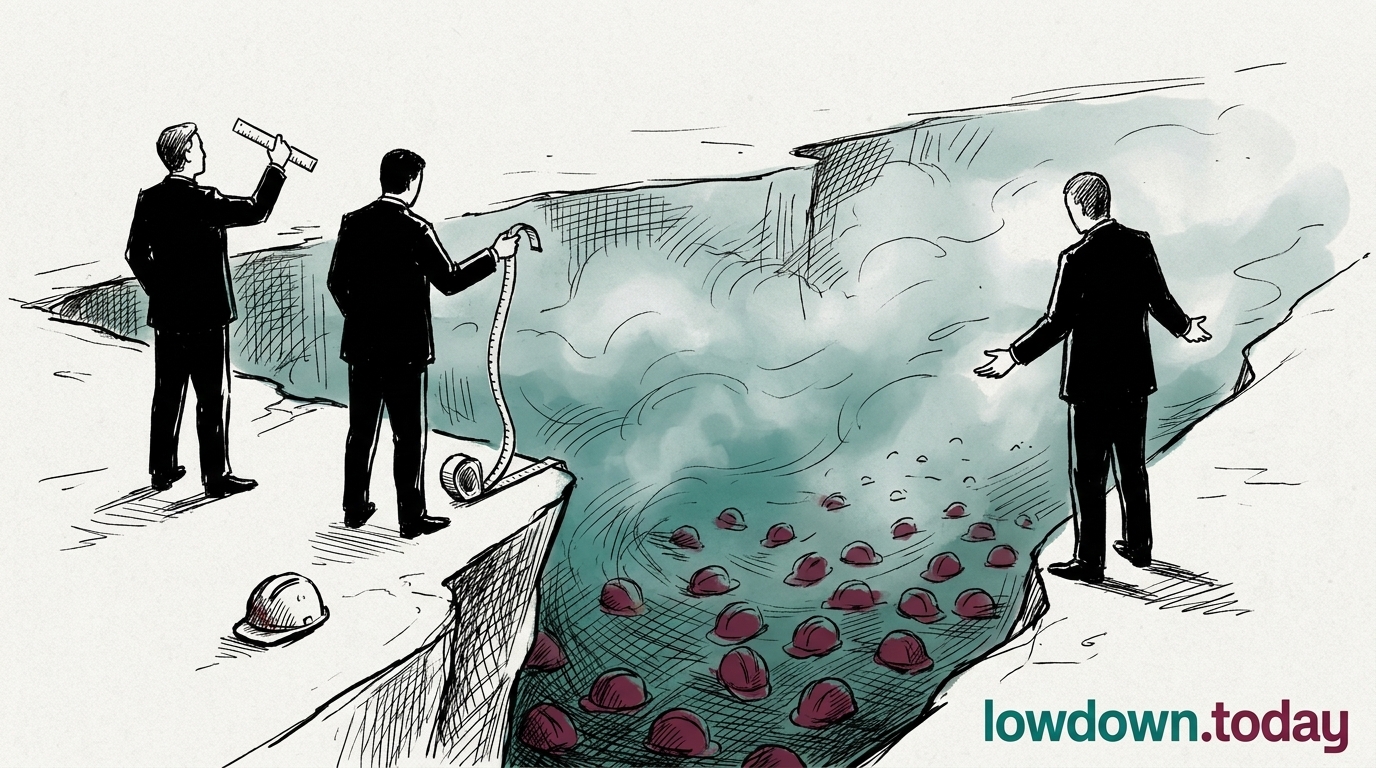
ONS (Office for National Statistics) reported UK vacancies at 705,000 for February to April, the lowest since the same period in 2021 and now below the pre-pandemic baseline⁠1. That breaks the 711,000 five-year low recorded a month earlier and the long 721,000 plateau before it. Real wage growth has fallen to 0.1% on a CPIH-adjusted basis (Consumer prices index including housing costs), down from 0.4%, leaving pay flat against prices.

Payrolled employment held at 210,000 down year on year, confirming the prior reading was no anomaly. The ONS still attaches no AI breakdown to any of it. The statistical apparatus records the contraction with precision and names no cause for it.

For scale, the Bank of England's Financial Policy Committee used 500,000 additional unemployed as its AI worst case. The UK is now absorbing 210,000 fewer payrolled workers a year, already two-fifths of the way to that stress scenario, through a measurement system that cannot say whether AI is the driver. A reader looking for the cause in the official data will not find it labelled there.


Deep Analysis

In plain English

The ONS (Office for National Statistics) counts job vacancies across the UK every month. In the three months to April 2026, it recorded 705,000 unfilled jobs: the lowest number since the same period in 2021, and for the first time, below the level that existed before the COVID pandemic. At the same time, 210,000 fewer people were on payrolls year on year. Real wages (earnings after accounting for inflation) grew by just 0.1%, barely anything. The Bank of England, the UK's central bank, had previously modelled a worst case in which AI leads to 500,000 more people becoming unemployed. UK vacancy data is already below the level the Bank's model assumed as a starting point. ONS does not currently break down its data by AI exposure, so it is not possible to say how much of the decline is caused by AI and how much by other factors like tax changes or the post-pandemic slowdown.

Deep Analysis
Root Causes

ONS produces no AI-specific breakdown of its vacancy or payrolled employment data. The 705,000 reading is therefore politically usable by both sides of the AI displacement debate: those who believe AI is causing structural displacement and those who attribute the decline to higher employer National Insurance contributions (introduced in the October 2025 Budget) and post-pandemic normalisation.

The Bank of England's 500,000 additional unemployed worst case was published when vacancies stood above 750,000. The structural buffer the Bank assumed in its scenario has now eroded, meaning the scenario's trigger point is closer than when it was published.

Escalation

The prior five-year low of 711,000 was broken in consecutive months (April then May), confirming the downward trend is not a single-month anomaly. The next test is the June reading: a third consecutive break below 711,000 would establish a trend that forces Bank of England commentary.

What could happen next?
  • Consequence

    Real wage growth at 0.1% CPIH-adjusted is insufficient to sustain consumer spending growth, compressing UK domestic demand in the second half of 2026.

    Short term · Reported
  • Risk

    Without ONS AI-exposure disaggregation, UK policymakers cannot distinguish AI displacement from cyclical correction, delaying any targeted intervention until the signal is too large to misread.

    Medium term · Assessed
  • Consequence

    The Bank of England's 500,000 additional unemployed stress scenario was calibrated against a vacancy baseline of 730,000-plus; the 705,000 reading means the worst-case trigger point is structurally closer than the scenario assumed.

    Short term · Reported
First Reported In

Update #11 · Markets now reward the cut, punish the freeze

ILO· 1 Jun 2026
Read original →
Different Perspectives
Competition and Consumer Commission of Singapore
The regulator found on 27 November that businesses can still choose and switch between cloud providers and AI models. It named dominant firms blocking rival AI agents as a risk, but answered with eight voluntary principles rather than rules.
La Poste
La Poste
France's state-owned postal group signed its first AI accord with four union confederations on 19 November, setting up a joint committee to oversee AI use. The announcement gives the unions a say, but no job security and no training hours for its 227,000 staff.
Nascent Information Technology Employees Senate (NITES)
The IT workers' union asked India's central government on 26 November for a mandatory national policy on AI layoffs, with every automated job cut logged in public. It expects to meet Labour Ministry officials; no government response has been reported.
China State Council
China State Council
Beijing's cabinet told local governments to pace AI in labour-intensive industries and to screen large AI projects for job losses. It keeps backing AI but wants the replacement of workers slowed, and it set no numeric targets.
SAP
SAP
SAP answered Bloomberg's report of at least 10,000 planned job cuts by telling CNBC that nothing is settled. In Germany a cut on that scale goes through works councils, and its 2024 round of about 10,000 ended mostly in voluntary departures.
Nvidia's board of directors
The board reinstated Jensen Huang on 22 November after input from senior levels of the US government, while its committee of independent directors keeps investigating. Its confidence rests, by its own account, on Washington's input, and the company says it will keep cooperating with government inquiries.

Written with AI from Lowdown's published reporting. Not individually reviewed by an editor. Editorial standards.
