Skip to content
Welcome, thoughtbot's Giant Robots listeners!Start here
AI: Jobs, Power & Money
16APR

UK public pay up 6.3%, private 2.9%

2 min read
13:29UTC

Public-sector regular pay grew 6.3% in May to July and private-sector pay 2.9%, below August's 3.1% inflation, as payrolls fell 145,000.

EconomicDeveloping
Key takeaway

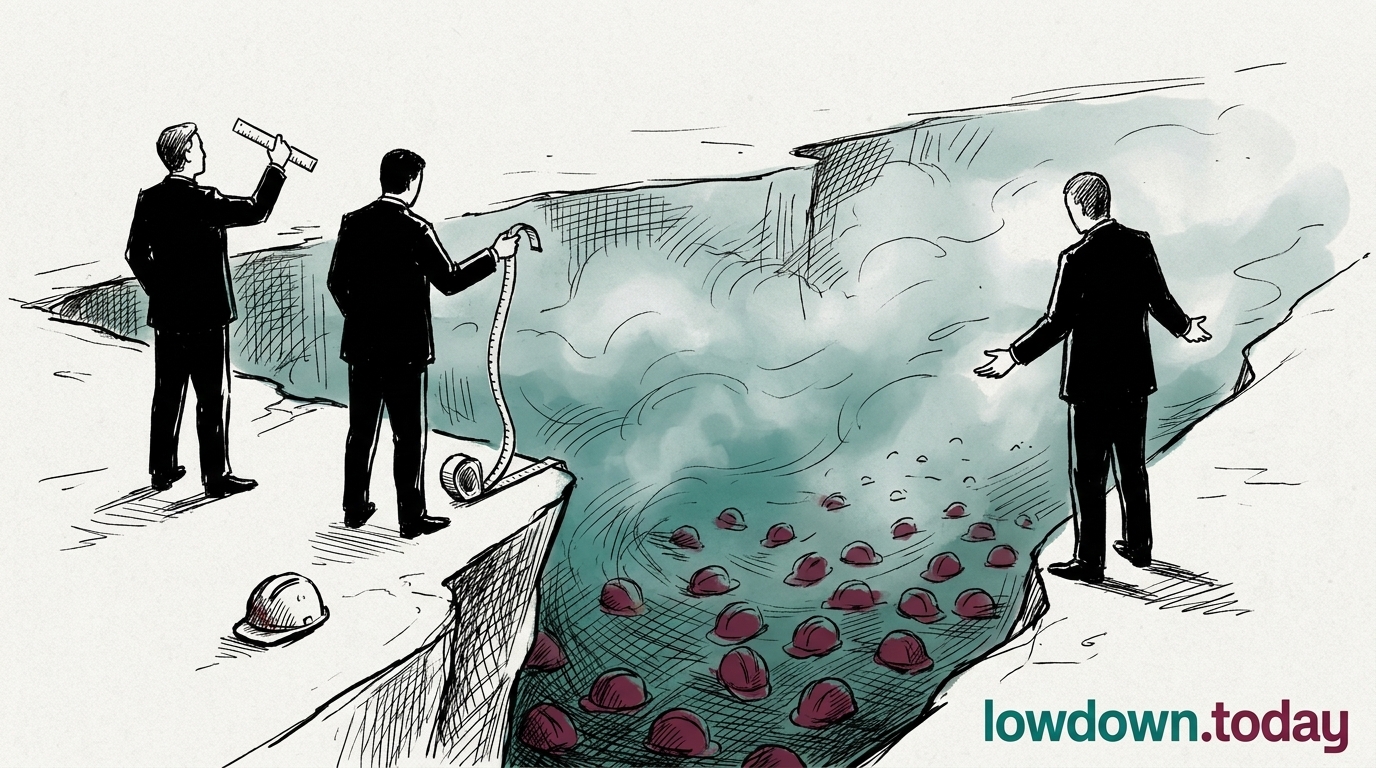
Public pay is rising at more than twice the private rate as payrolls shrink.

The Office for National Statistics (ONS) reported on 15 September that private-sector regular pay grew 2.9% in May to July, against 6.3% in the public sector⁠1. Consumer price inflation for August came in at 3.1%⁠2. The pay figure covers an earlier period, so setting the two side by side is Lowdown's comparison, not an ONS real-pay series; on that comparison, private pay trails prices.

Payrolls fell 145,000 on the year to 30.2 million, with wholesale and retail down 76,000. There were 2.5 unemployed people for every vacancy, up from 2.3 a year earlier, with vacancies averaging 702,000 in June to August.


Deep Analysis

In plain English

Pay rose at different speeds. The Office for National Statistics says private-sector workers got 2.9% more in May to July compared with a year earlier. Public-sector workers, such as nurses and teachers, got 6.3% more. Prices rose 3.1% in the year to August. Setting those two figures side by side is Lowdown's own comparison, because the pay and price figures cover slightly different months. There are also fewer employees on company payrolls than a year ago: 145,000 fewer, 30.2 million in all.

Deep Analysis
Root Causes

Public pay is set by review bodies on a separate annual cycle, so rises of 6.3% reflect past inflation, recruitment shortfalls and settlements agreed after the 2022-23 price rises. Private pay is set firm by firm, and firms facing weaker demand and higher employment costs settled lower.

The jobs data has a structural cause of its own: payrolls fell 145,000 on the year, with 76,000 of the fall in wholesale and retail, a sector that employs many people on low margins.

The pay and inflation figures cover different periods. The ONS pay series runs to July, inflation to August, so Lowdown's comparison of 2.9% against 3.1% is a rough guide rather than a real-pay measure.

What could happen next?
  • Consequence

    A 6.3% public pay rise and 2.9% private pay growth shift the tax base toward the public payroll, which the Treasury funds from slower private receipts.

  • Risk

    Falling payrolls in wholesale and retail lower income tax and national insurance receipts before the 28 October forecast.

First Reported In

Update #4 · £8.1bn over forecast, and the 30-year at 6%

Office for National Statistics· 7 Oct 2026
Read original →
Causes and effects
This Event
UK public pay up 6.3%, private 2.9%
Public pay is growing at more than twice the private rate, which trails August inflation, while payrolls shrank by 145,000 on the year.
Different Perspectives
Competition and Consumer Commission of Singapore
The regulator found on 27 November that businesses can still choose and switch between cloud providers and AI models. It named dominant firms blocking rival AI agents as a risk, but answered with eight voluntary principles rather than rules.
La Poste
La Poste
France's state-owned postal group signed its first AI accord with four union confederations on 19 November, setting up a joint committee to oversee AI use. The announcement gives the unions a say, but no job security and no training hours for its 227,000 staff.
Nascent Information Technology Employees Senate (NITES)
The IT workers' union asked India's central government on 26 November for a mandatory national policy on AI layoffs, with every automated job cut logged in public. It expects to meet Labour Ministry officials; no government response has been reported.
China State Council
China State Council
Beijing's cabinet told local governments to pace AI in labour-intensive industries and to screen large AI projects for job losses. It keeps backing AI but wants the replacement of workers slowed, and it set no numeric targets.
SAP
SAP
SAP answered Bloomberg's report of at least 10,000 planned job cuts by telling CNBC that nothing is settled. In Germany a cut on that scale goes through works councils, and its 2024 round of about 10,000 ended mostly in voluntary departures.
Nvidia's board of directors
The board reinstated Jensen Huang on 22 November after input from senior levels of the US government, while its committee of independent directors keeps investigating. Its confidence rests, by its own account, on Washington's input, and the company says it will keep cooperating with government inquiries.

Written with AI from Lowdown's published reporting. Not individually reviewed by an editor. Editorial standards.
