Skip to content
You can now search across every topic, entity and event.What's new
AI: Jobs, Power & Money
10APR

New York moves to count AI job losses

3 min read
16:54UTC

The New York State Assembly passed A 9581 on 3 June, requiring the state Labor Department to report annually on how AI affects hiring, and sent it to the Senate.

EconomicDeveloping
Key takeaway

New York's Assembly voted to make the state count AI's effect on hiring each year.

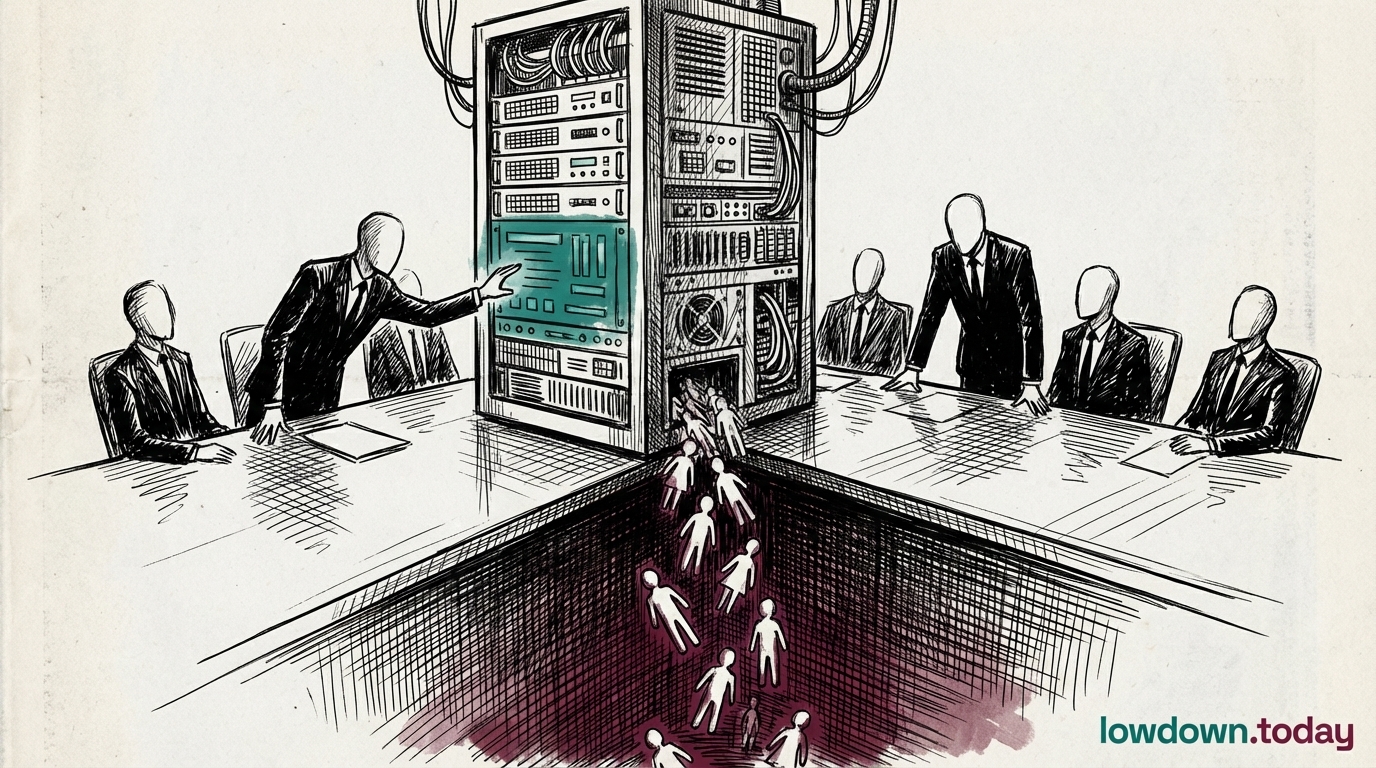
The New York State Assembly passed bill A 9581 on Wednesday 3 June 2026, requiring the state Labor Department to publish an annual report on artificial intelligence's effect on hiring and employment 1. The bill cleared the Assembly and went to the Senate for consideration. It is a measurement mandate rather than a restriction: the state would have to count what AI is doing to jobs, a number no federal instrument currently produces.

The gap A 9581 targets is real. No US federal agency currently measures how many jobs AI removes, which leaves legislators arguing over displacement without an agreed figure. New York's earlier WARN-style disclosure law showed the difficulty: in its first year, 162 companies covering 28,300 workers attributed none of their cuts to AI, because firms decide what reason to state.

The move runs against the opposite direction taken elsewhere. Colorado moved the opposite way in May, replacing its AI Act with a weaker notice-only regime that stripped out the substantive obligations. Two states, two contrary instincts on the same question, with no federal floor to reconcile them. A 9581's value depends on whether the Senate passes it and whether annual reporting can capture a channel that runs mainly through hires never made, the part of displacement that leaves no filing behind.

Deep Analysis

In plain English

The New York State Assembly, the lower house of the state's legislature, passed a bill on 3 June 2026 requiring the state's Department of Labor to publish an annual report on how artificial intelligence is affecting hiring in New York. The bill now moves to the Senate. No US government agency currently produces a regular, official count of how many jobs have been affected by AI. This bill would require New York's Labour Department to start building that record. This bill would require New York's equivalent of the UK's ONS to start keeping that record. Critics point out that a report with no penalties attached and no specific comparison metric may not change employer behaviour. But supporters argue that making the data official and public is the first step toward stronger legislation.

What could happen next?
  • Precedent

    If the New York Senate passes A 9581, it becomes the first US state to create a statutory annual AI-hiring-impact measurement obligation, potentially establishing a template other states adopt.

First Reported In

Update #12 · Jobs report says fine, layoff report says no

Transparency Coalition· 8 Jun 2026
Read original
Different Perspectives
Office for National Statistics
Deferred its Transformed Labour Force Survey beyond November 2027 and disclosed a May 2026 telephone-collection failure. The ONS carries no AI-attribution layer at all, so Britain sits outside this month's cohort of measuring states by its own admission.
Uber India, Swiggy, Zomato and Urban Company
Named as respondents after the Karnataka High Court extended the interim welfare-fee deposit arrangement under the state's gig-worker welfare law to Uber India on 28 July, joining the other platforms already under the same order. The companies are contesting the underlying law while complying with the interim deposit terms.
Kenya State Department for ICT and the Digital Economy
Its draft AI policy, open for consultation to 4 August, proposes a pay floor for data-annotation work, where Kenyan annotators earn $1.46 to $3.74 an hour against $21 to $27 in the US, on figures relayed by the trade outlet WeeTracker. Kenya is legislating on AI labour even though the World Bank rates it among the least exposed economies.
ARAN and Italian public-sector unions
Signed the CCNL Funzioni Centrali 2025-2027 on 6 August, the first Italian national contract with a dedicated AI Title, barring fully automated employment decisions without meaningful human intervention and requiring advance union notice of AI deployment. The unions secured this through bargaining rather than waiting for legislation.
US employers reporting to Challenger, Gray & Christmas
Named artificial intelligence as the leading stated cause of job cuts for a fifth consecutive month in July, at 33% of that month's total, even as the overall cut count fell 27%. Employers kept citing AI as the reason even as scrutiny of the attribution rose.
Bank for International Settlements
Bulletin 130 reports a 0.75 percentage point average unemployment rise across high-AIPI countries between 2023 and 2025, while its own footnote 2 states the index is strongly correlated with employment shares in AI-exposed sectors it is used to predict. The bulletin calls the productivity payoff uncertain and uneven.