Skip to content
You can now search across every topic, entity and event.What's new
AI: Jobs, Power & Money
10APR

Brussels drops binding AI literacy duty in Digital Omnibus

4 min read
16:54UTC

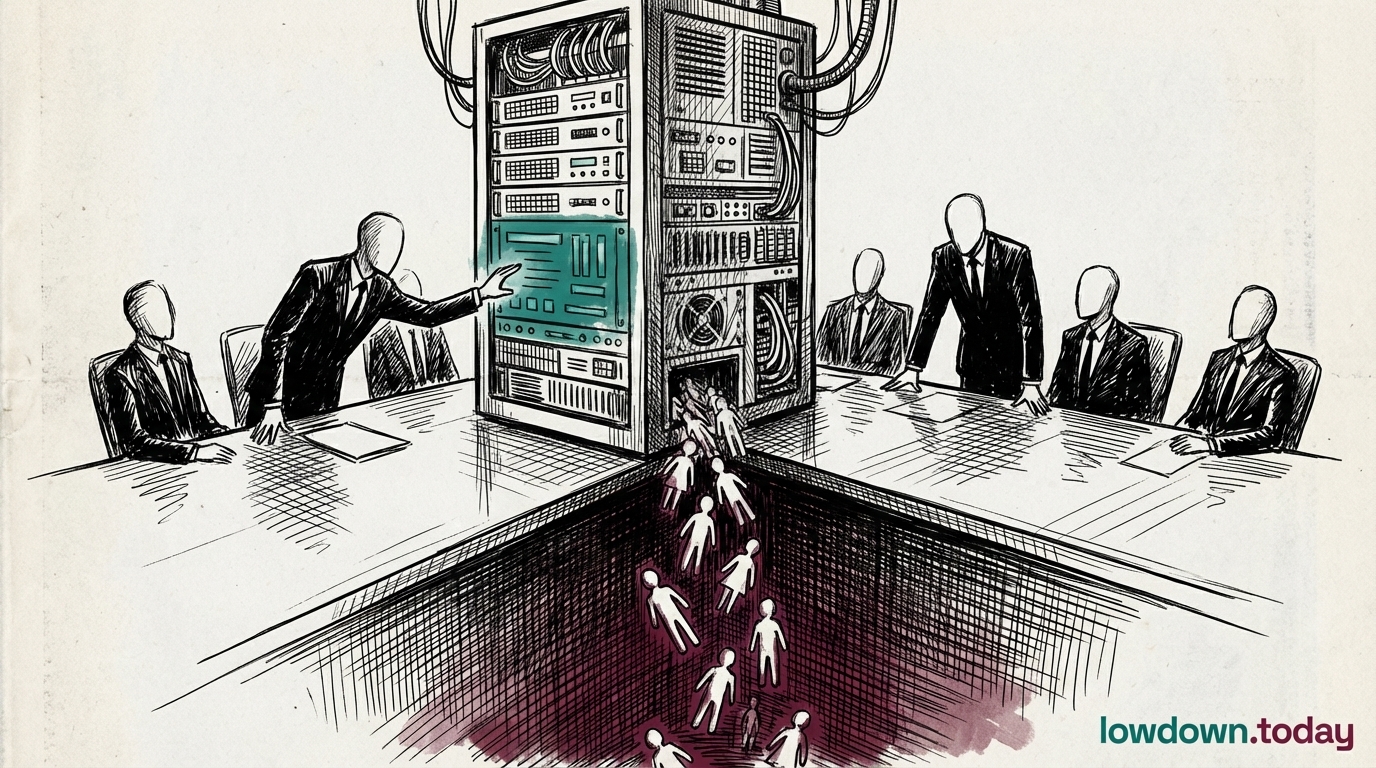
EU negotiators reached a provisional agreement on the Digital Omnibus in the early hours of Thursday 7 May 2026, dropping the binding employer AI literacy obligation entirely and replacing it with a government encouragement clause carrying no enforcement mechanism, no employer duty, and no penalty.

EconomicDeveloping
Key takeaway

Brussels's Digital Omnibus retreat leaves China with the only enforceable AI employment protection in any major jurisdiction.

EU negotiators reached a provisional agreement on the EU Digital Omnibus in the early hours of Thursday 7 May 2026, ahead of a third trilogue that had been scheduled for Wednesday 13 May. The binding employer AI literacy obligation, which would have required firms deploying AI on or alongside staff to ensure workers could understand how the systems operate, with documentation, explanation, and appeal pathways, was dropped in its entirety.

The final text requires the European Commission and Member States only to "encourage and support AI literacy in society": a government advisory clause with no enforcement mechanism, no employer duty, and no penalty for non-compliance. The high-risk employment deadline under Annex III (the EU AI Act schedule listing categories of high-risk AI applications, including those used in employment and worker management decisions) is delayed to 2 December 2027. Annex I obligations move to 2 August 2028. Brussels spent 18 months building toward the binding literacy requirement. The Council's non-binding encouragement language won the negotiation.

While Brussels retreated, China's courts moved in the opposite direction. The Hangzhou Intermediate People's Court upheld, on appeal, a ruling that an employer cannot dismiss a worker for AI cost reasons without offering retraining . The Beijing People's Court had established the foundational precedent in December 2025: under China's Labour Contract Law Article 40 (the unilateral termination clause), planned AI adoption counts as the employer's deliberate strategy, not a qualifying major change in circumstances that justifies dismissal . Those rulings are enforceable by individual workers in court. The EU literacy obligation, had it survived, would have required employer documentation and created a similar avenue for challenge.

The regulatory map after 7 May 2026: the only binding, judicially tested AI employment law in any major jurisdiction is Chinese. The EU has retreated to a position weaker than the US status quo. The United States has an Attorney General AI Task Force (established 9 January 2026) and a Commission study bill, the Economy of the Future Commission Act (S.3339), endorsed by the companies it would notionally regulate. No litigation has been filed. The legal geography that Western policymakers projected in 2023 has been inverted by the negotiating outcomes of May 2026.

Deep Analysis

In plain English

The European Union had been working on a law that would require companies using AI tools to manage their workers to explain to those workers how the systems work. If AI software was used to score your performance, schedule your shifts, or decide if you should be disciplined, your employer would have had to tell you so and give you a way to query the decision. On 7 May 2026, after 18 months of negotiations, that requirement was dropped. The final text says European governments should encourage AI literacy in society. That is advice, not a law, with no way to enforce it. The contrast with China is striking: Chinese courts have ruled that employers cannot fire workers because of AI cost savings without first offering retraining. The EU, which began this process with the most ambitious AI worker-protection rules in the world, ended up with a position weaker than the country it routinely contrasts itself with on human rights.

Deep Analysis
Root Causes

The EU Digital Omnibus trilogue failure has a structural mechanism the body identifies but does not explain in detail. The Council votes by qualified majority, meaning a blocking minority of member states can stop progressive Parliamentary provisions from surviving into the final text.

For the employer AI literacy obligation, the blocking coalition was French and German manufacturing and services lobbies, who argued that documentation and training requirements would impose compliance costs on employers at a moment when European businesses face competitive pressure from US and Chinese AI-adopting competitors.

The secondary mechanism is institutional: the European Parliament advanced the literacy obligation in its March 2026 vote as a political concession, accepting the high-risk employment deadline delay in exchange for the literacy requirement.

The Council extracted the literacy obligation in trilogue after the Parliament had already given up the binding August 2026 high-risk deadline. The Parliament's negotiating position entering the 7 May trilogue was therefore weaker than its March vote position suggests.

What could happen next?
  • Consequence

    EU employers can deploy AI performance management and scheduling tools with no documentation, transparency, or worker-explanation obligation until December 2027 at the earliest.

    Immediate · 0.9
  • Opportunity

    EU member states with strong labour movements, particularly Germany, France, and Sweden, face pressure from trade unions to introduce national AI workplace transparency obligations that fill the gap Brussels created.

    Medium term · 0.6
  • Risk

    The regulatory asymmetry between China's enforceable AI employment law and the EU's advisory clause will be cited in every subsequent EU internal debate on regulatory competitiveness, making re-introduction of the obligation politically harder.

    Long term · 0.7
First Reported In

Update #9 · GitLab signs the manifesto, Brussels backs out

Office for National Statistics· 15 May 2026
Read original
Different Perspectives
Office for National Statistics
Deferred its Transformed Labour Force Survey beyond November 2027 and disclosed a May 2026 telephone-collection failure. The ONS carries no AI-attribution layer at all, so Britain sits outside this month's cohort of measuring states by its own admission.
Uber India, Swiggy, Zomato and Urban Company
Named as respondents after the Karnataka High Court extended the interim welfare-fee deposit arrangement under the state's gig-worker welfare law to Uber India on 28 July, joining the other platforms already under the same order. The companies are contesting the underlying law while complying with the interim deposit terms.
Kenya State Department for ICT and the Digital Economy
Its draft AI policy, open for consultation to 4 August, proposes a pay floor for data-annotation work, where Kenyan annotators earn $1.46 to $3.74 an hour against $21 to $27 in the US, on figures relayed by the trade outlet WeeTracker. Kenya is legislating on AI labour even though the World Bank rates it among the least exposed economies.
ARAN and Italian public-sector unions
Signed the CCNL Funzioni Centrali 2025-2027 on 6 August, the first Italian national contract with a dedicated AI Title, barring fully automated employment decisions without meaningful human intervention and requiring advance union notice of AI deployment. The unions secured this through bargaining rather than waiting for legislation.
US employers reporting to Challenger, Gray & Christmas
Named artificial intelligence as the leading stated cause of job cuts for a fifth consecutive month in July, at 33% of that month's total, even as the overall cut count fell 27%. Employers kept citing AI as the reason even as scrutiny of the attribution rose.
Bank for International Settlements
Bulletin 130 reports a 0.75 percentage point average unemployment rise across high-AIPI countries between 2023 and 2025, while its own footnote 2 states the index is strongly correlated with employment shares in AI-exposed sectors it is used to predict. The bulletin calls the productivity payoff uncertain and uneven.