Skip to content
You can now search across every topic, entity and event.What's new
AI: Jobs, Power & Money
10APR

AI super PACs spend $150m on primaries

3 min read
16:54UTC

The $100m Leading the Future PAC, backed by OpenAI's Greg Brockman and Andreessen Horowitz, spent against regulation-minded candidates in the 2 June primaries; a $50m counter-PAC has formed.

EconomicDeveloping
Key takeaway

AI-industry and pro-regulation PACs are spending $150m to shape who wins the primaries.

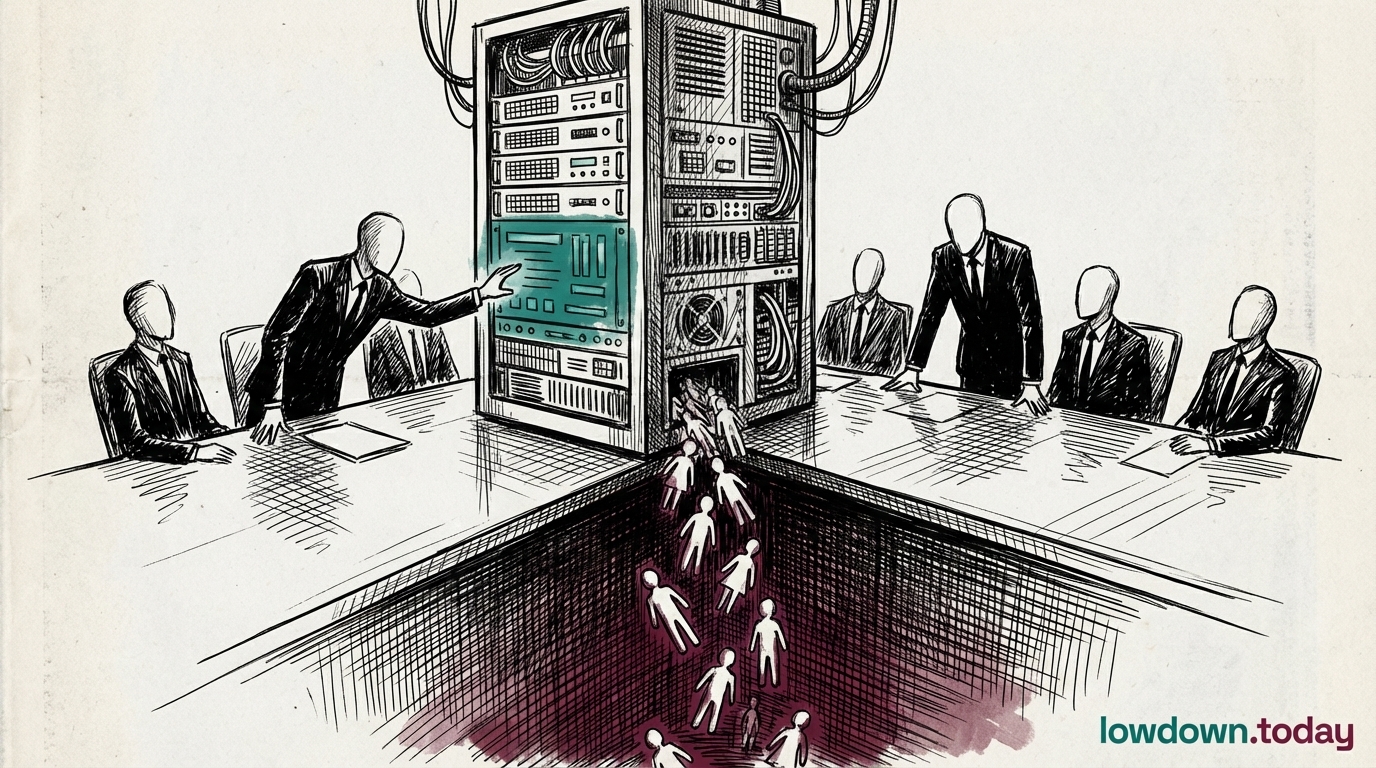
The $100 million Leading the Future super PAC, backed by Greg Brockman of OpenAI, the venture-capital firm Andreessen Horowitz and Joe Lonsdale, contested the primaries held on Tuesday 2 June 2026, spending against regulation-minded candidates in California and Montana races 1. The committee has committed over $100 million to the 2026 midterms and is lined up for the 27 June Louisiana runoff. A $50 million counter-PAC, Public First, has formed to back pro-regulation candidates, bringing combined spending on the question to $150 million.

Primaries are cheaper to influence than general elections and draw far lower turnout, so a relatively small sum can pick favourable nominees before the wider electorate engages. Leading the Future is run in part by a former crypto super-PAC operative reusing the 2024 playbook that flooded primaries early to lock in friendly candidates. The same fight that has stalled in Congress is being settled at the nomination stage instead.

The spending tracks the policy. As state bills such as California's SB 951 advance the case for AI-displacement rules , the industry is contesting the legislators who would write and vote on them. The $150 million committed on both sides signals that the participants expect AI labour policy to be decided in statehouses and primary ballots rather than on the Senate floor, and they are funding the contest accordingly.

Deep Analysis

In plain English

A super PAC is a political fund that can raise and spend unlimited money to influence elections, as long as it does not directly coordinate with a candidate. Two super PACs are now competing in the 2026 US midterm elections over AI regulation. Leading the Future, backed by OpenAI's co-founder Greg Brockman and the venture capital firm Andreessen Horowitz, has committed over $100 million to defeat candidates who favour regulating AI. In the 2 June primaries it targeted candidates in California and Montana who had backed AI worker-protection bills. A rival group called Public First has formed with $50 million to back the candidates Leading the Future is trying to unseat. The combined $150 million makes the 2026 midterms the most heavily funded AI-regulation election fight in US history. The result will shape whether state-level bills like California's SB 951 can advance through legislatures elected partly on AI-industry money.

What could happen next?
  • Risk

    If Leading the Future defeats even a third of its 2026 primary targets, the legislative path for federal AI workforce measurement funding and state-level displacement notice bills narrows significantly through 2027.

First Reported In

Update #12 · Jobs report says fine, layoff report says no

FierceBiotech· 8 Jun 2026
Read original
Different Perspectives
Office for National Statistics
Deferred its Transformed Labour Force Survey beyond November 2027 and disclosed a May 2026 telephone-collection failure. The ONS carries no AI-attribution layer at all, so Britain sits outside this month's cohort of measuring states by its own admission.
Uber India, Swiggy, Zomato and Urban Company
Named as respondents after the Karnataka High Court extended the interim welfare-fee deposit arrangement under the state's gig-worker welfare law to Uber India on 28 July, joining the other platforms already under the same order. The companies are contesting the underlying law while complying with the interim deposit terms.
Kenya State Department for ICT and the Digital Economy
Its draft AI policy, open for consultation to 4 August, proposes a pay floor for data-annotation work, where Kenyan annotators earn $1.46 to $3.74 an hour against $21 to $27 in the US, on figures relayed by the trade outlet WeeTracker. Kenya is legislating on AI labour even though the World Bank rates it among the least exposed economies.
ARAN and Italian public-sector unions
Signed the CCNL Funzioni Centrali 2025-2027 on 6 August, the first Italian national contract with a dedicated AI Title, barring fully automated employment decisions without meaningful human intervention and requiring advance union notice of AI deployment. The unions secured this through bargaining rather than waiting for legislation.
US employers reporting to Challenger, Gray & Christmas
Named artificial intelligence as the leading stated cause of job cuts for a fifth consecutive month in July, at 33% of that month's total, even as the overall cut count fell 27%. Employers kept citing AI as the reason even as scrutiny of the attribution rose.
Bank for International Settlements
Bulletin 130 reports a 0.75 percentage point average unemployment rise across high-AIPI countries between 2023 and 2025, while its own footnote 2 states the index is strongly correlated with employment shares in AI-exposed sectors it is used to predict. The bulletin calls the productivity payoff uncertain and uneven.