Skip to content
You can now search across every topic, entity and event.What's new
AI: Jobs, Power & Money
27JUL

EU waters down worker AI rights

3 min read
10:02UTC

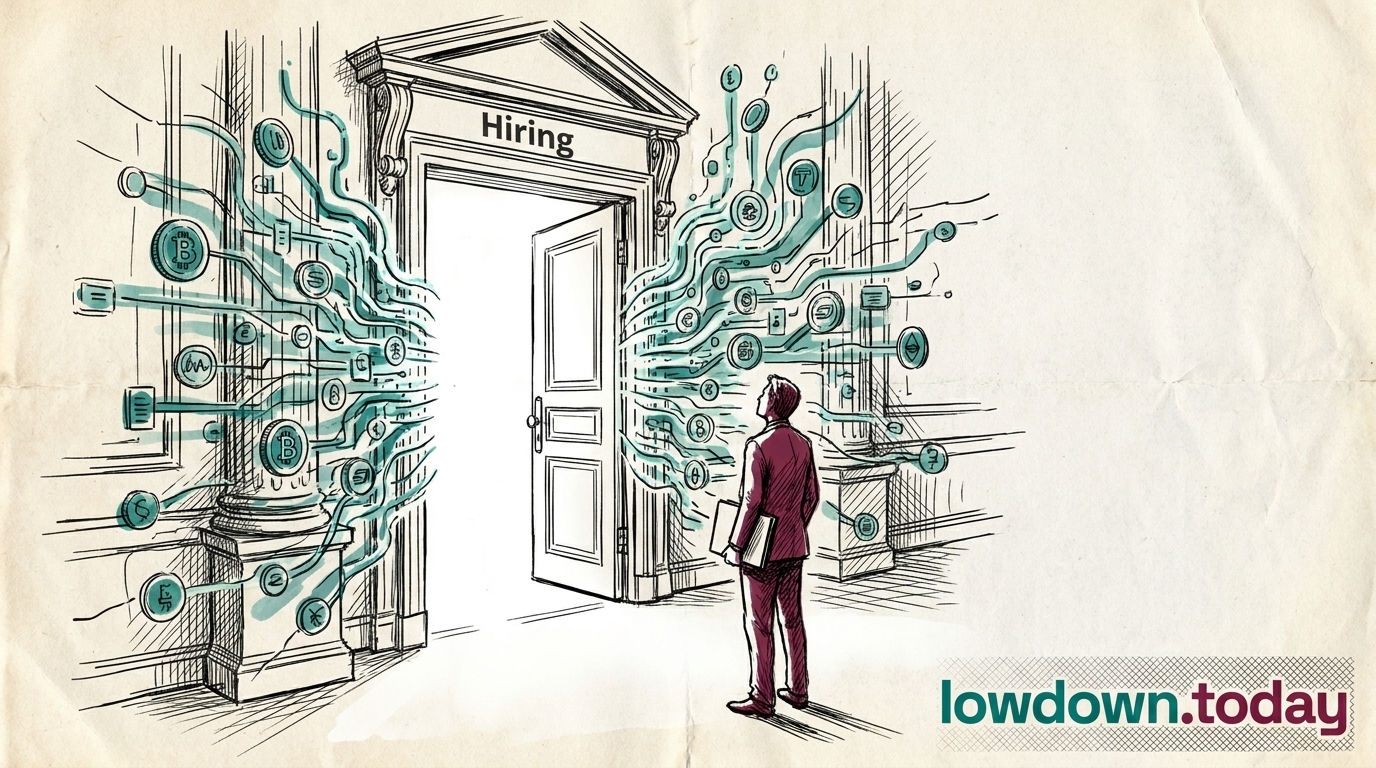
The European Parliament approved the Digital Omnibus 423 to 57 on 16 June, downgrading the duty on employers to make staff understand the AI deployed on them from 'ensure' to 'support'.

EconomicDeveloping
Key takeaway

Downgrading one verb from 'ensure' to 'support' strips the EU's worker AI-literacy duty of any enforceable standard.

The European Parliament approved its Digital Omnibus package on 16 June by 423 votes to 57, with 174 abstentions 1. The Left bloc voted heavily against. The Digital Omnibus is a single bill amending several EU laws, including the AI Act's rules for employers, and Tuesday's vote advanced the 93-4 committee approval covered earlier this month . It pushes the AI Act's high-risk employment obligations to December 2027 for standalone systems and August 2028 for AI embedded in safety components.

One verb carries the worker-facing cost. The employer AI-literacy duty, which would have required firms to make sure staff understood the systems deployed on them, was downgraded from "ensure" to "support" . The European Trade Union Confederation, the bloc's main labour federation, calls that a collapse of the legal threshold rather than a drafting tidy-up: "ensure" creates a duty a worker can test in court, while "support" describes an aspiration with no standard attached.

Until December 2027, a European employee in an AI-augmented but non-high-risk job has no statutory right to an explanation of the system making decisions about their work. The Council has still not formally adopted the text, which leaves one chokepoint before the August 2026 deadline. The Commission argues the delay relieves a genuine compliance burden on European business.

Deep Analysis

In plain English

The European Parliament voted on 16 June to change Europe's AI rules in a way that is important for workers. The original plan required employers to make sure their staff understood AI tools being used on them. The new version only requires employers to 'support' that understanding; a weaker commitment that is much harder to enforce in court. The European Trade Union Confederation, which represents workers across Europe, called this a fundamental weakening of workers' rights. The vote passed 423 to 57, but 174 MEPs; roughly a quarter; abstained, many because they were unhappy with the change but did not want to block the whole package. The rules still need to pass a final Council vote, expected before August.

Deep Analysis
Root Causes

The employer AI-literacy duty's dilution has two structural origins.

First, the Digital Omnibus was structurally designed as a simplification package; its legislative mandate was to reduce compliance burdens on European businesses, not to add worker protections. Grafting a worker-protection amendment (the AI literacy duty) onto a simplification vehicle meant it competed directly with the package's stated purpose.

The 174 abstentions reflect MEPs who wanted the simplification measures but were uncomfortable weakening the duty; a tension the rapporteur resolved by accepting the weaker formulation to hold the coalition together.

Second, the August 2026 adoption deadline created a compulsory schedule. The Council has still not formally adopted the text, but the August deadline means there is no time for a second reading. Any MEP who voted against the package to protect the stronger duty would have had to accept missing the deadline entirely. That asymmetric pressure explains the 423-57 result despite genuine dissent.

What could happen next?
  • Precedent

    The 'support' versus 'ensure' change establishes a drafting template for weakening EU digital worker protections through simplification vehicles; a mechanism industry lobbies may reuse in future AI governance packages.

    Long term · Assessed
  • Consequence

    Germany and France have signalled intent to legislate above the EU floor; if two of the bloc's four largest economies diverge on AI employer duties, companies with pan-European workforces face fragmented compliance requirements.

    Medium term · Reported
  • Risk

    The formal Council adoption has still not occurred. If any member state raises a qualified majority blocking minority before August 2026, the Omnibus timeline collapses and the current high-risk employment deadline (December 2027) defaults to the original 2025 AI Act schedule.

    Short term · Suggested
First Reported In

Update #14 · The AI layoffs nobody is counting

Agence Europe· 20 Jun 2026
Read original
Different Perspectives
European Commission
European Commission
The European Commission's draft Annex III guidelines, closed for comment on 23 July, treat algorithmic scoring in recruitment, pay and termination as high-risk regardless of whether a human signs off, echoing Spain's Audiencia Nacional ruling 101/2026 on concealed scheduling algorithms. Brussels is shifting the fight from counting AI job losses to assigning legal liability for the tools themselves.
Office for National Statistics
The Office for National Statistics recorded UK vacancies rising to 712,000 on 21 July, the first quarterly increase this beat has tracked, with payrolled employment down 85,000 on the year against May's 210,000 fall. The bulletin names no AI cause anywhere, and that is the point: nothing in the release confirms the displacement story it gets cited to support.
Christian Klein, SAP
Christian Klein told investors on 23 July that SAP's research headcount will not grow for twelve months because AI agents and their token costs are absorbing the work, not because SAP is cutting jobs. He frames it as commercial arithmetic: the cost of AI-assisted coding tokens plus the salaries specialist AI hires command, not people being replaced by machines.
Betsey Stevenson, University of Michigan
Betsey Stevenson argued that the 187,000 jobless-claims reading describes a market that hires little and fires little, not one AI is emptying. She said the real damage hides in eligibility rules and suppressed job postings, not in the headline layoff counts employers keep denying.
Comisiones Obreras, UGT and Concentrix's A Coruña works committee
Comisiones Obreras, UGT and Concentrix's A Coruña works committee blamed Microsoft's push toward AI self-service for the 80 redundancies unions signed off on 22 July, not unavoidable business cause. A second Coruña procedure covering 80 more jobs runs to a 31 August deadline, and the unions want the state, not the employer, setting the pace of AI-driven cuts.
Stanford's 'We Must Act Now' signatories
More than 200 academics, including 16 Nobel laureates, published a 13 July letter warning of AI-driven labour disruption, citing Daron Acemoglu's NBER estimate that AI's total factor productivity gain stays under 0.66% over ten years. The letter's own cited economics sit well below Goldman Sachs Research's 1.5-percentage-point estimate published the same week.