Skip to content
You can now search across every topic, entity and event.What's new
AI: Jobs, Power & Money
27JUL

Brussels fixes AI Act job deadline

2 min read
10:02UTC

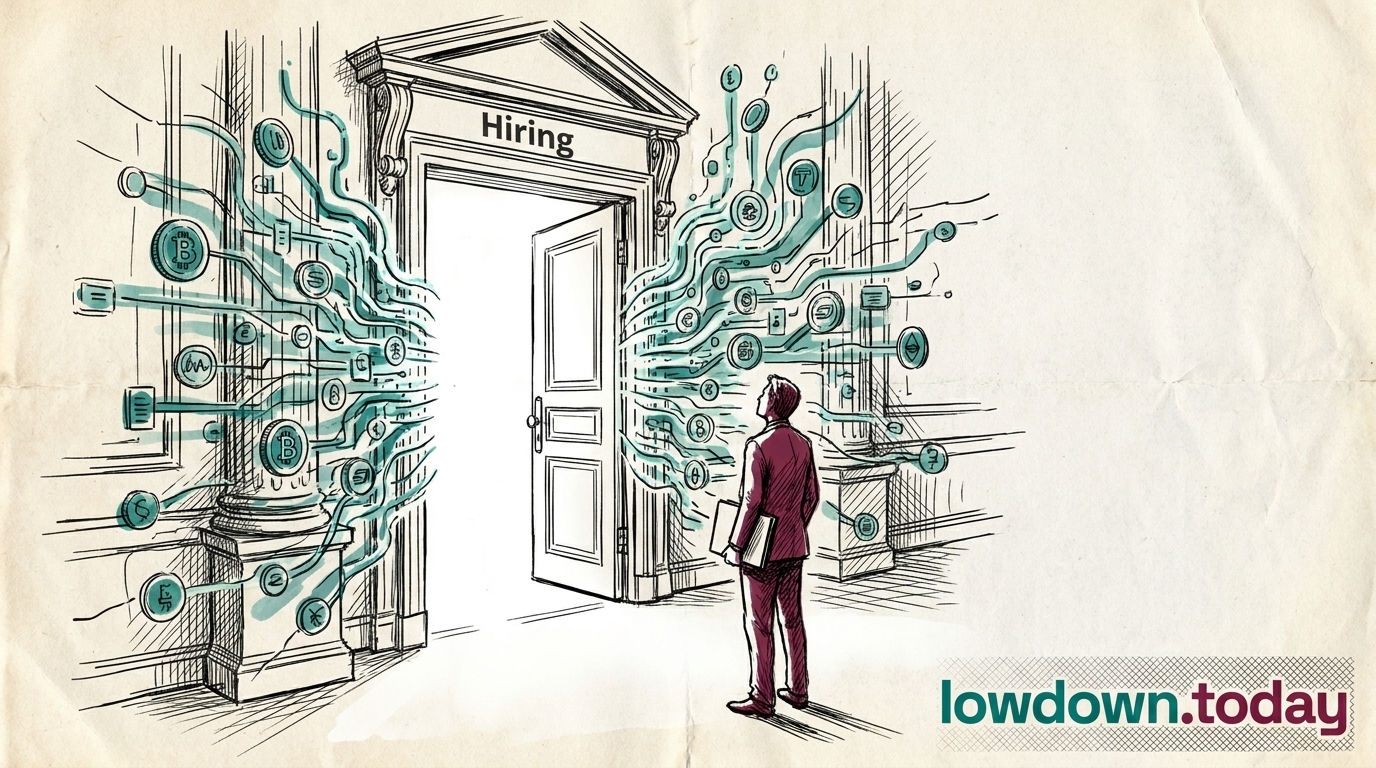
The Council of the European Union gave final adoption to the Digital Omnibus on 29 June, fixing the AI Act's high-risk employment deadline at 2 December 2027.

EconomicDeveloping
Key takeaway

The AI Act's employment deadline is now law, but the worker's right to an explanation carries no enforcement.

The Council of the European Union (EU) gave final adoption to the Digital Omnibus, the package that finalises the AI Act's workplace rules, on 29 June. The European Parliament had formally endorsed it at its 16 June plenary, though the rules do not bind until the text appears in the Official Journal, the EU's legal gazette, entering force three days later. 1

The deadline for high-risk employment uses of AI, meaning decisions on hiring, monitoring or dismissal, is NOW fixed in law at 2 December 2027. That gives employers about 18 months before the rules bite, while European workers face the displacement NOW and the safeguards later. The worker AI-literacy duty, which would have given staff a right to an explanation of the systems used on them, stays non-binding.

Parliament had already voted 423 to 57 to strip enforceability from that literacy duty ; the Council's adoption turns the awaited formal votes into settled law. BusinessEurope backed the softer wording, arguing a duty to 'ensure' worker comprehension was impossible to meet. The European Trade Union Confederation (ETUC) called the shift from 'ensure' to 'support' a collapse of the legal threshold rather than a drafting tidy-up, because a duty to 'support' gives a worker no cause of action.

Deep Analysis

In plain English

The EU has a big AI law called the AI Act. New rules about how AI can be used to hire, monitor and fire workers were meant to include a duty for employers to make sure staff understand how the AI systems affect them. On 29 June, EU governments gave final approval to a package called the Digital Omnibus that waters that duty down: instead of employers having to 'ensure' workers understand AI, they now only have to 'support' understanding. That might sound like a small wording change, but it matters: 'ensure' means a worker could complain if their employer failed to deliver, while 'support' gives the employer no specific target to fail. The tougher AI workplace rules themselves are still coming, just not until 2 December 2027.

Deep Analysis
Root Causes

The 'ensure' to 'support' downgrade followed the same Council unanimity dynamic that produced the Minimum Wage Directive's 'promote' language: any binding worker-facing duty requiring active enforcement infrastructure needs member states to fund inspectors and appeals processes, a cost several governments were unwilling to commit to inside the broader Digital Omnibus simplification push.

BusinessEurope's lobbying succeeded because the Digital Omnibus was framed from the outset as a 'simplification' exercise aimed at reducing compliance burden, which structurally favours softening any obligation industry can characterise as burdensome, regardless of its individual merits.

What could happen next?
  • Consequence

    Workers in EU member states now have no EU-wide legal claim if an employer fails to explain how a workplace AI system affects them, since the 'support' duty carries no enforcement mechanism comparable to GDPR's breach-notification regime.

    Immediate · Assessed
  • Risk

    France and Germany, both of which have domestic labour codes that already exceed EU minimums, are likely to legislate stricter AI-literacy obligations at national level, fragmenting the single market for AI-employment compliance rather than harmonising it.

    Medium term · Suggested
  • Meaning

    The 2 December 2027 high-risk employment deadline is now the only binding date left in the package, making it the single concrete test of whether the AI Act delivers any enforceable workplace protection at all.

    Long term · Assessed
First Reported In

Update #15 · Oracle names AI in its own annual report

Bloomberg· 1 Jul 2026
Read original
Different Perspectives
European Commission
European Commission
The European Commission's draft Annex III guidelines, closed for comment on 23 July, treat algorithmic scoring in recruitment, pay and termination as high-risk regardless of whether a human signs off, echoing Spain's Audiencia Nacional ruling 101/2026 on concealed scheduling algorithms. Brussels is shifting the fight from counting AI job losses to assigning legal liability for the tools themselves.
Office for National Statistics
The Office for National Statistics recorded UK vacancies rising to 712,000 on 21 July, the first quarterly increase this beat has tracked, with payrolled employment down 85,000 on the year against May's 210,000 fall. The bulletin names no AI cause anywhere, and that is the point: nothing in the release confirms the displacement story it gets cited to support.
Christian Klein, SAP
Christian Klein told investors on 23 July that SAP's research headcount will not grow for twelve months because AI agents and their token costs are absorbing the work, not because SAP is cutting jobs. He frames it as commercial arithmetic: the cost of AI-assisted coding tokens plus the salaries specialist AI hires command, not people being replaced by machines.
Betsey Stevenson, University of Michigan
Betsey Stevenson argued that the 187,000 jobless-claims reading describes a market that hires little and fires little, not one AI is emptying. She said the real damage hides in eligibility rules and suppressed job postings, not in the headline layoff counts employers keep denying.
Comisiones Obreras, UGT and Concentrix's A Coruña works committee
Comisiones Obreras, UGT and Concentrix's A Coruña works committee blamed Microsoft's push toward AI self-service for the 80 redundancies unions signed off on 22 July, not unavoidable business cause. A second Coruña procedure covering 80 more jobs runs to a 31 August deadline, and the unions want the state, not the employer, setting the pace of AI-driven cuts.
Stanford's 'We Must Act Now' signatories
More than 200 academics, including 16 Nobel laureates, published a 13 July letter warning of AI-driven labour disruption, citing Daron Acemoglu's NBER estimate that AI's total factor productivity gain stays under 0.66% over ten years. The letter's own cited economics sit well below Goldman Sachs Research's 1.5-percentage-point estimate published the same week.