Skip to content
You can now search across every topic, entity and event.What's new
AI: Jobs, Power & Money
1JUL

Brussels dilutes the one worker AI right

4 min read
11:00UTC

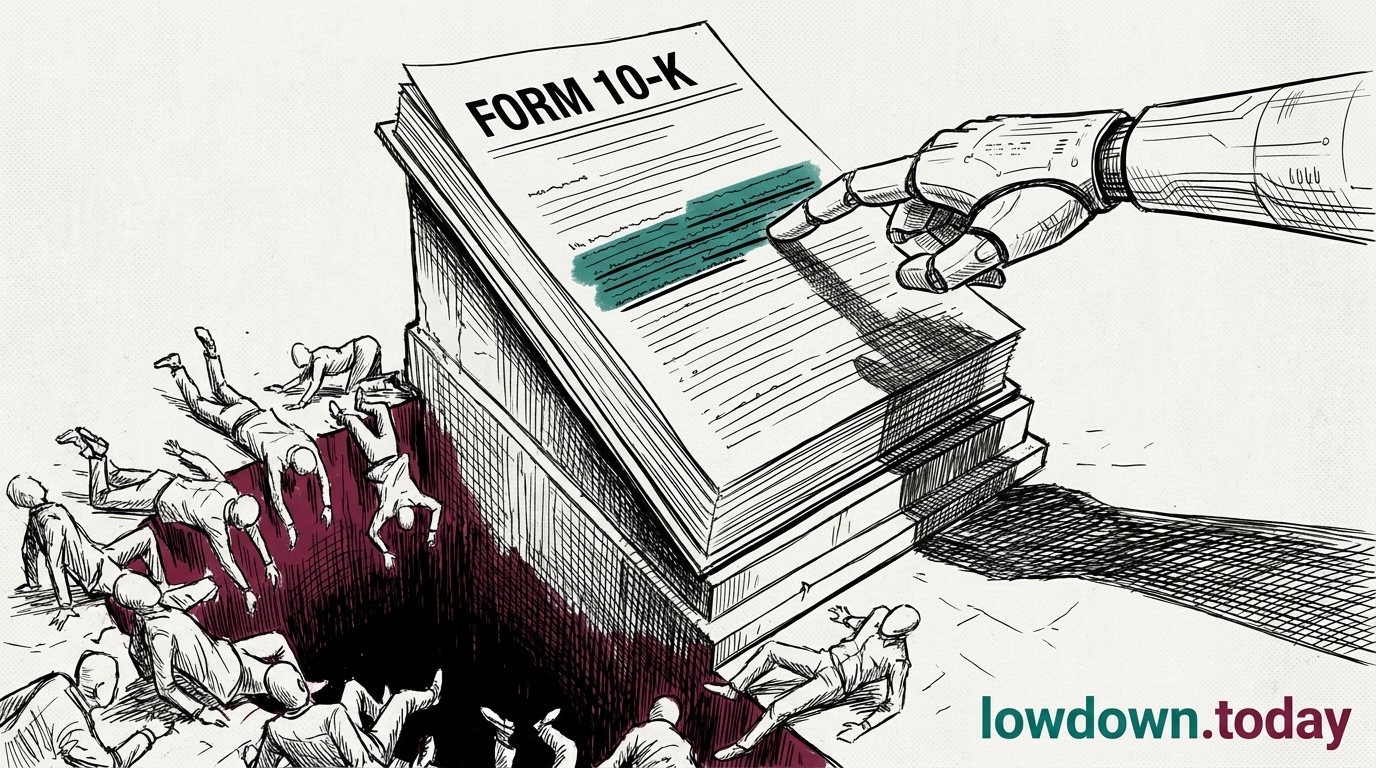
EU Parliament committees backed the Digital Omnibus 93-4 on Tuesday 2 June, sending it toward adoption before 2 August. The binding duty on employers to ensure staff understand AI is downgraded to an unenforceable promise to support it.

EconomicDeveloping
Key takeaway

The EU kept its worker AI-literacy duty on paper but stripped the legal force that would have made it enforceable.

The EU Digital Omnibus cleared the European Parliament's internal market and civil-liberties committees on Tuesday 2 June by 93 votes to four with 15 abstentions, sending it toward a final plenary vote and formal adoption before 2 August 1. The Digital Omnibus is the legislative package bundling amendments to the AI Act and related laws under a single simplification framework, and the European Parliament is the EU's directly elected legislature.

The contested provision is the employer AI-literacy duty: the obligation on firms deploying AI on or alongside staff to ensure those workers understand how the systems operate. The committee text does not delete it. It downgrades the binding requirement to a non-enforceable duty to support worker understanding, swapping a statutory right for a soft encouragement with no legal force behind it. The wording change does the work here: a binding 'ensure' carries documentation, explanation and appeal pathways, while a non-binding 'support' carries none.

The step sits inside an arc this desk has followed. The 7 May provisional deal had already weakened the binding obligation , reached after the second trilogue collapsed on 28 April , and the package was awaiting formal votes through May . The committee approval now advances the diluted text to the floor. The high-risk employment rules under the AI Act remain fixed, but they do not arrive until December 2027.

The International Labour Organisation, the UN's labour agency, placed 3.3% of the world's workforce in its highest AI-exposure band, a narrow group but a real one. For those workers, the tool to ask how a system was judging them survives in name but no longer carries the force to compel an answer, and the binding rules that might have replaced it are eighteen months away.

Deep Analysis

In plain English

The European Union has been negotiating rules about AI at work. One of the rules under discussion was that employers who use AI alongside their staff should have to make sure those workers understand how the AI works and how it affects their job. 'Make sure' is a legal obligation: you document it, you provide training, and if a worker says they were not told, the company can be held responsible. In the latest version of the rules, 'make sure' has been changed to 'support'. 'Support' means the employer is encouraged to help workers understand AI if they want to. There is no penalty if they do not, no way for a worker to force the employer to explain, and no one checking whether any support was actually given. For the roughly 6.5 million EU workers in the jobs most exposed to AI systems, this change removes the one legal tool that would have let them ask how an AI was judging them.

Deep Analysis
Root Causes

Business lobbies representing large EU employers, coordinated through BusinessEurope and national federations including the BDA and Medef, argued during the trilogue that the binding literacy obligation was incompatible with operational flexibility in AI deployment. The Cypriot Presidency, managing the negotiations, held the December 2027 employment rules deadline as the hard constraint, allowing the literacy clause to soften in exchange for retaining that timeline intact.

A deeper structural gap sits in the sequencing of the two instruments. The AI Act's high-risk employment rules, arriving December 2027, create binding obligations on employers around human oversight, documentation, and worker impact monitoring, but these apply only to high-risk systems meeting the Annex III definition.

The literacy clause in the Digital Omnibus was intended to cover all workers encountering AI at work, not those in high-risk systems alone. Softening it leaves workers in AI-augmented but non-high-risk workplaces with no statutory right of any kind .

What could happen next?
  • Consequence

    EU workers in AI-augmented but non-high-risk workplaces have no statutory right to AI literacy support from employers between the Omnibus adoption date and December 2027, when the AI Act's high-risk employment rules arrive.

    Medium term · Assessed
  • Risk

    The non-binding wording of the literacy duty may be cited by employers across the EU when resisting union demands for AI transparency provisions in collective agreements, weakening the negotiating baseline.

    Short term · Suggested
  • Precedent

    The committee vote of 93-4 in favour of the diluted package demonstrates that the European Parliament's IMCO and LIBE committees will not reinstate binding worker AI rights at plenary; the soft obligation is the final form.

    Immediate · Assessed
First Reported In

Update #13 · Washington pulls a live AI model

Agence Europe· 13 Jun 2026
Read original
Different Perspectives
Barclays
Barclays
Barclays economist Pooja Sriram flagged a 28,000-a-month bleed in finance and information roles the same week Microsoft disputed that AI drove its own 4,800 cuts. The bank treats Challenger's AI-attribution share as a lagging indicator against faster erosion visible in raw labour-market data.
European Commission
European Commission
Brussels deferred the Digital Omnibus's Annex III employment-compliance deadline from 2 August 2026 to December 2027, even as California advanced three binding AI-hiring bills the same week. The 17-month delay leaves EU workers without the algorithmic-hiring safeguards the regulation already promises.
OpenAI
OpenAI
OpenAI proposed a 5% US government equity stake worth $42.6bn, structured as a public wealth fund modelled on the Alaska Permanent Fund, with Sam Altman pitching it directly to Trump, Bessent and Lutnick. The offer pre-empts Sanders' rival one-time 50% AI-stock tax, which has not yet reached committee.
India's IT and outsourcing sector
BAT's transfer of 3,500 roles to Accenture on 29 June fits a delivery model Indian IT firms increasingly run: consultancies win Western contracts, then execute through offshore centres. The sector expects more Fit2Win-style transfers, not straight redundancies, as employers absorb AI without cutting outsourced headcount.
European Trade Union Confederation
ETUC says the Council's shift from 'ensure' to 'support' in the AI-literacy duty, confirmed in the Digital Omnibus's final adoption on 29 June, is a collapse of the legal threshold, not a drafting tidy-up. It expects EU workers to face AI-driven hiring and monitoring decisions with a statutory right to explanation that exists in name only.
British American Tobacco's Fit2Win workforce
BAT is cutting 9,000 roles under Fit2Win, transferring 3,500 to Accenture rather than making them redundant, to reach roughly £500m in AI-driven savings by 2027. For affected staff, that distinction decides whether they keep a job at all, just not at BAT.
