Skip to content
Briefings are running a touch slower this week while we rebuild the foundations.See roadmap
2026 FIFA World Cup
1MAY

Travel ban bars fans from four nations

4 min read
14:31UTC

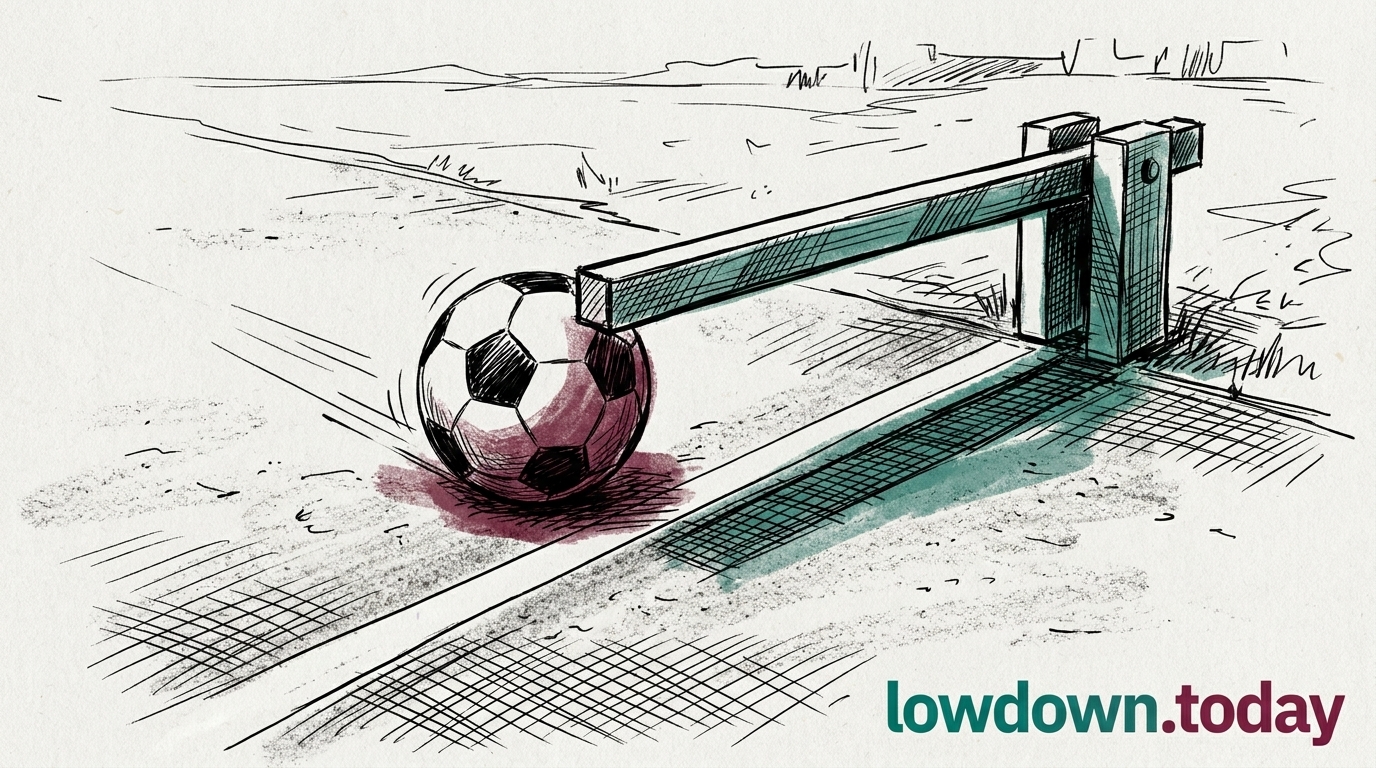
Supporters from Haiti, Iran, Senegal and Côte d'Ivoire cannot obtain US tourist visas to watch their teams play — the first time a World Cup host has excluded qualified nations' fans by law.

SportAssessed
Key takeaway

For the first time in World Cup history, a host nation's immigration law legally bars fans of four qualified nations.

Trump's travel ban — imposed in June 2025, expanded in December — prohibits tourist visas for nationals of 39 countries. Four of those countries have qualified for the 2026 World Cup: Haiti, Iran, Senegal and Côte d'Ivoire 1. Their fans cannot enter the United States to watch their teams play. Athletes and accredited officials are exempt. A further twelve qualified nations face tightened immigration restrictions, though their citizens can still obtain tourist visas 2.

No previous World Cup host has barred supporters of qualified nations by law. When Russia hosted in 2018, it created a Fan ID system that functioned as a visa waiver for all ticket holders. Qatar did the same in 2022. FIFA's hosting agreements historically include guarantees of entry for everyone with a valid match ticket — a principle the US travel ban directly contradicts. FIFA has not publicly stated whether it sought or received assurances on fan access before the ban's December expansion.

The four affected nations span three continents. Haiti returns to the World Cup for the first time since 1974 — a 52-year wait — and its diaspora, concentrated heavily in south Florida and the New York metropolitan area, cannot legally travel to matches 3. Senegal and Côte d'Ivoire, the reigning Africa Cup of Nations finalists and champions respectively, have large diaspora communities in France rather than the US, but supporters travelling from West Africa are blocked entirely. Iran's fans face a double exclusion: the travel ban bars their entry, while the separate factional dispute over Iran's participation means they may have no team to watch at all.

The result is a two-tier tournament. These teams will compete in stadiums where the opposing side's supporters can attend freely and theirs cannot. The American Immigration Council has argued the ban may violate FIFA's own anti-discrimination statutes 4, but FIFA has offered no public response. For the affected nations, the practical message is that entry to the 'World' Cup tracks US Foreign Policy priorities, not footballing qualification.

Deep Analysis

In plain English

The US government has banned tourist visas for citizens of 39 countries. Four of those countries — Haiti, Iran, Senegal, and Côte d'Ivoire — have qualified for this World Cup. Ordinary fans from those nations cannot legally obtain visas to enter the US to watch their teams. Players and officials receive exemptions, so the matches go ahead, but the supporters cannot follow. This is unprecedented: no prior World Cup host has used its domestic immigration law to legally exclude the fans of qualified competing nations. US-based diaspora members who are American citizens or permanent residents can still attend, but family members travelling from those home countries cannot — creating a painful institutional division within diaspora communities in host cities.

Deep Analysis
Synthesis

Events 14 and 15 together reveal a structural contradiction at the heart of this tournament: the US has made fan exclusion legally codified, while Congressional Democrats are attempting to create narrow sporting carve-outs that will almost certainly fail. FIFA's silence on the travel ban — contrasted with its public statement rejecting Iran's match-relocation request — signals an asymmetric institutional response that prioritises host-government relations over the universal-access principles FIFA publicly espouses.

Root Causes

The travel ban's application to World Cup fans appears to be a collateral consequence rather than a deliberate policy targeting these four nations specifically. Haiti and Côte d'Ivoire are not typically cited in US threat assessments as high-risk tourist-visa sources. The December 2025 expansion of the ban — occurring after host-city agreements were signed — creates a contractual tension that FIFA has not publicly resolved, suggesting it lacks the institutional will to confront the host government on immigration policy.

Escalation

African and Caribbean football federations — CAF and CONCACAF — are likely to raise formal objections at the 30 April FIFA Congress as the exclusion receives wider media attention in the approach to the tournament.

FIFA has not publicly addressed whether the travel ban violates the visa-facilitation clauses standard in host-city agreements. That silence functions as de facto endorsement and will draw escalating criticism from Global South member associations whose constituents are disproportionately affected.

What could happen next?
  • Precedent

    If unchallenged, the 2026 tournament establishes that a host nation may legally exclude qualifying nations' supporters without FIFA penalty or contractual remedy.

    Long term · Assessed
  • Risk

    CAF and Caribbean football federations raise formal objections at the 30 April FIFA Congress, creating a procedural confrontation over host-city visa obligations FIFA has not publicly addressed.

    Short term · Suggested
  • Consequence

    Future World Cup host-city bid criteria may require explicit, enforceable visa-guarantee requirements to prevent a recurrence of this structural gap.

    Long term · Suggested
  • Risk

    Televised imagery of near-empty sections where excluded nations' fans would have sat generates reputational damage to FIFA's universal-access branding during live broadcast.

    Immediate · Suggested
First Reported In

Update #1 · Iran splits on World Cup boycott

ESPN· 22 Mar 2026
Read original
Different Perspectives
Brazilian Football Confederation
Carlo Ancelotti's CBF named a 55-man preliminary squad on 9 May including Neymar, absent since October 2023, with the final 26 announced 18 May. Rodrygo and Militão were ruled out; the inclusion of Neymar serves both the coaching staff's tactical options and CBF's commercial interests in the home-continent cycle.
Confederation of African Football
CAF issued no public statement on the $15,000 visa bond affecting five qualified African nations, named by Al Jazeera on 5 May. Per BBC Africa Sport, CAF privately encouraged federations to use bilateral diplomatic channels rather than issue a collective protest, reflecting the body's institutional dependency on FIFA's commercial framework.
Giovanni Malagò / Serie A
Malagò reached 48% confirmed FIGC assembly bloc on 10 May after Lega B and Lega Pro signalled support, driven by Serie A clubs' need for parliamentary access to three debt-reduction reforms. A pre-vote majority before the 13 May declaration deadline would make the 22 June election ceremonial.
Football Supporters Europe / Euroconsumers
The Article 102 TFEU complaint filed on 24 March remains unacknowledged by DG COMP 18 days past the procedural deadline; MEP Brando Benifei and 24 colleagues filed a parliamentary question E-001336/2026 demanding an explanation from the Commission.
Human Rights Watch
Human Rights Watch
HRW's 11 May deadline for host cities to publish rights action plans passed with 12 of 16 cities non-compliant. HRW disputes FIFA's position that internal submission satisfies the transparency requirement, arguing fans cannot read what protections their city have committed to.
UNITE HERE Local 11
UNITE HERE Local 11
Filed NLRB and California AG complaints naming FIFA on 8 May, describing a SoFi Stadium strike as 'pretty realistic'. The filings follow five weeks of FIFA non-response to its April letter and test whether a Swiss event organiser can be bound by US employment and privacy law through its licensee chain.



