Skip to content
You can now search across every topic, entity and event.What's new
2026 FIFA World Cup
19APR

69 Congress members demand lower prices

3 min read
11:22UTC

Sixty-nine US lawmakers told FIFA its ticket prices are unacceptable. FIFA's concession — $60 seats for roughly one in a hundred fans — suggests it disagrees.

SportAssessed
Key takeaway

Congressional letters signal political intent but require jurisdictional leverage to compel FIFA action.

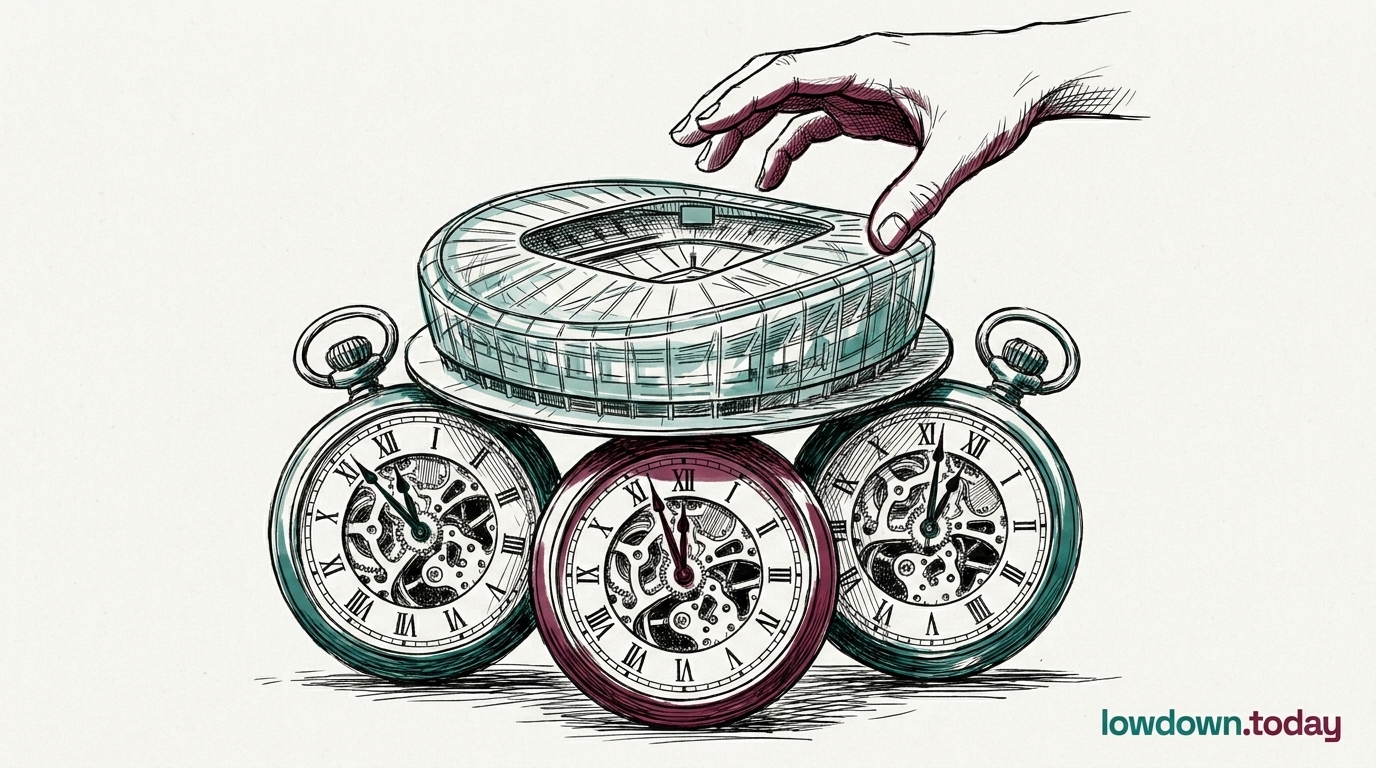
Sixty-nine Members of Congress wrote to FIFA demanding the governing body reduce ticket prices for the 2026 World Cup 1. The letter follows FIFA's introduction of Dynamic pricing for the first time in World Cup history — a system that adjusts costs in real time, replacing the fixed-price tiers used at every previous tournament.

Football Supporters Europe called the pricing "extortionate," calculating that tickets cost up to seven times more than equivalent seats at the 2022 Qatar World Cup 2. The cheapest final ticket at MetLife Stadium is $4,185; the most expensive, $8,680. On FIFA's own resale marketplace, one final ticket was listed at $230,000, with FIFA taking a 30% Commission on the transaction 3.

FIFA's concession: $60 tickets per match, accounting for only 1–2% of total availability 4. In an 80,000-seat stadium, that is 800 to 1,600 tickets per game against global demand for a 48-team tournament across 16 cities. As a pricing measure, it is negligible. As a public-relations response to 69 signatories, it confirmed the disparity they set out to document.

The letter has no legal force — FIFA is a Swiss-registered private association beyond US Congressional jurisdiction. But it makes the gap between FIFA's revenue model and the public cost of hosting explicit. US host cities are absorbing $625 million in federal security grants and billions more in infrastructure and policing, while FIFA's Dynamic pricing captures maximum value from every ticket sold and resold through its own platform. The 69 signatories cannot compel a price cut. What they can do is ensure the figures are on the public record — and they have.


Deep Analysis

In plain English

Nearly 70 US members of Congress — the politicians who make American law — signed a formal letter telling FIFA that its ticket prices are too high for ordinary fans. This is unusual: Congress rarely intervenes in international sports pricing. European fan organisations backed them up, comparing prices to seven times what fans paid in Qatar. FIFA's response — offering a small number of $60 tickets — covered only 1–2% of all seats, which critics have described as a token gesture that changes nothing for most fans.

Deep Analysis
Synthesis

The simultaneous arrival of Congressional letters and European fan protests creates a coordinated political environment spanning two of FIFA's three host nations. The 69 Congressional signatories represent districts that collectively include most of the eight US host cities. Their motivation is partly constituent economic interest — not sporting idealism alone — which gives this pressure a local political accountability that FIFA's usual diplomatic deflection cannot fully absorb.

Escalation

The 69-signature threshold includes representatives from World Cup host city districts, grounding the letter in local constituent economic interest rather than abstract fan advocacy. If even a handful of Republican members from host-city districts add their names — motivated by local business revenues rather than fan sentiment — the political calculus shifts toward potential legislative action.

Bipartisan co-sponsorship of the three ICE-restriction bills would serve as the clearest indicator that Congress is moving from advocacy to jurisdiction.

What could happen next?
  • Risk

    If bipartisan Congressional support builds, FIFA could face referral to the DOJ Antitrust Division over its combined ticket-issuer and resale-operator role within US jurisdiction.

    Medium term · Suggested
  • Precedent

    A successful US legislative intervention in FIFA pricing would establish a jurisdictional precedent for domestic oversight of international sports governance.

    Long term · Suggested
  • Consequence

    Corporate-dominated stadiums reduce the local economic multiplier effect in host cities, undermining the community benefits case that justified public investment in World Cup hosting infrastructure.

    Immediate · Assessed
  • Opportunity

    Bipartisan Congressional engagement on affordability could provide political cover for Republicans to oppose FIFA's practices without appearing to oppose the tournament itself.

    Short term · Suggested
First Reported In

Update #1 · Iran splits on World Cup boycott

ESPN· 22 Mar 2026
Read original
Causes and effects
This Event
69 Congress members demand lower prices
The Congressional letter has no enforcement power over a Swiss-registered private organisation, but it exposes the tension between FIFA's commercial model and the hundreds of millions in public funds US cities are committing to host the tournament.
Different Perspectives
FairSquare
FairSquare
FairSquare has referred Gianni Infantino to the International Olympic Committee's Ethics Commission over FIFA's political-neutrality rules, using the IOC's authority as a lever FIFA's own president-appointed Ethics Committee cannot provide against itself. Trump's on-podium presence at the final, with Infantino visibly moving him aside, becomes an exhibit for that complaint rather than an argument for it.
Fiscalía General de Justicia de la Ciudad de México
Mexico City's prosecutor has opened four homicide investigations into the crush that killed Emilín Yumith Téllez, Joshami Iraís Robles, Leonardo Ruiz and an unidentified fourth victim at the Ángel de la Independencia, three of them classified as negligent homicide. Three weeks after the final whistle, no determination has been reached.
FIFA / Gianni Infantino
Infantino called the 48-team format "100 percent" right and confirmed FIFA's committees will examine expanding to 64 teams for 2030, on the strength of a goal count FIFA has never published as one audited total for all 104 matches. FIFA has issued no statement on the Malvinas banner review or the Bellingham file since deferring both past the final.
Claudio Tapia / AFA
Claudio Tapia / AFA
AFA president Claudio Tapia told the squad to stand tall after the final, and Argentina's own press did not contest the result, framing the defeat around the possible end of the Messi era rather than any complaint about the match itself. Messi ruled out only the 2030 tournament, leaving his Copa America future unaddressed.
Luis de la Fuente / Spain
Luis de la Fuente nominated Rodri for the Ballon d'Or after the final, framing a title built on one goal conceded as proof a team can win through control rather than scoring. His squad carried eight Barcelona players and none from Real Madrid, the first time that has happened in the federation's history.
Football data analysts
A 6-4 between exhausted, eliminated sides making four half-time changes each reads as collapsed defensive intensity, not proof of a better format. The number that actually tests the 48-team expansion is the per-match rate, roughly 2.9 against 2022's 2.69, not the raw 300-goal aggregate padded by forty extra fixtures.


