Skip to content
2026 FIFA World Cup
10APR

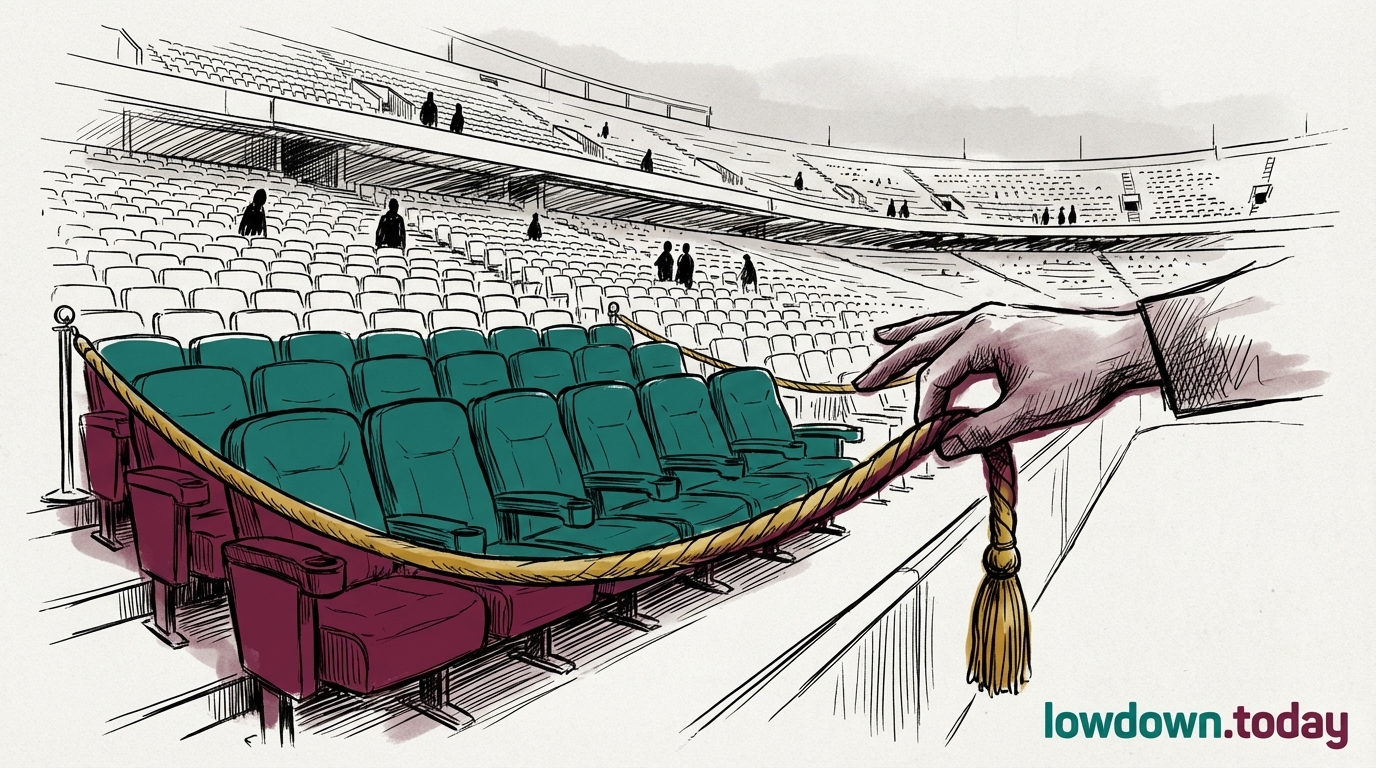
Penn Station bars commuters for eight World Cup matches

3 min read
16:41UTC

New York's busiest commuter terminal will lock out 650,000 daily passengers for four hours before each MetLife match, with one closure landing on a Monday evening rush hour.

SportDeveloping
Key takeaway

Penn Station will close to commuters for four hours before each MetLife match, an unprecedented prioritisation of tournament traffic.

Penn Station will not close for security but for capacity: NJ Transit has designated the terminal as fan-only: NJ Transit has designated the terminal as fan-only for four hours before each match to move 40,000 of the 80,000 expected fans per game. MetLife Stadium's pre-existing infrastructure constraints directly drove this decision.

No previous World Cup has required this. Brazil 2014, Russia 2018, and Qatar 2022 managed crowd flow alongside regular service or built dedicated links. MetLife Stadium was not designed for rail-dependent crowds at this scale; NJ Transit's network converges on Penn Station with no equivalent bypass.

Political exposure sits sharpest at the 22 June Norway-Senegal closure: a Monday at 4pm–8pm, directly overlapping evening rush hour. Alternative routes (PATH, ferries, Amtrak via Moynihan Train Hall) exist but none matches Penn Station's capacity or geographic reach.

Assemblyman Bhalla's framing captures the equity dimension precisely: the closure penalises the 99% who cannot afford tournament tickets in order to ease access for those who can.


Deep Analysis

In plain English

If you commute through Penn Station in New York, you will be locked out for four hours before each of eight World Cup matches so football fans can use the trains instead. One of those closures is on a Monday evening rush hour.

Deep Analysis
Root Causes

MetLife Stadium's design pre-dates the era of mega-event, rail-dependent crowd management. Built in 2010, it has 82,500 seats and minimal dedicated rail infrastructure.

The Meadowlands Rail Line—a seasonal, single-service line operated by NJ Transit—connects directly to Penn Station but was never designed for sustained World Cup-scale loads across eight matches. The capacity gap between what MetLife needs (40,000 fans moved by rail per match) and what the Meadowlands Line can deliver without disrupting the broader Penn Station network is the structural cause of the closure decision.

What could happen next?
  • The precedent of closing a major public commuter terminal for a commercial sporting event creates a template other host cities may replicate in future tournaments.

    Long term · 0.6
  • Commuters on the Monday 22 June evening rush (Norway vs Senegal) face the highest disruption; PATH and ferry alternatives cannot match Penn Station's throughput during peak demand.

    Short term · 0.85
  • The equity dimension—wealthy ticket holders prioritised over working commuters—will generate sustained political pressure on NJ Transit and the host committee.

    Short term · 0.8
First Reported In

Update #6 · FIFA's stealth price hike

CBS New York· 10 Apr 2026
Read original
Causes and effects
This Event
Penn Station bars commuters for eight World Cup matches
No previous World Cup has closed a host city's primary commuter terminal to accommodate tournament traffic. The decision creates a legal and political precedent for prioritising commercial event access over public transit.
Different Perspectives
EU Sports Commissioner Glenn Micallef
Publicly criticised Infantino after a Brussels meeting produced no safety guarantees for European fans — an institutional escalation that treats FIFA as answerable to European political authorities on operational security.
Iraq national team
Iraq national team
Coach Graham Arnold argued that closed airspace, shuttered embassies and stranded personnel make squad assembly physically impossible, requesting postponement rather than accepting what would be the first conflict-caused qualification forfeit.
Football Supporters Europe (FSE)
Views FIFA's ticketing monopoly as an abuse of market dominance requiring regulatory intervention — the first fan organisation to invoke EU competition law against a sports governing body.
US Immigration and Customs Enforcement
Positions itself as integral to tournament security infrastructure and has not excluded enforcement operations near match venues, despite three Congressional bills seeking restrictions.
Jalisco state government
Insists Guadalajara's World Cup matches will proceed as planned regardless of the February cartel violence, rejecting any possibility of FIFA relocating fixtures.
Jamaica Football Association
Publicly uneasy about playing in Guadalajara three months after cartel violence forced cancellation of an international sporting event in the same city.