Skip to content
You can now search across every topic, entity and event.What's new
2026 FIFA World Cup
16JUL

South Africa reach a first knockout

2 min read
10:33UTC

Thapelo Maseko's 63rd-minute goal beat South Korea 1-0 in Guadalajara, carrying South Africa to the World Cup knockout rounds for the first time in their history.

SportDeveloping
Key takeaway

South Africa reach the World Cup knockouts for the first time, after three previous group-stage exits.

South Africa beat South Korea 1-0 at Estadio Akron on 24 June, Thapelo Maseko striking on 63 minutes to send Bafana Bafana into the World Cup knockout rounds for the first time in their history. A side ranked in the world's low 60s, beaten 2-0 by Mexico in its opener, finished second in Group A on just 4 points, enough to clear a stage it had failed in three times before: 1998, 2002, and as 2010 hosts.

The format made the recovery possible. The expansion to 48 teams added a third-place qualification path the old 32-team draw never offered, so a low-ranked side can lose its opener and still go through. Under the previous maths a single opening defeat usually ended such a tournament. Mexico had topped the group as the tournament's first qualifiers a week earlier ; South Africa took the slower road behind them.

South Africa now open the round of 32 against co-host Canada on 28 June at SoFi Stadium in Inglewood, the first knockout tie of the tournament. South Korea and Czechia, the group's other two sides, both exit.


Deep Analysis

In plain English

South Africa have been to four World Cups but had never won a knockout match, or even made it past the group stage. At the 2010 World Cup they hosted the tournament on home soil and still went out in the group stage, which tells you how hard that barrier has been to cross. This time they only needed 4 points from three games to go through, because the tournament now has 48 teams instead of 32. That means more spots in the knockout rounds, and you can even lose a game and still advance if your points and goals are good enough. South Africa lost to Mexico, beat South Korea, and scraped through on 4 points, a total no African side has needed so little from to reach the last 32.

Deep Analysis
Root Causes

South Africa's three prior group exits share a common structural cause: under the 32-team format, a loss in the opener typically eliminated an African side from contention. In 1998, 2002, and 2010, Bafana Bafana collected either no wins or insufficient point margins to survive. The 48-team format's critical mechanical change is that it converts the groups from a binary pass/fail into a tiered contest: lose one, win one, and your goal difference rather than your wins total governs advancement.

Coach Hugo Broos, appointed in 2021, rebuilt the squad around a domestic and diaspora blend that reduced dependence on a single playmaker. Captain Themba Zwane's three-match suspension forced a collective defensive shape against South Korea that proved sufficient for a 1-0 win.

What could happen next?
  • Precedent

    South Africa's 4-point qualification sets a new floor for what African teams can achieve under the 48-team format without topping their group.

  • Consequence

    Canada face a South Africa side with nothing to lose and genuine defensive organisation, a trickier opener than their seeding suggests.

First Reported In

Update #29 · South Africa reach a first knockout

France 24· 25 Jun 2026
Read original
Different Perspectives
FIFA
FIFA
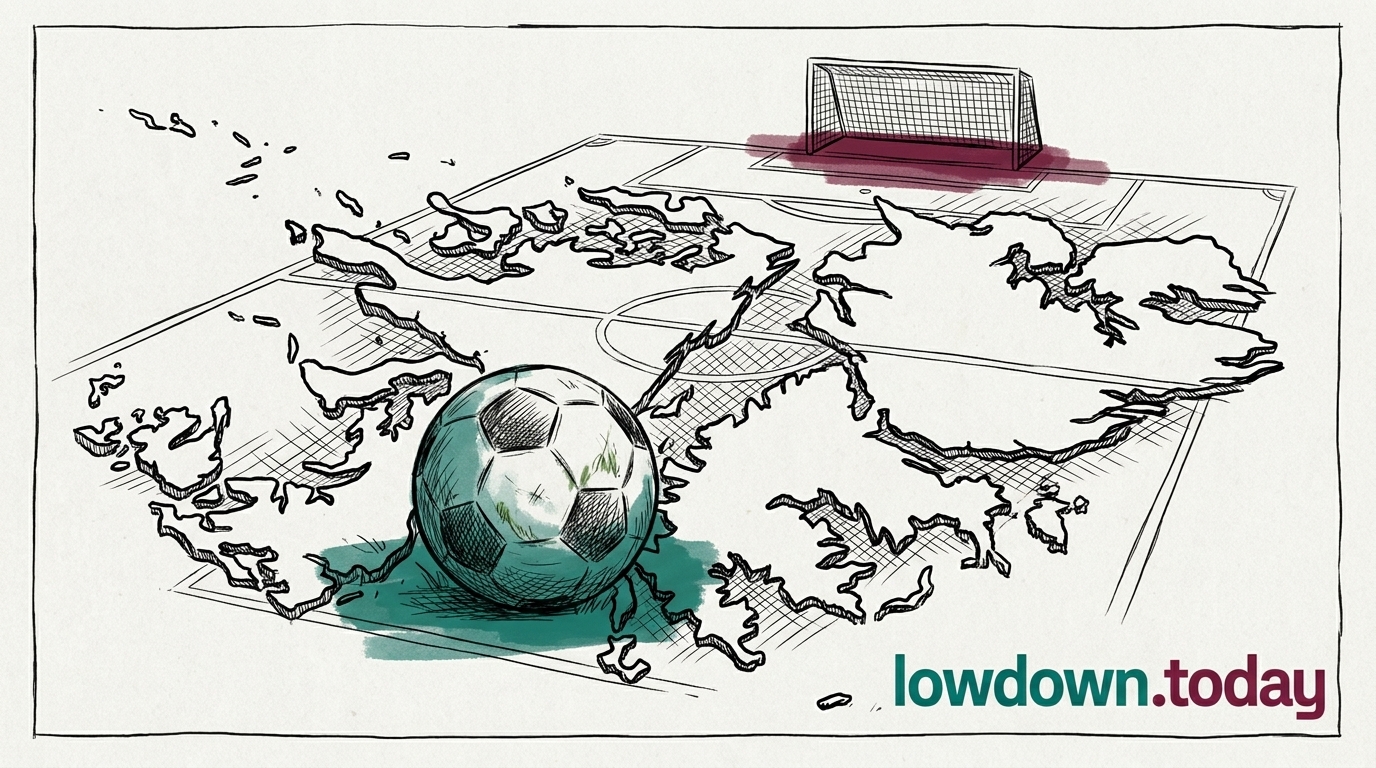
FIFA had not opened disciplinary proceedings over the Malvinas banner as of 16 July, continuing a pattern set by its fast reversal of Folarin Balogun's ban while South Africa's appeal over Themba Zwane's ban remained outstanding. The nearest tariff, a CHF 30,000 fine from 2014, remains only a precedent, not a decision.
France
France
France's tournament ended at the semi-final stage for the first time since 2010, beaten 2-0 by Spain in Arlington, and Kylian Mbappe's Golden Boot chances are reduced to Saturday's third-place game alone. The 2022 runners-up now play for bronze rather than a second straight final.
Spain
Spain
Spain reached their first World Cup final since winning the trophy in 2010, beating France 2-0 through goals from Mikel Oyarzabal and Pedro Porro. Sixteen years after their only title, this squad returns to the same stage without the sovereignty politics attached to the other semi-final.
Downing Street (UK Government)
Downing Street said on the record that the Falkland Islanders 'are British with the right to determine their own future,' answering Argentina's vice-president and foreign minister. London rests its case on the islanders' 2013 referendum, not on the fixture, and lodged no formal protest despite the semi-final framing.
Argentina
Argentina
Vice-President Victoria Villarruel called England 'the usurping pirates' before kickoff; midfielder Leandro Paredes said after the 2-1 win that the Falklands 'will always be Argentine'. Argentina's 1994 constitution commits every office-holder to press the Malvinas claim, so a World Cup semi-final was never going to pass without it.
Switzerland
Switzerland
Switzerland reached their first World Cup quarter-final since 1954 and led Argentina before Breel Embolo's second yellow card left them a man down for the last half-hour. They expect the run to raise expectations for the next cycle rather than close a chapter.


