Skip to content
You can now search across every topic, entity and event.What's new
2026 FIFA World Cup
12JUN

Mexico win first opener at ninth try

3 min read
09:25UTC

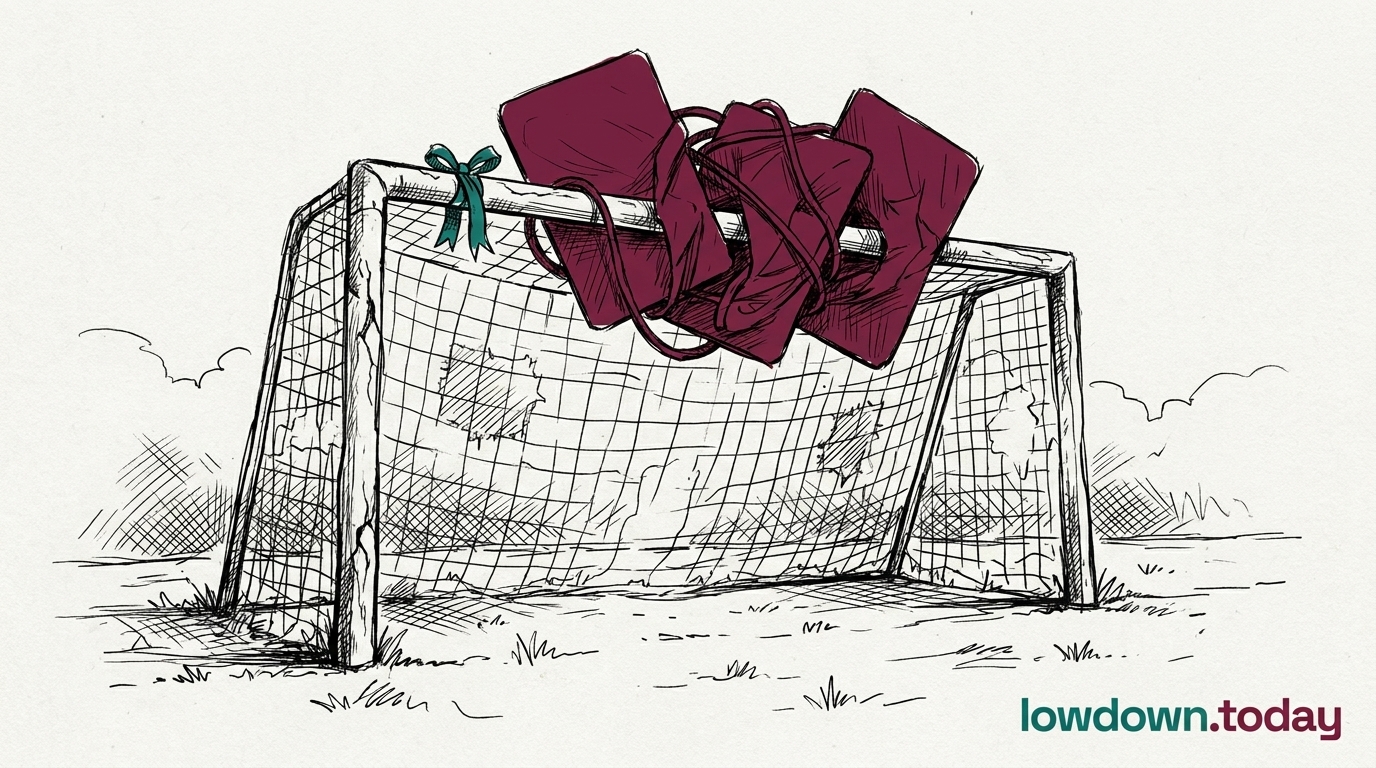
Quiñones struck on nine minutes and Jiménez headed a second on 67 as Mexico beat South Africa 2-0 at the Azteca, ending a 74-year wait. The match turned on Sithole's 50th-minute red and set a three-card opener record.

SportDeveloping
Key takeaway

Mexico's 74-year opener drought ended on a 50th-minute red card, not on a performance.

Mexico beat South Africa 2-0 at the Estadio Azteca in Mexico City on Thursday 11 June, the host nation's first win in a World Cup opening match across nine attempts spanning 74 years (their prior record read 0W-6L-2D) 1. Julián Quiñones turned in an Erik Lira cutback on nine minutes for the tournament's first goal, and Raúl Jiménez headed the second on 67 from a Roberto Alvarado cross 2. Mexico had carried this drought into every opener since 1958, and the win that 18 months of build-up pointed towards finally landed at the rebuilt Azteca.

The scoreline flatters the hosts. It was goalless until the 50th minute, when South Africa's Sphephelo Sithole was sent off for denying Brian Gutiérrez a clear run at goal, a DOGSO (denying an obvious goalscoring opportunity) red. Bafana Bafana, back at a World Cup after 16 years , then conceded twice against ten men and lost a second player in stoppage time. Mexico's two goals both came after the dismissal, which makes the historic first a statistic that stands regardless of how it was won.

The match set a World Cup opener record of three red cards 3, beating the two shown when Cameroon beat Argentina in 1990. Referee Wilton Pereira Sampaio upgraded Themba Zwane's 84th-minute yellow to red for violent conduct, the first competitive use of a 2026 rule from IFAB (the International Football Association Board, which writes the laws of the game) . Sithole and Zwane now miss South Africa's next match through suspension, and Mexico's César Montes was dismissed in stoppage time for a third DOGSO. Mexico top Group A on goal difference ahead of the day's other winners, South Korea, whom they meet next.


Deep Analysis

In plain English

Mexico had never won the first game of a World Cup across nine previous attempts. Playing at the Estadio Azteca in Mexico City, one of football's most famous stadiums, they finally broke the jinx against South Africa on 11 June. The result was shaped by a controversial refereeing novelty: for the first time ever at a World Cup, a referee upgraded a yellow card to a red one using VAR video review. South Africa also lost a second player to a red card, finishing the game with nine men. Three red cards in one match set a World Cup opener record. Mexico's goals came from Julián Quiñones (9 minutes) and Raúl Jiménez (67 minutes).

Deep Analysis
Root Causes

Mexico's nine-attempt opener drought had two structural roots. First, the Azteca fixture had historically opened against strong European opposition (USSR in 1970, West Germany in 1986) where altitude-aided fitness advantages were cancelled by technical inferiority in the final third.

Second, El Tri's traditional psychological burden at the Azteca, where 87,000 expectant fans historically generated what Mexican sports psychologist Dr Isaías Salgado has described as 'presión de vitrina' (display-case pressure), suppressed attacking output in the opening 15 minutes, the most common period of their concessions.

The 2026 edition removed the first structural factor (South Africa are not a technical European side) but amplified the second, with the opening ceremony and national symbolism raising stakes higher than any previous edition.

What could happen next?
  • Consequence

    South Africa's automatic suspensions for Sithole and Zwane leave them severely weakened for their second group match, likely exiting in the group stage.

  • Precedent

    The first competitive use of IFAB's 2026 VAR second-yellow review rule will be scrutinised by federations ahead of its potential broader adoption.

First Reported In

Update #19 · Mexico finally win an opener, on the ninth try

beIN SPORTS· 12 Jun 2026
Read original
Different Perspectives
FIFA
FIFA
The 48-team tournament opened on schedule with 104 matches and a $13.1 billion projected revenue cycle, but three of the first weekend's most consequential stories, Iran's fan lockout, SoFi's embedded strike clause, and Malagò's eligibility suspension, were each decided by domestic legal systems operating outside FIFA's authority.
Morocco
Morocco
Mohamed Ouahbi takes charge of his first senior match in football management against the five-time world champions, with the full-strength defensive structure that reached the 2022 semi-finals intact and facing a Brazilian lineup missing its three most celebrated attackers.
Brazil
Brazil
Brazil open Group C on Saturday at MetLife without Neymar, Estêvão or Militão against a Morocco side managed by a first-time senior coach, making their opener the most consequential group-stage fixture of the opening weekend in terms of pre-tournament expectation versus squad availability.
FIGC / Italy
FIGC / Italy
CONI's referral of the Malagò eligibility question entirely to ANAC means Italy's federation enters the group stage without a confirmed president-elect, with the anti-corruption regulator holding the power to remove the Serie A-backed frontrunner from the ballot ten days before the 22 June election.
United States
United States
The co-host avoided its worst opening image when SoFi workers ratified a deal averting a strike before Friday's Paraguay opener, though the contractual walkout clause means the threat is deferred not dissolved. Pochettino named his XI with Tillman over Reyna, signalling he will manage risk rather than chase headlines against Paraguay.
FFIRI / Iran
FFIRI / Iran
Iran's squad trains in Tijuana with 14 staff still barred from the US, and learned on 9 June that their entire 8% supporter ticket allocation for all three Group G matches was revoked under OFAC sanctions. FFIRI is preparing an Article 4 FIFA complaint over the conditions of participation.


