Skip to content
You can now search across every topic, entity and event.What's new
2026 FIFA World Cup
12JUN

Gravina report puts Italian club debt at €5.5 billion

3 min read
09:25UTC

Lowdown Editorial Desk

SportDeveloping
Key takeaway

Italian football's debt is now a documented €5.5 billion; the reforms that might address it require parliament.

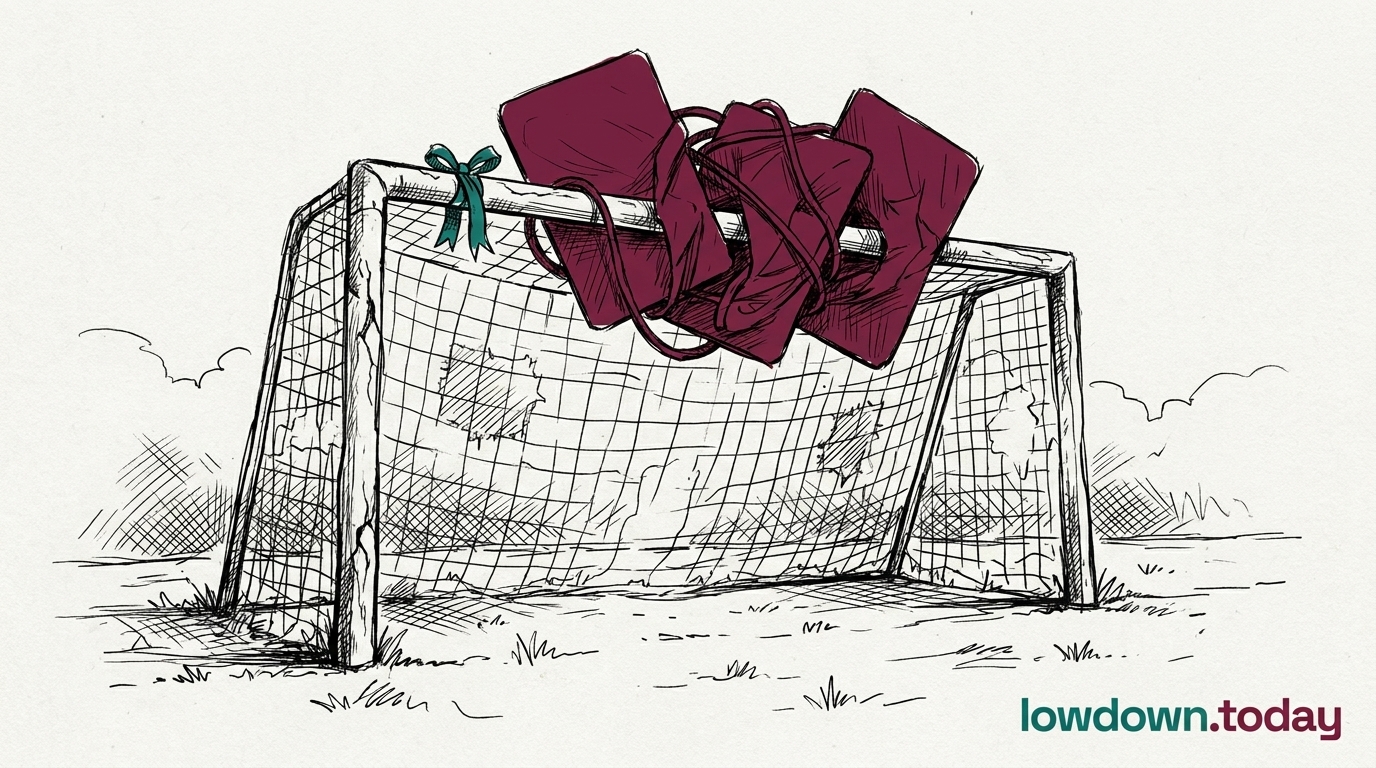
Gabriele Gravina submitted his final parliamentary report as FIGC president on 8 April, with the headline figure that Italian professional clubs collectively carry €5.5 billion of debt and book annual losses in excess of €730 million 1 . The submission lands two months before his successor takes office and frames the financial position the next president must legislate against.

Malagò's three headline reform proposals are calibrated to that ledger. Each addresses a distinct mechanism. The youth-development tax break attacks the supply-side cost of developing domestic players. Restoring gambling-sponsorship revenue reopens a category clubs have not had access to for eight seasons. The proposed sports-betting turnover levy, projected at roughly €160 million a year earmarked for football, is designed as a structural transfer from a complementary industry into the federation's accounts.

All three reforms require parliament. None can be enacted by federation resolution. That technical fact is what underpins the clubs' decision to back a CONI president with cross-bench access. It also defines the test for the new presidency in its first 12 months: whether any of the three measures gets a vote, regardless of whether they pass.

The report is also the document the next president will inherit as the published baseline. A successor who fails to move the legislative file within a parliamentary cycle will be measured against numbers their predecessor wrote into the parliamentary record on his way out.


Deep Analysis

In plain English

Italy's top football clubs collectively owe €5.5 billion and are losing more than €730 million a year. To put that in perspective: Serie A clubs are spending significantly more than they earn, and have been doing so for years. Giovanni Malagò, the incoming FIGC president candidate, has proposed three ways to help: reinstating a tax break for player wages, reversing an advertising ban for gambling companies (which are big sports sponsors), and introducing a 1% levy on sports betting that would generate about €160 million a year for the clubs. All three require the Italian parliament to pass new laws. That is not certain to happen. Even if they did, the measures would help the clubs' cash flow but would not eliminate the underlying debt, which has been accumulating for over a decade.

What could happen next?
  • Risk

    Parliamentary rejection of the Growth Decree reinstatement, the highest-value measure, would leave Serie A clubs with no structural remedy, increasing the likelihood of one or two major clubs entering financial distress within two to three years.

  • Consequence

    The gambling advertising repeal is the most immediately actionable of the three proposals, requiring no new primary legislation, only a ministerial order, but it has been politically toxic since the 2018 ban and faces opposition from public health lobbies.

First Reported In

Update #7 · Iran said yes in Antalya

ANSA· 15 Apr 2026
Read original
Different Perspectives
FIFA
FIFA
The 48-team tournament opened on schedule with 104 matches and a $13.1 billion projected revenue cycle, but three of the first weekend's most consequential stories, Iran's fan lockout, SoFi's embedded strike clause, and Malagò's eligibility suspension, were each decided by domestic legal systems operating outside FIFA's authority.
Morocco
Morocco
Mohamed Ouahbi takes charge of his first senior match in football management against the five-time world champions, with the full-strength defensive structure that reached the 2022 semi-finals intact and facing a Brazilian lineup missing its three most celebrated attackers.
Brazil
Brazil
Brazil open Group C on Saturday at MetLife without Neymar, Estêvão or Militão against a Morocco side managed by a first-time senior coach, making their opener the most consequential group-stage fixture of the opening weekend in terms of pre-tournament expectation versus squad availability.
FIGC / Italy
FIGC / Italy
CONI's referral of the Malagò eligibility question entirely to ANAC means Italy's federation enters the group stage without a confirmed president-elect, with the anti-corruption regulator holding the power to remove the Serie A-backed frontrunner from the ballot ten days before the 22 June election.
United States
United States
The co-host avoided its worst opening image when SoFi workers ratified a deal averting a strike before Friday's Paraguay opener, though the contractual walkout clause means the threat is deferred not dissolved. Pochettino named his XI with Tillman over Reyna, signalling he will manage risk rather than chase headlines against Paraguay.
FFIRI / Iran
FFIRI / Iran
Iran's squad trains in Tijuana with 14 staff still barred from the US, and learned on 9 June that their entire 8% supporter ticket allocation for all three Group G matches was revoked under OFAC sanctions. FFIRI is preparing an Article 4 FIFA complaint over the conditions of participation.


