Skip to content
Briefings are running a touch slower this week while we rebuild the foundations.See roadmap
2026 FIFA World Cup
6JUN

Amnesty Upgrades Risk; Host Cities Split on ICE

2 min read
12:17UTC

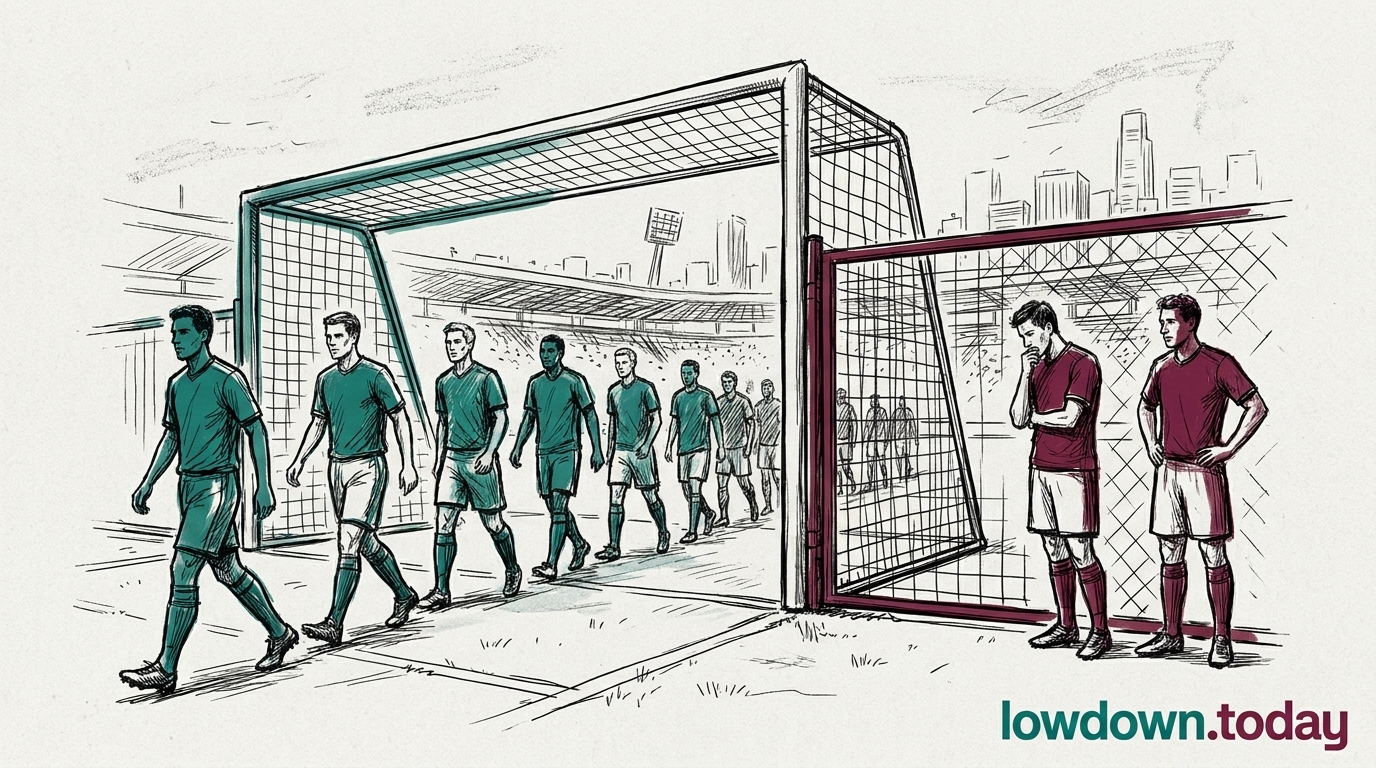
Amnesty International published 'Humanity Must Win' on 31 March, upgrading tournament risk to medium-to-high and finding only 4 of 16 host cities with human rights plans. Dallas, Houston and Miami signed ICE collaboration agreements; Toronto displaced unhoused people; Vancouver explicitly barred ICE from any role.

SportAssessed
Key takeaway

Amnesty's report confirms a two-tier enforcement tournament, with Canadian and US host cities operating under different human rights regimes.

Amnesty International published 'Humanity Must Win' on 31 March 2026, upgrading overall World Cup tournament risk to 'medium to high.' The report audited all 16 host cities; only 4 had published human rights plans, and none of those plans addressed immigration enforcement measures. Dallas, Houston and Miami had signed ICE collaboration agreements with local law enforcement . Toronto closed a warming shelter used by unhoused people to accommodate FIFA operations. Amnesty reported US deportations exceeded 500,000 in 2025.

The report draws a documented distinction between US and Canadian host cities that goes beyond formal policy. Vancouver Police chief explicitly confirmed: 'ICE is not being deployed, nor have they been invited or approved, to participate in security oversight for FIFA 2026 in Vancouver.' Two countries, two legal environments, one tournament: the record is now explicit on both sides. Dallas, Houston and Miami have agreements; Vancouver has a formal prohibition.

The context from prior reporting sharpens the picture. ICE acting director Todd Lyons told Congress in March that ICE would be 'a key part of the overall security apparatus' and declined to rule out enforcement near World Cup venues . Three House Democrats introduced bills to ban ICE enforcement at World Cup locations; those bills face near-certain defeat in the Republican-controlled Congress. Amnesty's report provides the human rights evidence base; the legal route via those bills is closed. The practical remedy for fans from affected nations is to avoid US host cities, which is neither a solution nor what FIFA promised when awarding the tournament.


Deep Analysis

In plain English

Amnesty International, the human rights organisation, published a report on 31 March saying the World Cup carries a medium-to-high risk for human rights. Of the 16 cities hosting matches, only four have published plans for protecting people's rights during the tournament. In three US cities, local police have agreed to work with US immigration enforcement (ICE). In Vancouver, Canada, the police chief publicly said ICE will not be involved in World Cup security at all. This means fans from countries with immigration complications face different risks depending on which city they travel to.

What could happen next?
  • Three Democratic bills to restrict ICE near venues face near-certain defeat; the legal route is effectively closed, leaving fan advice and diplomatic pressure as the only available remedies.

  • The documented two-tier enforcement environment will be cited by every future country that asks FIFA to guarantee fan safety as a condition of participation.

First Reported In

Update #4 · 48 Teams, Four Debutants, One Missing Champion

Amnesty International· 1 Apr 2026
Read original
Causes and effects
This Event
Amnesty Upgrades Risk; Host Cities Split on ICE
Amnesty's report maps a two-tier enforcement environment across 16 host cities, with documented cases of civil harm already occurring before the tournament opens, at a moment when neither FIFA nor the European Commission have responded to outstanding complaints.
Different Perspectives
FIFA
FIFA
FIFA remains publicly silent on every open dispute touching the tournament: no response to the UNITE HERE ICE-moratorium demand since April, no on-record comment on the Iran visa reversal, no intervention on the FIGC election. Its governance architecture, which routes bilateral matters to governments and domestic federation matters to national bodies, structurally precludes a direct answer on all three.
Andrea Abodi / Italian Sports Ministry
Abodi's ANAC referral is the first formal institutional step in his challenge to Malagò, converting a legal argument into a timed procedural clock, with both bodies reportedly receiving the request with "considerable frustration". The 15 June deadline means Italy's federation crisis will peak mid-tournament regardless of the ruling's direction.
Mauricio Pochettino / USMNT
Pochettino confirmed the 4-3-3 with Reyna and Pulisic starting against Germany, resolving the formation question at the cost of a 3-1 defeat that exposed the defensive axis. His public frustration over Richards's fitness, "I got a little annoyed", frames the 11 June deadline as an emotional as well as a tactical decision.
FFIRI / Mehdi Taj
FFIRI / Mehdi Taj
FFIRI confirmed the squad's clearance but stated five federation staffers were blocked under a "false pretences" finding, and denied separately reported player rejections, insisting the playing group travels intact. Taj's 5 June deadline expired; the approval arrived the same day, meeting the form of the demand while leaving the delegation short.
US State Department / UNITE HERE Local 11
Unnamed US officials approved Iran's squad visas via Ankara without a formal State Department statement, leaving Taremi's individual file unconfirmed; at the same venue system, UNITE HERE Local 11's 96% strike mandate among 2,000 SoFi workers, following FIFA's silence since 7 April, means US immigration enforcement runs as two parallel pressure tracks through the opener.
France (FFF)
France (FFF)
Manager Didier Deschamps confirmed William Saliba will play, reversing the 'very doubtful' briefing from earlier in the week and deferring any surgery until after the tournament. France recovers its first-choice central defender for the group stage at a point when rivals were adjusting their tactical assessments.


