Skip to content
Briefings are running a touch slower this week while we rebuild the foundations.See roadmap
2026 FIFA World Cup
22MAR

Football chief defies minister on Cup

3 min read
05:50UTC

Eight days after the sports minister said Iran was out, the football federation president drew a line between boycotting America and boycotting the tournament — a distinction that now forces FIFA to choose whose word counts.

SportAssessed
Key takeaway

The federation's public defiance of a government minister signals FIFA membership is treated as a sovereign institutional asset.

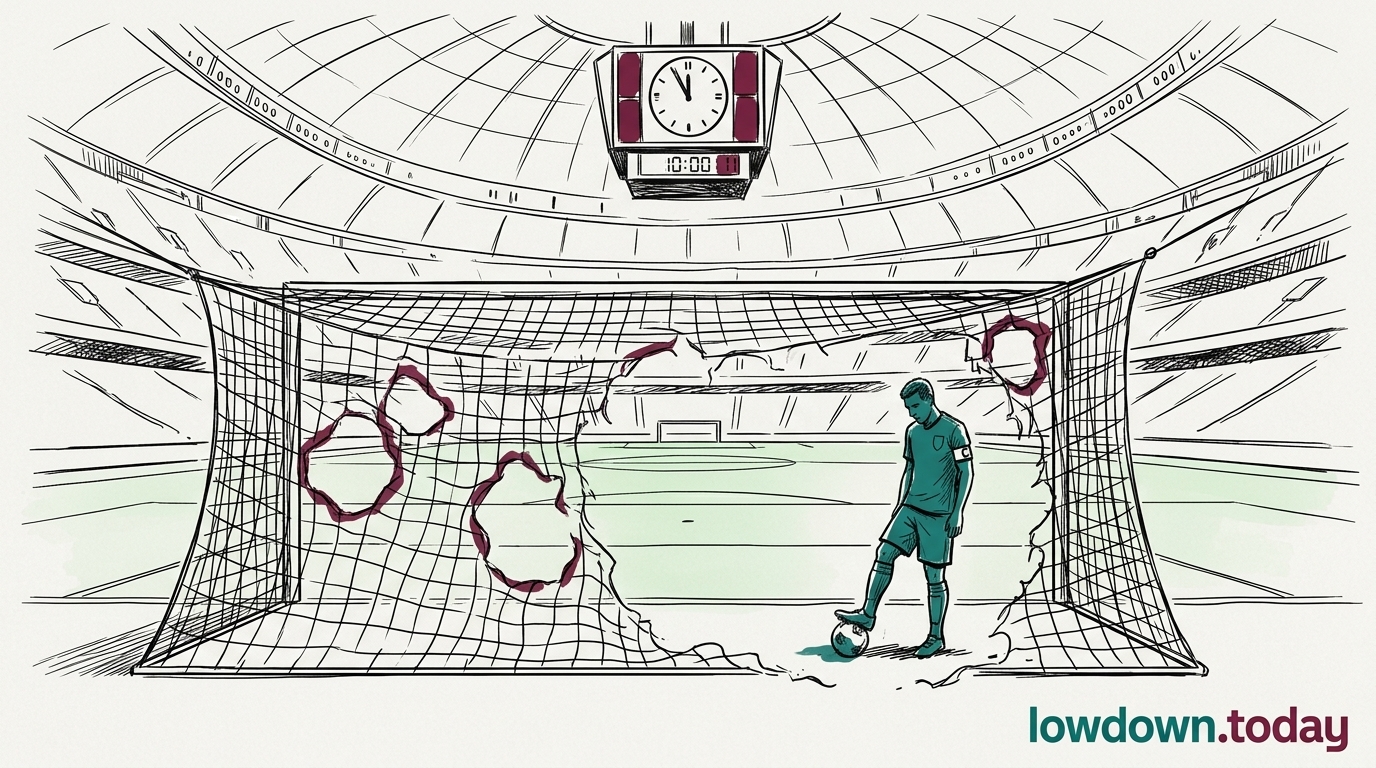
FFIRI President Mehdi Taj stated on 19 March that Iran "will boycott America, but will not boycott the World Cup" 1, directly contradicting sports minister Donyamali's declaration eight days earlier. Taj's formula was precise: Iran would refuse to play matches on US soil but intended to remain in the tournament. He asked FIFA to relocate Iran's Group G fixtures — against Belgium, Egypt and New Zealand — from American venues to Mexico 2.

The split between Taj and Donyamali is not a miscommunication. It reflects two competing strategies for managing the political fallout from Khamenei's assassination. Donyamali's position — full withdrawal — aligns with hardliners who view any engagement with a US-hosted event as capitulation. Taj's position preserves Iran's sporting presence while extracting a political concession: the symbolic refusal to set foot on American territory. The football federation, which answers to FIFA rather than to the sports ministry, has institutional reasons to resist withdrawal — including the financial penalties and multi-year bans FIFA can impose on federations that abandon tournaments.

Taj's approach has a recent precedent. During the 2022 World Cup in Qatar, Iranian players refused to sing The National anthem before their opening match against England in solidarity with the Mahsa Amini protests. The federation neither endorsed nor punished the act. That episode demonstrated the FFIRI's capacity to navigate between state pressure and FIFA's requirements — a space Taj is now attempting to occupy on a far larger scale.

The practical obstacle is that FIFA rejected the relocation request on 17 March 3, two days before Taj's public statement. FIFA stated that matches would proceed as scheduled per the draw announced on 6 December 2025. Taj made his declaration knowing the answer was already no, which suggests the statement was directed at a domestic audience — positioning the federation as willing to compete while placing blame for any eventual withdrawal on FIFA's inflexibility rather than on Iran's internal dysfunction. The AFC has confirmed no formal withdrawal 4. The next decision point is the FIFA Congress on 30 April, and until then, Iran's participation exists in a state that mirrors its government: contested, fractured, and unresolved.


Deep Analysis

In plain English

Iran's football federation — the body that actually manages the national team — publicly contradicted the sports minister. The federation president drew a precise distinction: Iran will boycott America as a political entity, but will not boycott the World Cup as a sporting competition. This separation of sport from politics is FIFA's own standard position, and the federation is deliberately invoking it to justify its stance. In effect, the FFIRI is arguing: 'We answer to FIFA's statutes, not solely to our government's political directives.' Whether this holds depends entirely on which faction gains dominance in Tehran's emerging post-Khamenei power structure — a question that remains unresolved.

Deep Analysis
Synthesis

The Taj-Donyamali split maps a deeper fault line in post-revolutionary Iranian governance: technocratic institutions that derive legitimacy from international bodies versus revolutionary-ideological ministries that derive legitimacy from the state. When supreme authority collapses, these fault lines become publicly visible. The World Cup decision is functioning as a live stress test for Iran's entire post-Khamenei institutional architecture — its outcome will reveal which type of institution retains effective authority during the interregnum.

Root Causes

FIFA Statutes Article 15 explicitly prohibits government interference in national football federation operations, granting federations a legal basis to resist state directives. Taj may be deliberately invoking this shield. Iranian sports federations have historically cultivated a degree of operational autonomy from political ministries precisely because FIFA affiliation requires it — this institutional culture provides the foundation for Taj's defiance in a way that would be unavailable to other government agencies.

Escalation

Taj's public contradiction of a serving government minister is itself an escalatory act within Iran's domestic political framework. Under a functioning supremacy structure, this would be impossible without consequences. The fact that it occurred without apparent reprisal signals the power vacuum is deep enough that subordinate institutions feel unconstrained — a condition that historically resolves through either rapid consolidation or factional conflict.

What could happen next?
  • Meaning

    FIFA-affiliated bodies within Iran are using international governance frameworks to resist domestic political pressure, revealing a novel institutional dynamic in the succession crisis.

    Immediate · Assessed
  • Risk

    If Tehran's new leadership orders withdrawal and FFIRI refuses, Iran could face government suspension of the federation, automatically triggering a FIFA ban under Article 15 statutes.

    Short term · Assessed
  • Opportunity

    Iran's continued participation stance could serve as an informal back-channel signal that Tehran retains interest in selective international engagement despite the active conflict.

    Medium term · Suggested
First Reported In

Update #1 · Iran splits on World Cup boycott

Al Jazeera· 22 Mar 2026
Read original
Different Perspectives
Brazilian Football Confederation
Carlo Ancelotti's CBF named a 55-man preliminary squad on 9 May including Neymar, absent since October 2023, with the final 26 announced 18 May. Rodrygo and Militão were ruled out; the inclusion of Neymar serves both the coaching staff's tactical options and CBF's commercial interests in the home-continent cycle.
Confederation of African Football
CAF issued no public statement on the $15,000 visa bond affecting five qualified African nations, named by Al Jazeera on 5 May. Per BBC Africa Sport, CAF privately encouraged federations to use bilateral diplomatic channels rather than issue a collective protest, reflecting the body's institutional dependency on FIFA's commercial framework.
Giovanni Malagò / Serie A
Malagò reached 48% confirmed FIGC assembly bloc on 10 May after Lega B and Lega Pro signalled support, driven by Serie A clubs' need for parliamentary access to three debt-reduction reforms. A pre-vote majority before the 13 May declaration deadline would make the 22 June election ceremonial.
Football Supporters Europe / Euroconsumers
The Article 102 TFEU complaint filed on 24 March remains unacknowledged by DG COMP 18 days past the procedural deadline; MEP Brando Benifei and 24 colleagues filed a parliamentary question E-001336/2026 demanding an explanation from the Commission.
Human Rights Watch
Human Rights Watch
HRW's 11 May deadline for host cities to publish rights action plans passed with 12 of 16 cities non-compliant. HRW disputes FIFA's position that internal submission satisfies the transparency requirement, arguing fans cannot read what protections their city have committed to.
UNITE HERE Local 11
UNITE HERE Local 11
Filed NLRB and California AG complaints naming FIFA on 8 May, describing a SoFi Stadium strike as 'pretty realistic'. The filings follow five weeks of FIFA non-response to its April letter and test whether a Swiss event organiser can be bound by US employment and privacy law through its licensee chain.


