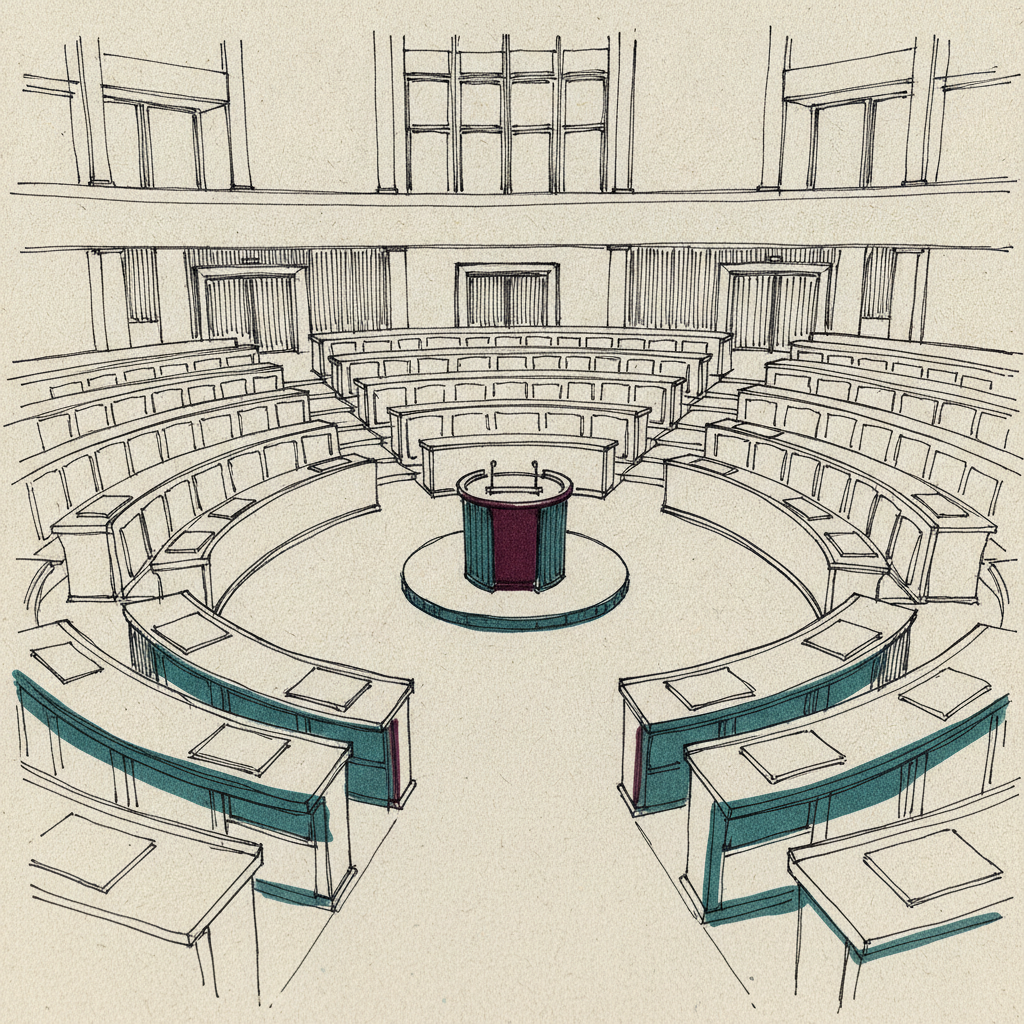
Tweede Kamer
Lower house of the Dutch Parliament.
As at October 2026, the 150-member Tweede Kamer was the directly elected lower house of the Dutch Parliament, responsible for scrutinising government and making national law with it.
Last refreshed: 22 October 2026 · Appears in 1 active topic
Will MPs push drinking-water cooling limits into European data-centre law?
Timeline for Tweede Kamer
Received the cabinet letter on the data-centre motions
Data Centres: Boom and Backlash: Dutch cabinet wants EU peak-load reportsBackground
The Tweede Kamer is the directly elected Lower Chamber of the Dutch Parliament. Its 150 members scrutinise The National government, debate policy and make laws with the government. Cabinet letters and motions let members test ministers' positions before policy becomes legislation or a Dutch negotiating stance.
In October 2026, the chamber received a Cabinet letter on three Party for the Animals motions. They concerned a European ban on high-grade drinking water for data-centre cooling, public reporting of energy and water use, and binding performance standards. The Cabinet left the motions to the Tweede Kamer's judgement. MPs therefore retained the decision on whether to endorse those requests as part of the Dutch position on proposed European Union rules.
What does the Tweede Kamer do?
How many members sit in the Tweede Kamer?
Why is the Tweede Kamer debating data-centre water use?
What did the Dutch cabinet say about data-centre peak loads?





Written with AI from Lowdown's published reporting. Not individually reviewed by an editor. Updated 22 October 2026. Editorial standards.