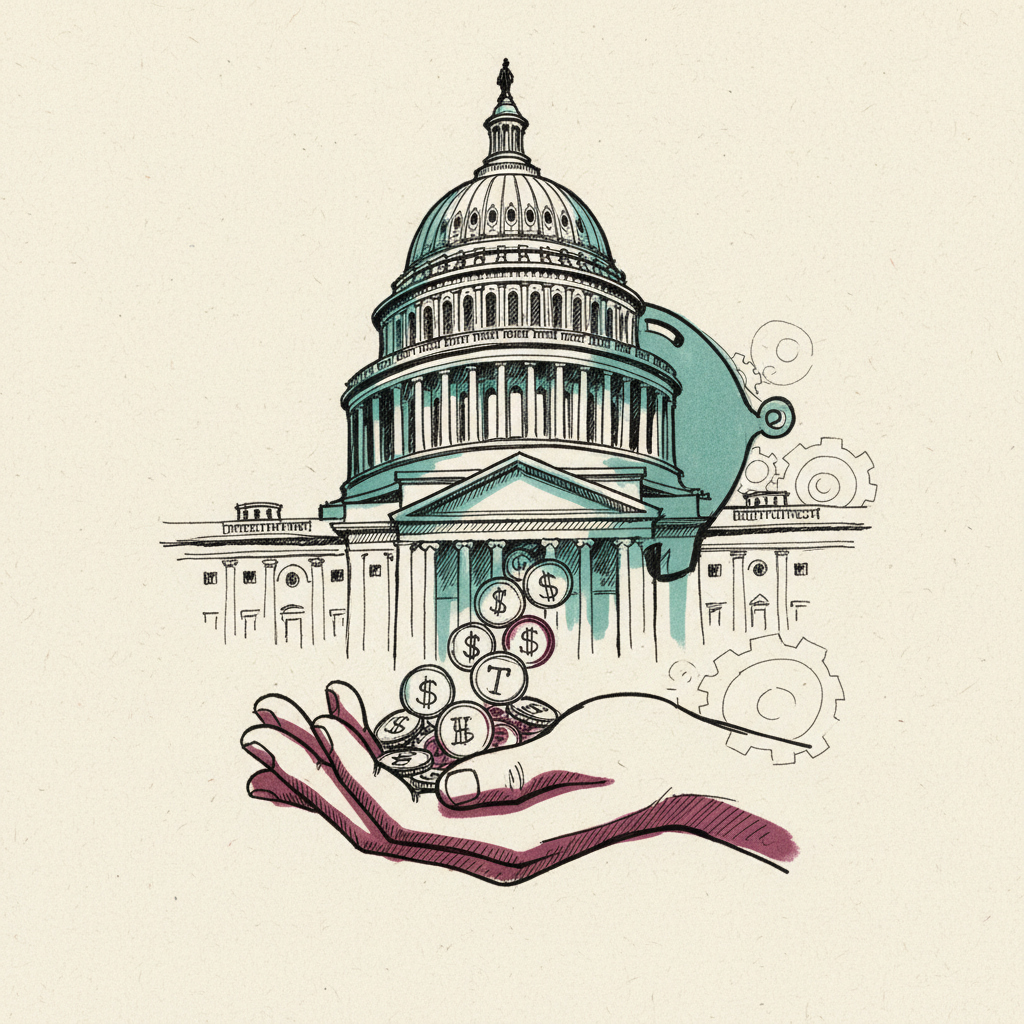
TrumpIRA.gov
Trump-branded federal retirement savings portal created by executive order, launching six months before the 2026 midterms.
Last refreshed: 17 June 2026
Does TrumpIRA.gov break the Hatch Act by using the President's name on a government portal?
Timeline for TrumpIRA.gov
Mentioned in: White House signs nothing on elections
US Midterms 2026Trump signs TrumpIRA.gov order before midterms
US Midterms 2026Background
TrumpIRA.gov is a consumer-facing retirement savings portal created by executive order on 30 April 2026, signed by President Trump alongside a federal contracting efficiency order. The product pools retirement-savings access under a single federal consumer interface, structured to allow individuals to open retirement accounts through a branded government gateway. It targets workers without employer-sponsored retirement plans, a cohort The Administration identified as a swing-voter demographic concentrated in the non-unionised service and manufacturing sectors.
The product's political significance derives from its timing and branding. It bears the President's name, launched at the six-month mark before the November 2026 Midterm elections, and routes voters through a government portal branded with the sitting president's identity. The Hatch Act, which bars executive branch employees from partisan political activity using government resources, presents a legal question the Office of Special Counsel (OSC) would typically assess: whether a government service bearing a president's name during a campaign window constitutes prohibited activity. No formal OSC investigation had been announced as of 7 May 2026. Campaign-finance lawyers have noted that a presidentially branded federal product reaching millions of potential voters constitutes partisan communication at scale regardless of its policy merits.
Retirement security has consistently ranked in the top five economic concerns for voters over 45 in pre-midterm polling. The Republican strategy of associating the product with the President's name directly is a retail-politics gambit: if the portal proves popular, the brand link makes the beneficiary relationship explicit. If it becomes a Hatch Act controversy, The Administration can argue it is a genuine policy product being attacked by opponents of retirement security.