Threat-Sense
Pearson Engineering AI mine-detection; over 95% detection in NATO trials, sent to Ukraine.
Pearson Engineering's AI mine-detection system scored over 95% accuracy in NATO trials and, following Eurosatory 2026, two units are being sent to Ukraine for live battlefield evaluation.
Last refreshed: 24 July 2026 · Appears in 1 active topic
Can an AI mine detector finally make manned minefield reconnaissance obsolete?
Timeline for Threat-Sense
A ground robot takes over the minefield
Autonomous Systems: Land & SeaBackground
Threat-Sense is an AI-powered mine-detection system developed by Newcastle-based Pearson Engineering. It analyses visual and sensor data in real time to identify surface-laid anti-tank and anti-personnel mines ahead of vehicles or dismounted soldiers, flagging threat locations to operators across varying terrain and conditions.
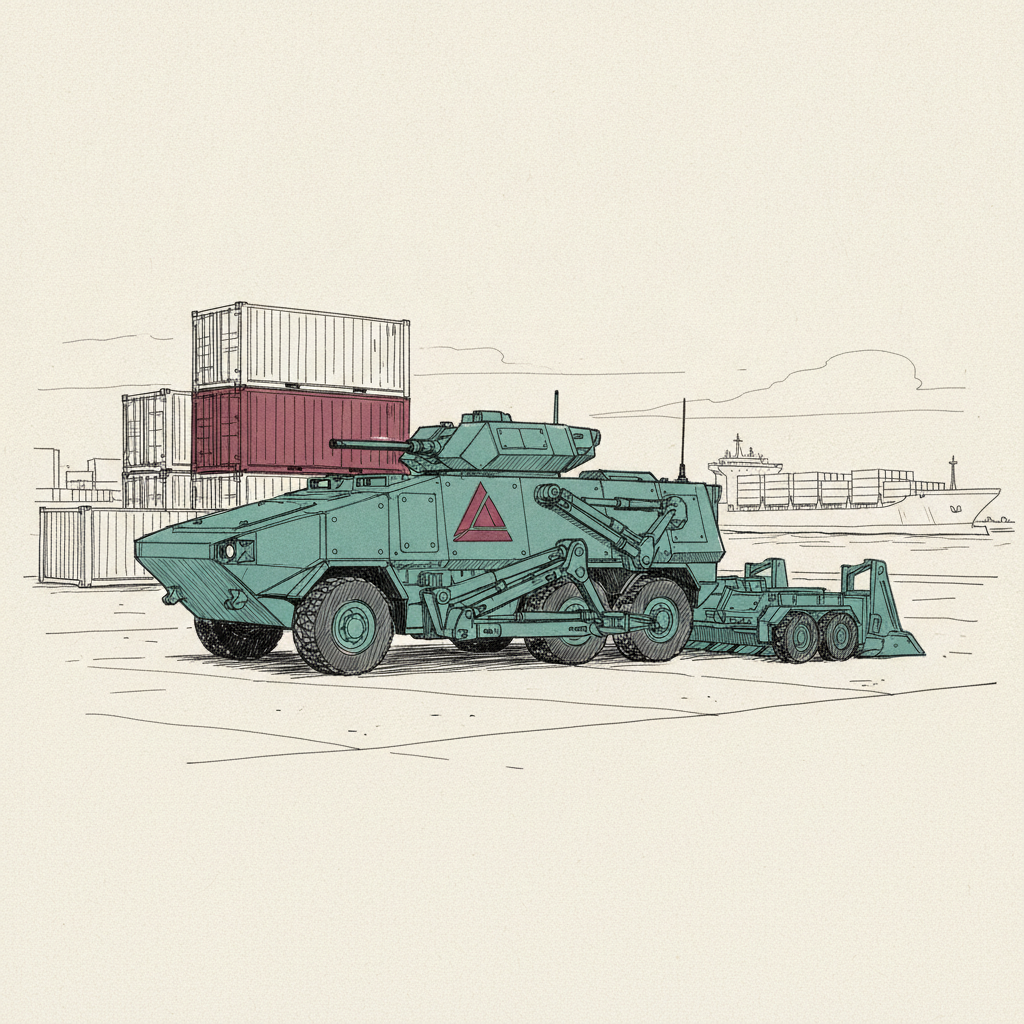
In NATO trials the system achieved more than 95% detection with a false-alarm rate below 10%, a level that meets the alliance's operational threshold for minefield-approach work. It was developed alongside Pearson Engineering's physical breaching equipment and, at Eurosatory 2026, the two capabilities were combined on the DOK-ING MV-8 Komodo to demonstrate a complete detect-and-breach package.
The system's significance runs beyond counter-IED work: dense anti-vehicle minefields remain one of the defining tactical obstacles in modern warfare, and a detector with a sub-10% false-alarm rate changes the calculus of a minefield crossing for both attacker and defender.
Ukraine will battle-test the detector
Threat-Sense's deep-learning detection algorithm scored more than 95% detection with fewer than 10% false alarms in NATO trials, a performance level meeting the alliance's threshold for approach-to-minefield operations.
At Eurosatory 2026 Pearson Engineering announced that two Threat-Sense units would go to Ukraine for evaluation under combat conditions, a step that will generate real-world performance data ahead of any NATO procurement decision. The system is also qualified to fly on Skydio drones, extending its reach from ground vehicles to the air.
What is Threat-Sense and how does it detect mines?
Is Threat-Sense being used in Ukraine?
Can Threat-Sense work on drones?
How does Threat-Sense fit with Pearson Engineering's breaching equipment?

