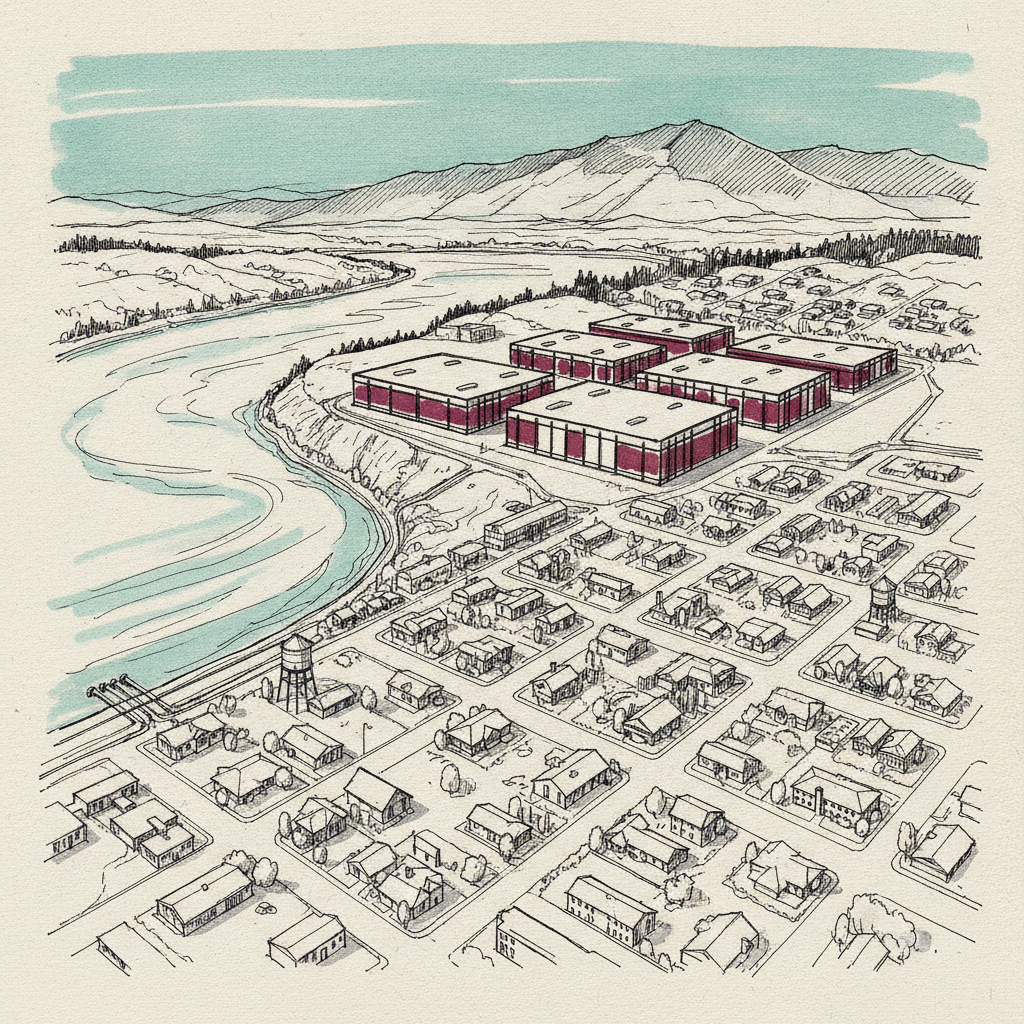
The Dalles
Oregon city on the Columbia River, home to a Google data-centre campus begun in 2006.
Figures published in June 2026 show Google's campus at The Dalles drawing about 550 million gallons of water a year, roughly 40% of the city's supply, with residents facing a projected 99% rise in water rates by 2036.
Last refreshed: 18 October 2026 · Appears in 1 active topic
Can The Dalles survive Google's water appetite as the city plans a fifth campus building?
Timeline for The Dalles
Mentioned in: Kotek seeks pause on data-centre permits
Data Centres: Boom and BacklashGoogle prices its water ahead of rules
Data Centres: Boom and BacklashBackground
The Dalles is the county seat of Wasco County, Oregon, with 16,010 residents at the 2020 census, on the Columbia River about 75 miles east of Portland. Google began building a data centre there in 2006. For years the city fought The Oregonian's request for Google's water-use records, until a settlement in December 2022 released them.
Those records make the city a test of what hyperscale expansion costs a small American town. The campus takes about 550 million gallons a year, and a $260 million upgrade to keep up with demand puts residents on course for a 99% rise in water rates by 2036. The city is eyeing the salmon-habitat Hood River Basin to supply a fifth Google building. Google's 3 June 2026 water pledge commits $17 million across seven states and targets 19 billion gallons of annual replenishment by 2030, but that figure nets water across every site and basin, while The Dalles loses 40% of its supply at one tap.
Governor Tina Kotek wrote to Oregon's environment department on 9 October 2026 seeking a halt, until 1 July 2027, to discharge permits for data centres that are new or growing, city wastewater permits included.
Reference
Will Oregon pause new data-centre permits?
Why are water rates rising in The Dalles?
How much water does Google use in The Dalles?
What is Google's water replenishment pledge?
When did Google come to The Dalles?
Written with AI from Lowdown's published reporting. Not individually reviewed by an editor. Updated 18 October 2026. Editorial standards.