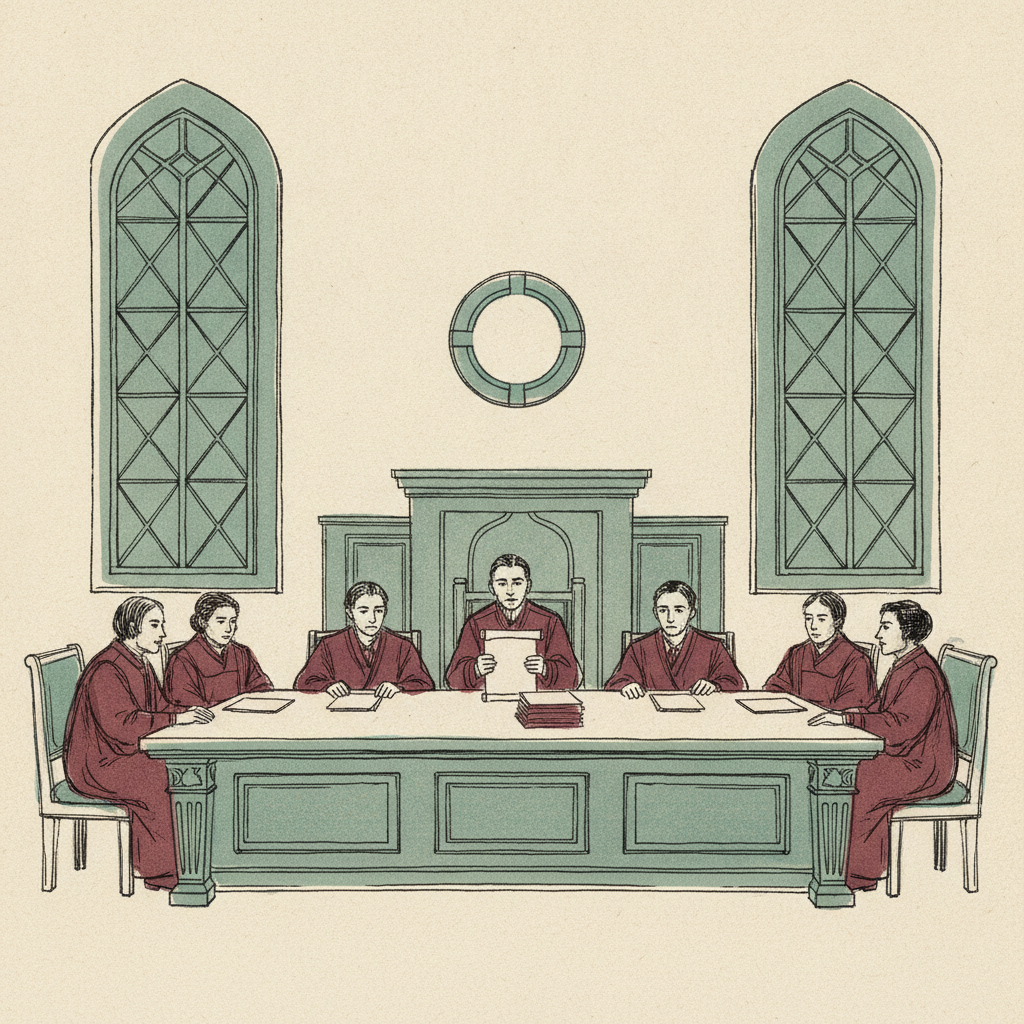
Revolutionary Court
Iran's parallel security judiciary that tries political, espionage and 'anti-revolutionary' cases in closed session.
Last refreshed: 5 July 2026
Why does a Tehran death sentence go through a separate court from ordinary justice?
Timeline for Revolutionary Court
Mentioned in: Protester hanged in secret at Isfahan
Iran Conflict 2026Sentenced Arghavan Fallahi to death via Branch 15
Iran Conflict 2026: NCRI: Tehran court sentenced Fallahi to deathMentioned in: Two Kurds hanged on the talks day
Iran Conflict 2026Mentioned in: Athlete Benyamin Naqdi sentenced to death
Iran Conflict 2026Mentioned in: Amnesty: 39 executions since war began
Iran Conflict 2026Background
Branch 15 of the Revolutionary Court in Tehran, presided over by Judge Abolqasem Salavati, sentenced Arghavan Fallahi, a woman linked to the PMOI/MEK, to death on 1 July; her lawyer received six years and a travel ban in the same case.
The Revolutionary Court was established after the 1979 revolution, originally to try officials of the former Pahlavi government, before its jurisdiction expanded to national security offences, espionage, narcotics and so-called "anti-revolutionary" crimes. It operates as a parallel judiciary alongside Iran's ordinary courts, with hearings frequently held behind closed doors, restricted defence access and verdicts that are difficult to appeal outside the system.
Human rights organisations say the Court is routinely used to prosecute political dissidents, journalists and protesters rather than ordinary security threats. Foreign governments including the EU and US have responded not by sanctioning the institution itself but by targeting individual judges, most prominently Branch 15's Salavati, over specific rulings.