Regulation (EU) 2026/261
EU regulation banning short-term pipeline gas imports; long-term contracts exempt until September 2027.
Last refreshed: 15 June 2026
Does the June 2026 pipeline ban actually stop Russian gas entering the EU?
Timeline for Regulation (EU) 2026/261
The ban's own text makes it porous
European Energy MarketsHungary's challenge is now a one-player game
European Energy Markets- What does EU Regulation 2026/261 actually ban from 17 June?
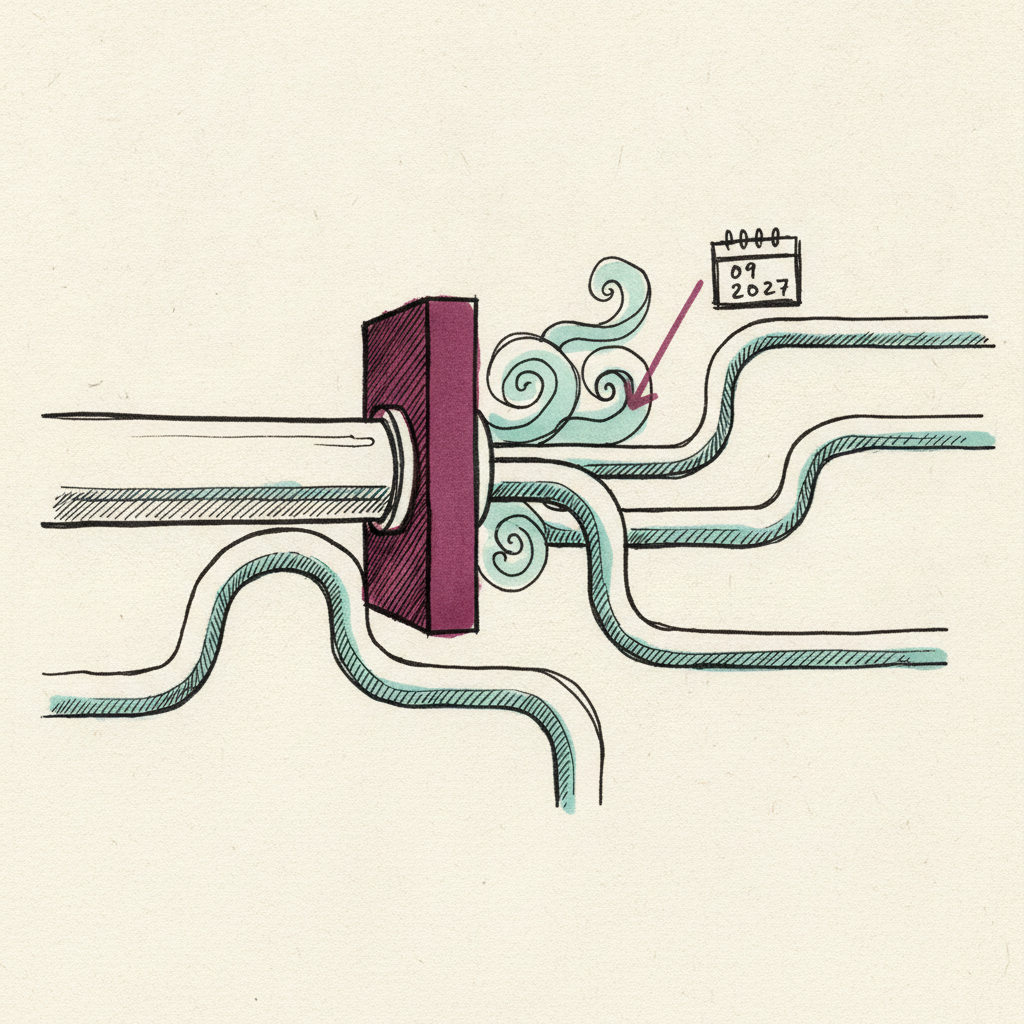
- Short-term pipeline gas contracts concluded before 17 June 2025. Long-term contracts are exempt until 30 September 2027, so most TurkStream physical flow into Central Europe continues legally.Source: EUR-Lex
- Why are long-term Russian gas contracts exempt from the EU ban until 2027?
- Regulation 2026/261 includes transitional provisions that exempt contracts in force before 17 June 2025 until 30 September 2027 to avoid abrupt supply disruptions in member states that depend structurally on TurkStream deliveries.Source: EUR-Lex
- Is Slovakia or Hungary challenging the EU Russian gas import ban in court?
- Hungary filed an annulment action (C-46/26) in February 2026, but the Tisza government that took office in May 2026 has no incentive to press it. Slovakia under Robert Fico filed a separate suspension application arguing the regulation required unanimity.Source:
- What legal basis did the EU use to pass the pipeline gas ban?
- Articles 194(2) and 207 TFEU; the energy policy and common commercial policy provisions. Slovakia's challenge contests whether a measure of this scale required unanimity rather than a qualified-majority vote.Source: EUR-Lex
Background
Regulation (EU) 2026/261 is the European Union's primary legal instrument phasing out pipeline natural gas imports from Russia. It binds from 17 June 2026 for short-term contracts, defined as those concluded before 17 June 2025, while exempting long-term contracts until 30 September 2027. The legal basis is Articles 194(2) and 207 of the Treaty on the Functioning of the European Union, and it was contested in CJEU annulment proceedings filed by Hungary in February 2026 (case C-46/26).
The regulation's scope is narrower than its headline date suggests. Long-term contracts account for the bulk of TurkStream physical flow into Central Europe, leaving that volume legally intact for fifteen months beyond the 17 June binding date. Its companion measure, Implementing Decision (EU) 2026/335, further reduces enforcement scope by exempting six origins from prior authorisation. Together, the two instruments create an architecture that stops a thin slice of short-term contractual flow while preserving the structural Russian pipeline volumes that Central European states depend on.
The regulation is significant as the EU's first binding legal prohibition on Russian pipeline gas rather than a voluntary phase-down target. It establishes the enforcement framework that will determine whether the EU achieves energy independence from Russian pipeline supply before the long-term contract exemption expires in September 2027. Slovakia filed a separate CJEU suspension application arguing the measure required unanimity rather than a qualified-majority vote, making the judicial challenge the key variable for whether the ban holds its current architecture.

