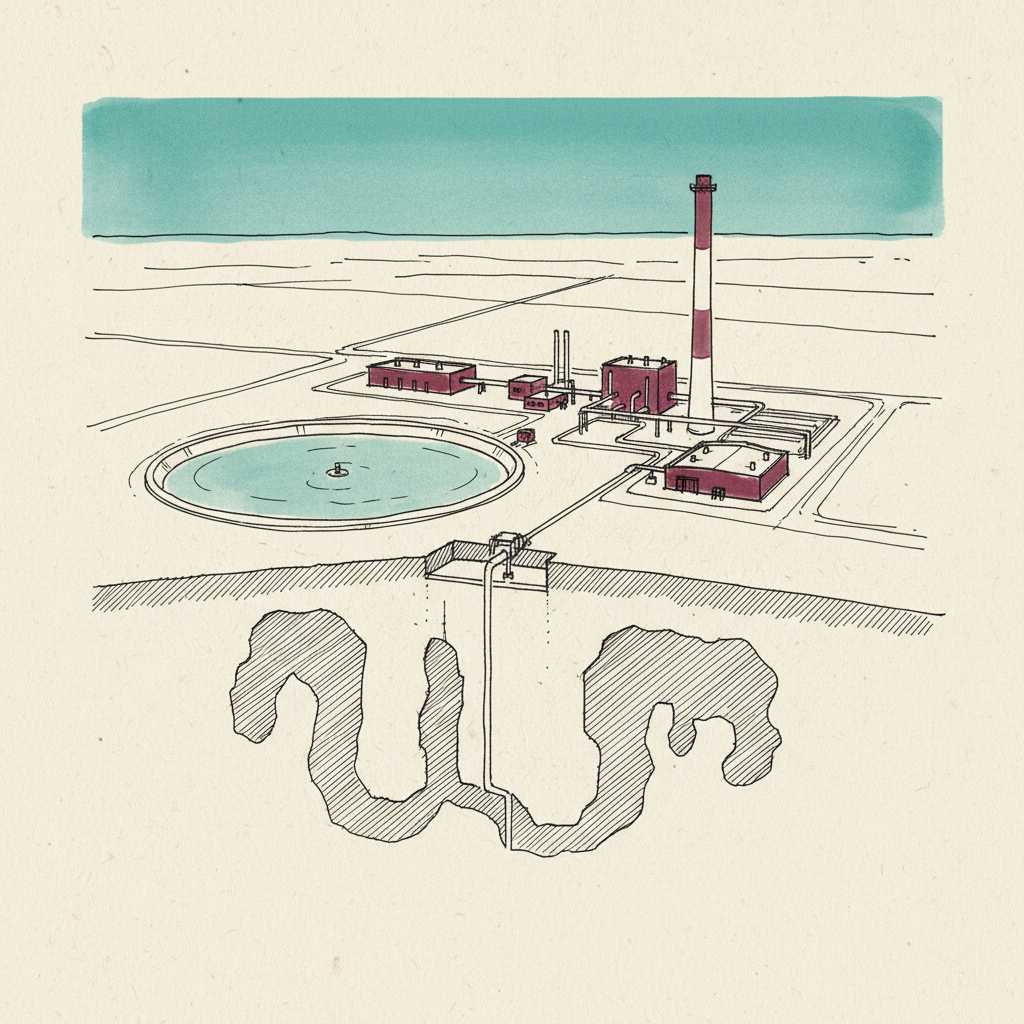
Rehden
Germany's largest gas storage site; pore reservoir in Lower Saxony under reduced 45% target.
By 1 April 2026, Rehden had only 21 Mmcm booked for the coming injection season, prompting VNG AG to call for federal intervention as Germany's storage refill system began to break down.
Last refreshed: 31 July 2026 · Appears in 1 active topic
Is Germany's largest gas storage site too empty to guarantee winter 2026 supply?
Timeline for Rehden
Mentioned in: FNB Gas calls refill model broken
European Energy MarketsBooked at approximately one two-hundredth of capacity, illustrating market-mechanism failure on injection economics
European Energy Markets: EU needs 469 TWh injection, 39 extra cargoesMentioned in: TTF trades €41.67 intraday, extending six-week low
European Energy MarketsMentioned in: EC confirms 22 April energy crisis package
European Energy MarketsMentioned in: SPD threatens to block German 10 GW gas plant law
European Energy MarketsBackground
Rehden is Germany's largest single gas storage site, a pore rather than salt cavern reservoir in Lower Saxony. That distinction carries weight: Germany's amended Gasspeicherfuellstandsverordnung places Rehden among the pore storage facilities held to a reduced 45% fill target for 1 November, precisely because pore reservoirs inject and withdraw more slowly than cavern storage, unlike the 80% asked of most German sites.
The site passed through the astora/Gazprom Germania infrastructure before Berlin took it into federal trusteeship in 2022, after regulators found it had been deliberately run down ahead of that year's Russian gas cutoff. Trusteeship put day-to-day management under Bundesnetzagentur oversight rather than a commercial operator answering to Moscow, and Rehden has since sat at the centre of Germany's post-2022 debate over how much security-of-supply risk sits inside privately booked storage.
That debate resurfaced in spring 2026: Rehden had only 21 Mmcm booked for the coming season by 1 April, and Germany's TSO association told Berlin in May that the market-based refill model itself had broken down after the storage levy lapsed on 1 January. As the country's biggest single site, Rehden's Booking level functions as an Early Warning gauge for the wider system.
Injection bookings collapse near zero
By 1 April 2026, Rehden had booked only 21 Mmcm of capacity for the coming injection season, roughly one two-hundredth of the site's total volume, prompting VNG AG to call publicly for federal intervention in storage refill economics. The shortfall sat inside a wider EU arithmetic problem: with aggregate storage at 27.7% of capacity on 1 April and Germany itself ending winter at 21%, its lowest since 2018, Brussels needed the equivalent of 39 extra LNG cargoes by 22 April just to stay on course for the 80% November target.
For Rehden specifically, the exposure runs deeper than the EU-wide figures suggest: as a pore rather than cavern site, it carries a lighter 45% target precisely because its injection and withdrawal rates lag cavern storage, yet even that reduced bar looked doubtful while commercial operators found summer/winter spreads too thin to justify filling it.
Why is Rehden gas storage almost empty in spring 2026?
Who owns Rehden gas storage in Germany?
How much gas can Rehden store?
What happened to Rehden storage under Gazprom?
What type of gas storage facility is Rehden?
Why does Rehden only have to fill to 45% instead of 90%?
Why was Rehden almost empty in spring 2026?
What happened to Rehden's gas reserves under Gazprom Germania?

Written with AI from Lowdown's published reporting. Not individually reviewed by an editor. Updated 31 July 2026. Editorial standards.