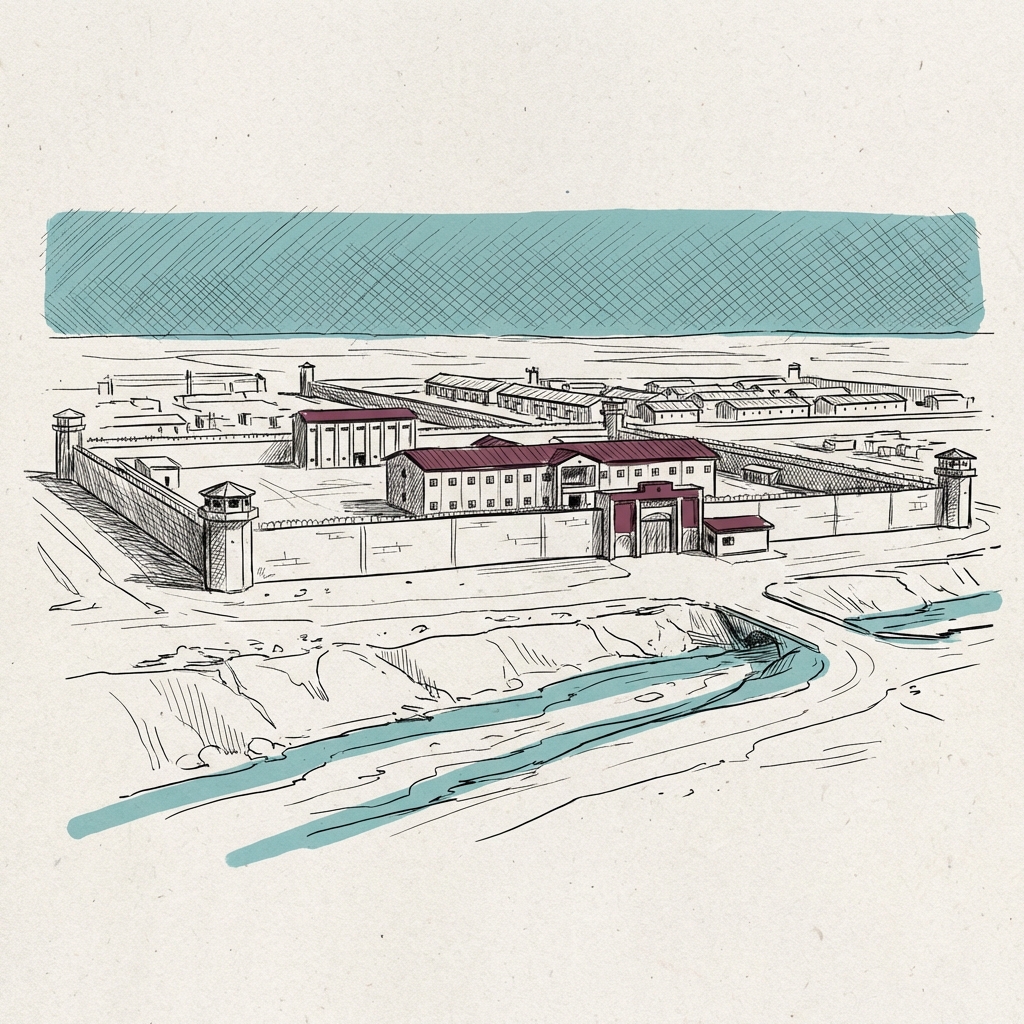
Qom Prison
Iranian prison in Qom; site of secret political executions under ceasefire cover in 2026.
Last refreshed: 10 April 2026
How were prisoners moved from Evin to Qom Prison during the war?
Timeline for Qom Prison
Mentioned in: Iran Executes 13 Under Ceasefire Cover
Iran Conflict 2026Mentioned in: NOPO seizes Evin Prison, food halted
Iran Conflict 2026- What happened at Qom Prison during the Iran ceasefire?
- Secret political executions were documented at Qom Central Prison alongside Ghezel Hesar — at least 14 confirmed in 18 days, conducted without family notification under internet blackout.Source: iran-conflict-2026
- Were Evin Prison detainees transferred to Qom Prison?
- Yes. After NOPO seized Evin, authorities ordered political prisoners transferred to Qom Prison and other facilities. The internet blackout prevented families tracking the movements.Source: iran-conflict-2026
Background
Qom Central Prison emerged alongside Ghezel Hesar as a documented site of secret political executions in the 18 days between 19 March and 6 April 2026. Iran Human Rights Monitor confirmed at least 14 executions across the two prisons, conducted without family notification under cover of a 1,008-hour nationwide internet blackout , the longest ever recorded. Prisoners transferred there during the conflict included political detainees moved from Evin Prison after NOPO (Iran's special forces riot police) seized control of Evin in the early weeks of the war.
Qom is Iran's holiest city and its primary centre of Shia Islamic scholarship. The prison is a provincial facility serving Iran's religious heartland , a city that produces senior clerics including members of the Assembly of Experts that selects the Supreme Leader. The use of a Qom facility for political executions reflects the Islamic Republic's comfort using even its most symbolically charged geography for coercive purposes.
The transfer of political prisoners from Evin to Qom and Ghezel Hesar during the conflict suggests a deliberate dispersal strategy: spreading detainees across facilities reduces the risk of mass release or escape in a single event, while also obscuring the overall population from human rights monitors. The internet blackout eliminated the informal notification networks that families normally rely on to track transfers and sentencing.