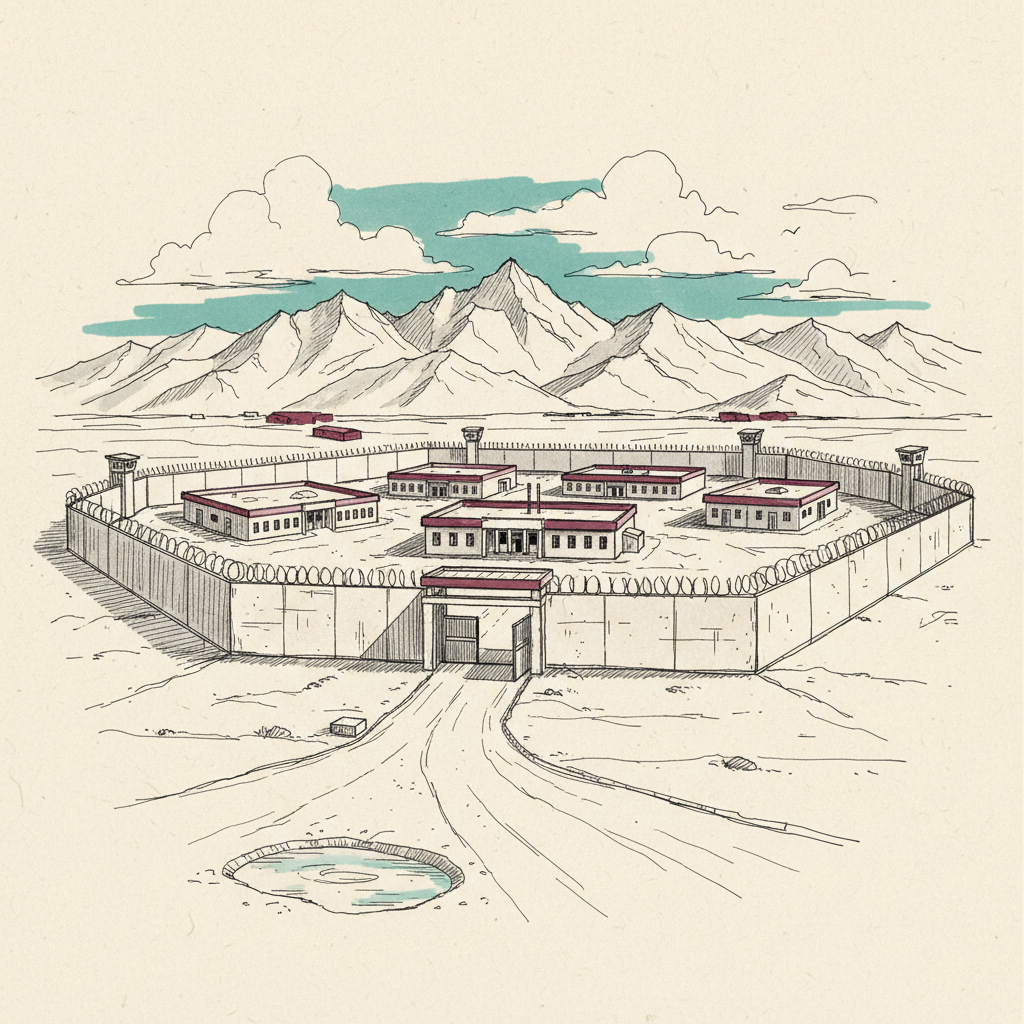
Qezel Hesar Prison
Iranian prison in Karaj; site of multiple protest-era executions carried out under war-period internet blackout.
Last refreshed: 23 April 2026 · Appears in 1 active topic
How many protesters has Qezel Hesar Prison executed since the Iran war started?
Timeline for Qezel Hesar Prison
Two Kurds hanged on the talks day
Iran Conflict 2026Mentioned in: Naqadeh executes two Kurdish PDKI prisoners
Iran Conflict 2026Mentioned in: Turkish court annuls CHP leadership vote
Iran Conflict 2026Reza Soleimani executed at Qom Central
Iran Conflict 2026Background
Qezel Hesar Prison in Karaj, west of Tehran, has become the primary site for Iran's execution of protest-era detainees during the 2026 conflict. Amirali Mirjafari was hanged there in the early hours of 21 April 2026 without a final family visit, the eighth such execution since the war began. Earlier, Ali Fahim, a 23-year-old protester, was executed at the same facility in March 2026 as part of a wave of 13 political executions in 18 days documented by Iran HRM.
The facility is under the jurisdiction of Iran's Prison Organisation and is known for holding both political prisoners and those convicted under national security charges. Qezel Hesar carries heavy historical weight: during the 1988 mass executions of political prisoners, hundreds of detainees, predominantly MEK (Mojahedin-e Khalq) supporters, were hanged at the prison in one of the largest extrajudicial killings in post-revolution Iran. Amnesty International has documented the 1988 killings as a crime against humanity. The spelling Ghezel Hesar appears in some human rights documentation, and the prison sits roughly 20 km west of central Tehran in Alborz Province.
Iran's internet blackout — maintained for more than 1,272 hours by Day 53 of the conflict — has been used to time executions when external scrutiny is lowest. Hengaw and Iran HRM have both documented Qezel Hesar executions during blackout windows, noting that families are typically informed after the fact rather than given opportunity for final visits.
Where is Qezel Hesar Prison in Iran?
How many protesters has Iran executed at Qezel Hesar in 2026?
Why is Iran executing protesters during the ceasefire?
Written with AI from Lowdown's published reporting. Not individually reviewed by an editor. Updated 23 April 2026. Editorial standards.