Plan Kukulkan
Mexico's 2026 World Cup security operation: 100,000 forces, 24 aircraft, anti-drone systems across three host cities.
Last refreshed: 28 July 2026 · Appears in 1 active topic
Can 100,000 troops actually make Mexico's World Cup venues safe enough to match Qatar 2022?
Timeline for Plan Kukulkan
Mentioned in: Cartel drones bomb a Guerrero village
2026 FIFA World CupFour die in Mexico World Cup crush
2026 FIFA World CupProvided the operational framework under which the drone was detected and intercepted
2026 FIFA World Cup: Mexico downs drone over Korea trainingMentioned in: Teachers and the missing take the Zocalo
2026 FIFA World CupGuadalajara passes first security test
2026 FIFA World CupBackground
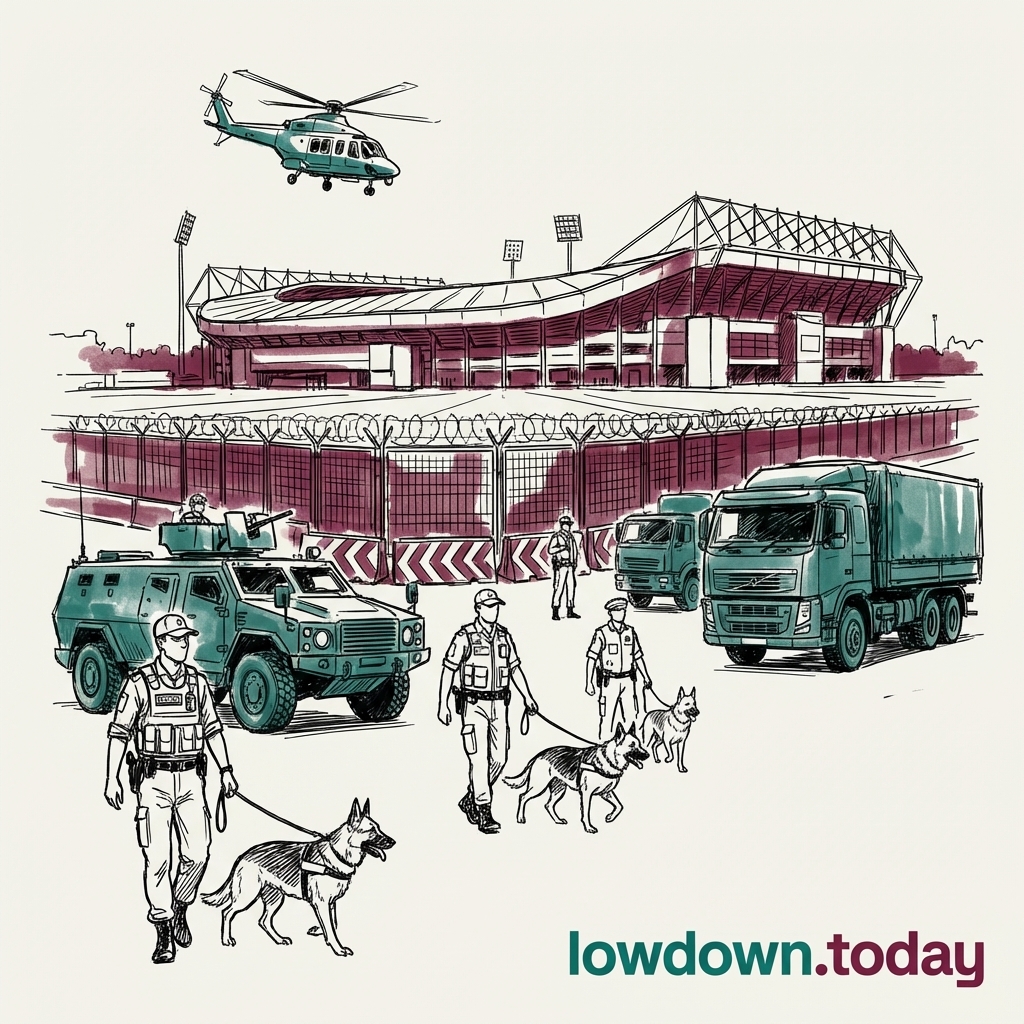
Plan Kukulkan is the Mexican federal security operation for the 2026 FIFA World Cup, announced by President Claudia Sheinbaum on 5 March 2026. Named after the Mayan feathered serpent deity — cognate of the Aztec Quetzalcóatl — the plan deploys up to 100,000 security personnel, 2,500 vehicles, 24 aircraft, anti-drone countermeasures, and explosives-detection dogs across the three Mexican host cities: Mexico City (Estadio Azteca), Guadalajara (Estadio Akron), and Monterrey (Estadio BBVA). It is the largest security deployment for a sporting event in Mexican history.
Plan Kukulkan was announced in direct response to retaliatory CJNG cartel violence that killed at least 70 people across a dozen Mexican states following the military killing of cartel leader El Mencho in February 2026. Sheinbaum personally visited Jalisco — the CJNG's operational heartland and home of Estadio Akron — the day after the announcement, signalling that the federal government was not delegating security to state authorities.
Guerrilla deployments under the plan were first tested in Guadalajara on 26 March 2026, when 12,000 personnel were deployed for the inter-confederation playoff semi-finals — the first major international fixture in the city since a Diving World Cup was cancelled in late February after cartel violence. The test passed without major incident. The operation's scale reflects the genuine complexity of hosting a global tournament in a country where organised crime killed roughly 30,000 people in 2023 alone. The US State Department maintained Level 2-3 travel advisories for Jalisco and Nuevo León, home to two of the three venues, throughout the tournament build-up. Whether the operation can hold at full group-stage crowd scale — FAR larger than playoff matches — remains the central operational question.
What is Plan Kukulkan?
How many troops is Mexico deploying for the World Cup?
Did the World Cup security test in Guadalajara work?
What is Plan Kukulkan in Mexico?
Why did Mexico need such a large security force for the World Cup?
What happened when Plan Kukulkan was first tested in Guadalajara?
